


The decision to disarm Hezbollah is not a national decision in Lebanon, but rather the US and Saudi Arabia have proposed and are pursuing this plan. From the perspective of Lebanese experts, President Joseph Aoun, Prime Minister Nawaf Salam and a group of political and media mercenaries are the US tools for implementing this project. The decision to disarm Hezbollah does not enjoy consensus due to the withdrawal of Shiite ministers from the cabinet meeting; for that, it is not practical and will not be implemented.
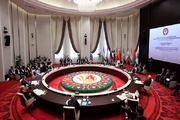
Hezbollah’s weapons protect not only Lebanon but also Iran, Palestine and even the entire region agisnt the occupation of the Zionist regime. In fact, Lebanon is at the center of regional issues. In this regard, the international conference “Disarming Hezbollah and the Future of Lebanon” was held by Mehr News Agency with the participation of Iranian, Yemeni and Lebanese political observers.
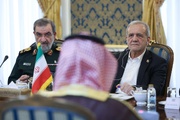
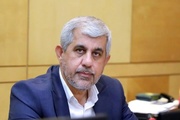
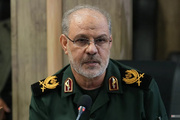
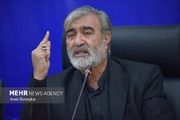
Ahmad Dastmalchian, former Iranian ambassador to Lebanon and Jordan, Mohammad Khajuei, director of the Lebanon Studies Group at the Tehran-based Middle East Institute for Strategic Studies, Mohammad Ali Hassannia, expert on Arab globsl issues, Mohammad Sarfi, editor-in-chief of the Tehran Times newspaper, Mohammad Reza Moradi, director-general of International anf Foreign News Department at Mehr News Agency, Zeinab Farhat, commentator from the Lebanese NBA TV network, Dr. Ali Ahmad, researcher on Lebanese political issues, and Ahmad Abdulwahab Al-Shami, analyst from Yemen's Al-Masirah TV network, were the panelists. The Iranian panelists in person and the foreign experts online through video conferencing discussed Hezbollah's disarmament decision and the future of Lebanon, which is detailed in the report below.
Hezbollah disarmament is in violation of the laws of Taif Agreement
Mohammad Reza Moradi said, "The Lebanese cabinet has brought the issue of Hezbollah disarmament in a situation where observers believe that this issue is like a double-edged sword that can damage Lebanon's internal security and stability. Talking about Hezbollah disarmament as the only instrument supporting the Shiites when five bases in southern Lebanon are still under the occupation of the Zionist regime and the Shiites in this area are being attacked by the occupiers is dangerous. Sheikh Naim Qassem also said in his recent speech that 'We will fight like in the battle of Karbala and the weapon of resistance is our red line.' Sheikh Naim warned the Lebanese government of the risk of civil war in his speech."

The Mehr journalist added, "Experts are concerned about security and stability in Lebanon. The disintegration of Lebanon could spread to other regions. Hezbollah's weapon was created to fight the occupation. Hezbollah has announced that Hezbollah's weapon should not be up for discussion as long as there is occupation. Any talk of a government monopoly on weapons must be accompanied by a comprehensive defense strategy. The government's unilateral disarmament of Hezbollah is a violation of Taif Agreement."
One should look at regional issues through the lens of national interests
Mohammad Sarfi, as the panlist who delivered the opening speech said: Public opinion in society is poorly informed about regional issues. Such specialized meetings that Mehr News Agency has held today and in which we are present can have two aspects; the first aspect is that the public opinion in society that is looking for more accurate and detailed information about regional issues can hear these issues from the experts. Audiences beyond public opinion, that is, those who are decision-makers, can benefit from such specialized meetings, and this is the second aspect.
He added: panels held on regional issues show courage and audacity. Discussions and issues are examined that are rarely addressed and heard in the media. Decision-makers and decision-makers can hear issues from different perspectives and in different languages in these meetings so that their actions and decisions are effective.

According to him, the issue of Hezbollah disarmament is an Iranian issue, not only because of the support that the Islamic Republic of Iran gives to Hezbollah, but also because the issues of the Middle East and West Asia are strongly interconnected; after October 7 and Operation al-Aqsa Storm, this interconnection increased. What happens in Lebanon affects Iran's national security. It is of great importance to see issues through the lens of national interests and to consider regional issues as our own issues.
The collapse of the old order and the emergence of a new order
Ahmad Dastmalchian stated in the seminar that "in the current critical situation, we need to explain the conditions of the region and the world." He said: The roots of the developments must be examined carefully and deeply so that analytical and strategic errors do not occur. Discourse-building and the promotion of knowledge in Iran will increase the intellectual security and peace of the people.
He added: We are in a transition period. The result of this period will be the gradual collapse of the old order and the formation of a new order. What happened 80 years ago is happening again today. Two fundamental and decisive axes in the region are facing each other. One side is the sinister triangle and the other side is Iran and the Axis of Resistance.

"Both sides talk about a war of survival, a war of self-determination, and an existential war. These indicate that this war is a decisive war. The events that occur within this puzzle are interconnected like chains; if a 12-day imposed war occurs, it is related to the disarmament of Hezbollah. If they raise the issue of disarming Hezbollah and pressuring the Iraqi Popular Mobilization Forces, it will return to Syria. I am saying frankly that such a view does not exist at the macro level. Strategic necessity requires that the decision-makers of the Islamic Republic of Iran should be more aware of the root and depth of the regional developments."
The former Iranian ambassador to Lebanon stated: The issue of disarming Hezbollah is not a new issue. The axis of arrogance has always had its eye on Hezbollah’s weapons and sought to disarm them; from the first day Hezbollah fought against the occupiers until today. The Arab alliance, America and the Zionist regime have always been unanimous in their support for disarming Hezbollah. Just as they committed stupidity and strategic error in attacking Iran and overthrowing its regime, they are repeating the same strategic error in disarming Hezbollah. Hezbollah’s weapons are weapons of honor. The resistance in Lebanon consists of all tribes and is of the people.
Dastmalchian added: Whatever happens in Lebanon, we see its reflection in the region. Lebanon’s stability is the stability of the region. If Lebanon becomes unstable, the region will also become unstable. Hezbollah’s weapons are not parallel to those of the Lebanese army, but complement them. Hezbollah’s weapons have been used in defending the homeland and have come to the aid of the army. The army has never been able to advance anything without Hezbollah’s weapons. The army system is a classic system all over the world, and the resistance has an asymmetric deterrent strategy. How can the resistance system be assimilated into the heart of the army? The basis of this theory is fundamentally wrong.
The former Iranian ambassador to Jordan emphasized: The leaders of Arab countries should know that the weapon of resistance against the Zionist regime is a deterrent for the entire Islamic nation. If this weapon is taken from Hezbollah, the first countries that will not be safe from the expansionism and crimes of the Zionist regime will be themselves. The leaders of Arab countries have no trust in the Zionist regime and admit this in private meetings.
Hezbollah's disarmament plan is not feasible
Mohammad Khajuei said: Hezbollah's weapons are a sterile product of state-building in the Middle East, specifically in Lebanon and Syria. In a sense, Hezbollah's weapons are a reflection of a bankrupt state in Lebanon. When a country is attacked by a foreign enemy, there is practically no army to confront this enemy. In this way, people take up arms to defend their lives and property. This issue coincides with the victory of the Islamic Revolution, they become fat and become an organization.

He added: The argument of those opposed to Hezbollah's weapons is completely logical. In every state and country, weapons should be in the hands of the army. There is no question on this issue. It is also unacceptable for Iran for a group outside the state to have weapons. The question arises: has a state that has been formed and is responsible for providing security been able to prove its efficiency and ability, and now it is telling the people to put down the weapons and I am responsible for defending you? The experience of the last four decades in Lebanon proves the opposite. At various times, whether fighting the Zionist regime or fighting Takfiri groups, the official Lebanese forces, including the army, have not played an effective role. If they have been anywhere and done anything, it has been completely coordinated with Hezbollah; for example, liberating the eastern regions of Lebanon from the presence of ISIS. The Lebanese army has not been able to prove its ability to defend the people.
Stating that the Lebanese army does not actually have the necessary independence, the director of the Lebanon Studies Group of the Middle East Strategic Research Institute continued: The Lebanese army is completely and 100 percent under the umbrella of the United States. The smallest weapon it wants to buy must be approved by the United States. It is not allowed to buy weapons outside of the decisions of the United States. In any case, the Americans humiliatingly provide weapons to the Lebanese army; they bring two helicopters, tie a ribbon to them and say we gave you two helicopters.
Khajuei added: The government is not in the spotlight, but rather the plan is to “destroy Hezbollah’s weapons.” If Hezbollah's weapons are to be in the hands of the army, the balance of the region will be destroyed. These conditions and plans have been created to stabilize the new security equation of the Zionist regime. The Zionists will have freedom of action in the airspace. The Americans will not even allow the Lebanese army to have Hezbollah's weapons.
The disarmament plan began after 2000. The country had been liberated and the groups believed that there was no need for Hezbollah’s weapons. Hezbollah also offered the justification that, firstly, the entire country had not been liberated and parts of Lebanon were under the occupation of the Zionist regime. Secondly, Hezbollah’s weapons could serve as a deterrent. The disarmament issue reached its peak in 2006. At that time, due to Hezbollah’s power, the issue was not raised with the language of “disarming Hezbollah” but rather under the title of “National Defense Strategy.” The National Defense Strategy, which was presented during the presidency of Michel Suleiman, is a good model for a good way out in the current situation. According to this plan, Hezbollah would not be disarmed, but the power of resistance would have to be coordinated with the government’s decisions. Also, the decision on war and peace would have been left to the government. This plan was not implemented for various reasons, and Hezbollah did not fall under the aforementioned plan after 2008 and 2009, when it had become very powerful and its peak was after 2016; although politically, the National Defense Strategy was approved by Hezbollah.
Stating that Hezbollah’s disarmament plan has three national, sectarian and regional dimensions in Lebanon, he emphasized: “What is being proposed today under the name of Hezbollah’s disarmament plan is the product of changing political conditions in Lebanon. Hezbollah’s opponents have taken advantage of this opportunity and, in view of the pressures of the US government, are trying to implement the plan in parallel with the plan to disband the Popular Mobilization Forces in Iraq. The political order formed in Lebanon is completely an American order. Joseph Aoun and Nawaf Salam came to power under pressure from the Americans and were elected primarily for the reason that they would implement the complex disarmament project.”
The director of the Lebanon Studies Group at the Middle East Institute for Strategic Studies continued: “Hezbollah used the excuse that this is my weapon that has created deterrence for the country, but the recent war, which was accompanied by miscalculations on the part of Hezbollah, violated Lebanon’s deterrence and practically caused Hezbollah’s deterrence power to decline. Hezbollah and Lebanon have returned to at least two decades ago; southern Lebanon has been reoccupied and the Zionist regime has the upper hand.” Gibran Bassil, who was a supporter of the resistance weapon, says that the recent war proved that the resistance weapon does not have much deterrent power. Naturally, in the current situation where the army is not able to expel the occupiers from southern Lebanon, eliminating Hezbollah's own power means shooting itself in the back.
He added in the end: Disarming Hezbollah, apart from the national dimension and the power it had created for Lebanon, also has a sectarian aspect. The roots of this weapon go back to the Shiite sect. Geographically, the Shiites were on the borders with the Zionist regime. From the east, they were also on the borders with Syria and the attacks of the Takfiris. From the Shiites' point of view, disarmament means rendering the Shiites defenseless as a sect against a foreign enemy. Khawaji added: The plan to disarm Lebanon is not feasible. Its implementation would mean a civil war in Lebanon. The Zionist regime, which has not commented on Barak's plan so far, is questioning the entire plan.
Hezbollah in Lebanon is the center of Iran's regional issues
Mohammad Ali Hassannia said: The Lebanese atmosphere before the victory of the Islamic Revolution in 1975 was an ethnic atmosphere. There were many different tribes in Lebanon. For this reason, the Shiites were a lonely tribe in Lebanon before 1975. The Shiites did not even have identity cards. Many Shiite women lived as maids in the homes of Christians and Sunnis. After the arrival of Imam Musa Sadr in Lebanon, the 1982 war, and the victory of the Islamic Revolution, the Shiites rehabilitated themselves. The Islamic Republic of Iran and sometimes Hafez al-Assad also came to the aid of the Shiites in Lebanon. What happened to the Maronite Christians after the formation of their failed government was that they lost their power, and the Druze and Shiites rehabilitated themselves until 1982. Hezbollah in Lebanon uses one of the clauses of the Taif Agreement and keeps its weapons, and the agreement, without using the word resistance, states: “As long as the Zionist enemy is inside the occupied territories, dealing with it is legitimate.”

He added: After the fall of Bashar al-Assad in Syria, the balance in Lebanon was disrupted. When the Taif Agreement was reached, even the Shiites, including Nabih Berri and Jumblatt, were against it. Hafez al-Assad invited them to Damascus at the request of the Saudi king, and after a meeting in Damascus, they agreed. In the recent war, after the Majdal Shams incident, the Zionists came to the conclusion that they should change their strategy in order to change the security equation in Lebanon. The Americans also entered to change the political equation.
This expert on Arab world affairs continued: The issue of disarming Hezbollah will not be that easy. Hezbollah has missiles and drones. The implementation of the disarmament plan is shrouded in ambiguity. Even if Hezbollah hands over the weapons to the army, the army does not have the ability to use them. Since 1974, the Lebanese army has only used American light weapons, and it has only two helicopters. The Lebanese army does not have tanks, fighter jets, or drones. The enemies are trying to destroy Hezbollah’s weapons, not to provide them to the Lebanese army.
Hassannia said: The scenario that the Americans and Saudis are writing for Lebanon is, first of all, unworkable. Second, Lebanon is like a pizza and a cake that has been cut into pieces. This country has basically been the playing field of various regional and extra-regional countries; Iran, Saudi Arabia, France, the United States, and the Zionist regime. Syria was also the one that practically withdrew from playing the role of the Lebanese movement after the fall of the Bashar al-Assad government. Qatar has also occasionally played a role, as in 2005. Therefore, the demands of regional and extra-regional countries in Lebanon are important. Nawaf Salam and Joseph Aoun told Mr. Larijani not to interfere in the issues during his visit to this country. These people talk about disarmament and national issues in Lebanon during the visits of Tom Barak and Yazid Farhan.
He added: There is agreement and disagreement in the Shiite community. It is not possible to bypass the different Shiite, Sunni and Christian communities. It is written in the National Pact and the Taif Agreement that the clans in Lebanon cannot be separated from each other. In 2006, Hezbollah went to the borders of occupied Palestine and took several Zionists as prisoners and killed them. There was a common belief among the Shiite and Christian circles that Hezbollah went and did this to free Lebanese prisoners. Hezbollah went to free the graves of Shaba and Kafr Shuba. Hezbollah's work was Lebanese.
This observer of Arab world affairs also said: Hezbollah is not an organization but a quasi-state; it has a bank, manpower, weapons, media, traders, ships and even a dedicated terminal. The US and the Zionist regime are seeking to destroy Hezbollah’s quasi-state. The Zionist regime targeted Hezbollah’s Qarz al-Hasanah institution in the recent war. It was targeted so that Hezbollah could no longer give money to the people of the south for reconstruction. Mr. Nawaf Salam has put Hezbollah’s banking centers on the terrorist list. Hezbollah in Lebanon is the center of gravity of Iran’s regional issues. It is Hezbollah in Lebanon that goes to Yemen and takes charge of their training. It is Hezbollah in Lebanon that sends its field commanders to Iraq when ISIL attacks Iraq and within 48 hours turns the tables in Baghdad’s favor. It is Hezbollah in Lebanon that goes to Syria in 2012 and changes the tables in their favor.
Hezbollah will not give up its weapons
Ali Ahmed, stating that the current Lebanese government believes that the resistance will end its activities and the occupation will remain in the country, said: The current Lebanese government is completely under the domination and influence of America. Joseph Aoun is trying to pursue all American projects against the disarmament of the resistance. This government believes that after 1990 and the Taif Agreement, there was a disruption in the process of arming Lebanon, which was formed as a result of not ending non-state weapons in Lebanon.

He added: The recent war, the Gaza Support War, which the Islamic Resistance of Hezbollah entered, was a fierce and difficult war. The Lebanese Resistance entered this war despite the warnings of the Zionist regime and their efforts for more than 18 years to widely influence Hezbollah, but the regime failed to achieve its strategic goals. Although the Zionists martyred Sayyed Hassan Nasrallah, the Secretary General of Hezbollah, and the senior commanders of the resistance, they did not succeed in eliminating the resistance and Hezbollah in the country. Despite all the blows inflicted by the occupiers on the resistance, the resistance elements in the border areas fought the occupiers and prevented the occupation of five divisions of the occupying army of Jerusalem inside Lebanon. In these circumstances, the war ended and a ceasefire agreement was reached. The Zionist regime did not abide by the commitments stipulated in this agreement. The occupiers caused the most destruction in the southern region of Lebanon and south of the Litani River.
The researcher on the Lebanese politics continued his speech by saying that: Today, after several months of government activities, the decision to disarm Hezbollah has been determined based on specific American and Saudi instructions. The envoys of these two countries have made a lot of effort in this area. Saudi Arabia has shown more effort, and this is remarkable. The Saudi side has been told that if this decision is implemented, a civil war may break out in Lebanon. Saudi Arabia has responded that the civil war is not important, but the disarmament of Hezbollah is important. Tom Barak, the US ambassador to Lebanon, also intends to complete the process of this project.
According to Ali Ahmed, the options and decisions of the resistance are quite clear; as long as the Zionist regime’s aggression and expansionism exist in Lebanese lands, the Lebanese resistance will not lay down its arms under any circumstances. Hezbollah is ready to discuss Lebanon’s defense strategy. It must be examined how to protect Lebanon from threats? How to use all the available levers to defend Lebanon? It does not matter whether this lever is under the control of the army or any other organization. Hezbollah believes that Lebanon must be protected from the aggressions and ambitions of the Zionist regime and its barbarities.
This protection requires power, and to achieve this power, if there is an overlap of forces and efforts in Lebanon, it can lead to the creation of a “national defense strategy” that will keep Lebanon under its flag. In this case, the resistance is ready to put all the levers of its power at the service of this defense strategy.
Ali Ahmed added: "But if Hezbollah were to hand over its weapons from Lebanon without examining and searching for a defense strategy, if the people of southern Lebanon were to be left without protection from Zionist aggression, if there were no possibility of defending Lebanon against the aggression of the Zionist regime, and if no horizon based on equipping the army or creating a solution to support Lebanon was formed, Hezbollah would not hand over its weapons. This is while the Zionist regime is not fulfilling its obligations and has repeatedly announced that it will not withdraw from Lebanon.
The Americans have also announced that there are no guarantees in this regard. The US envoy has said that we cannot give you guarantees that the Zionist regime will withdraw from Lebanese lands. In such circumstances, it is unacceptable anywhere in the world for a sane person to lay down his weapons based on the Zionist request."
The Lebanese political researcher concluded by emphasizing: The Lebanese resistance does not want to give America and the Zionist regime concessions that they have not been able to achieve during the war. If they want to enter the field again, the resistance is fully prepared." The only way the Lebanese government should take is to abandon this resolution and hold talks to realize Lebanon's defense strategies.
Hezbollah's weapon is the weapon of honor and the Islamic nation
Ahmed Abdul Wahab Al-Shami pointed to verse 102 of the holy Surah An-Nisa in Quran, saying: The enemy is waiting for us to become unarmed so that it can attack. This is the case with Hezbollah; the enemy wants to seize the weapons of resistance in Lebanon. The US and the Zionist regime are behind this matter. The enemy seeks to weaken the Lebanese resistance in order to dominate this country and the region. It was Hezbollah's weapon that liberated southern Lebanon in 2000. It was Hezbollah's weapon that stood against the Zionist regime's army in 2006. Disarming Hezbollah is not specific to Hezbollah's weapon, but with this plan they seek to erase the Palestinian issue. By disarming Hezbollah, they want to pave the way for the dangerous project of "Greater Israel."

The Yemeni expert added: "The US and the Zionist regime have no problem with the weapons they have. They do not think about disarming the one that is committing genocide in Gaza and targeting the people of Iran, Syria, Iraq, Yemen, and Lebanon. Rather, they have a problem with the weapons in the hands of the freedom-seekers and honorable people. It is the weapons of the freedom-seeking that create security. The enemy fears these weapons and prevents their domination. The weapon of resistance is not simply a tool of war, but an existential red line. If it is disarmed, the enemy will advance, and if it remains, it will be a deterrent. The issue of Hezbollah's weapons is the issue of the future of Lebanon, Palestine, and even the entire region. Yemen believes that Hezbollah's weapons are the weapons of the Islamic nation. They are weapons of honor. Hezbollah preserved the honor of the nation in 2000 and 2006. The entire Islamic nation has a duty to support and defend Hezbollah's weapons."
The decision to disarm Hezbollah is not a domestic decision
The other panelist Zeinab Farhat said: The decision of the current Lebanese government to disarm Hezbollah is not a domestic decision, but an American decision. Joseph Aoun, Nawaf Salam and a group of media and political mercenaries are tasked with the implementation of the Hezbollah disarmament project by the United States. Tom Barak, the US envoy, openly declared that if Lebanon does not implement this project, it will join the Levant (Al-Nusra Front).
She added: The country that proposes the Hezbollah disarmament plan is the United States. The Lebanese government is not the decision-maker in this regard, but the United States plays a role with direct pressure from Saudi Arabia. Yazid bin Farhan, the Saudi envoy to Lebanon, is particularly provocative in this regard. The Hezbollah disarmament project, which is actually an American project, is in line with the new Middle East project.
An expert from the Lebanese NBA Network stated: The resistance disarmament plan does not have the necessary consensus due to the withdrawal of Shiite ministers from the cabinet meeting. The General Charter in Lebanon, the framework for power-sharing that has been in place since 1943, was established on the basis of the Taif Agreement that ended the country's civil war. The Charter emphasizes Lebanon's right to take the necessary measures to liberate all of its territory and extend sovereignty over it.
Zeinab Farhat emphasized: Hezbollah has firmly stated its position on disarmament. Civil disobedience, the use of the cabinet, the overthrow of the government, and the suspension of parliamentary elections are among the scenarios that may be realized in the future. If Hezbollah is threatened from within by any political movement, it is ready to defend itself. Of course, Hezbollah is opposed to any conflict or civil war, and the party's weapons are aimed only at the Zionist enemy.
MNA/6565841





Your Comment