


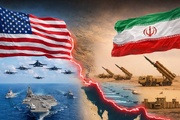
The United States and the Israeli regime launched unprovoked coordinated military strikes against Iran on February 28, 2026, targeting leadership, nuclear, military, and civilian sites across the country. The aggression prompted immediate and sustained retaliatory strikes by the Islamic Revolutionary Guard Corps (IRGC) and the Iranian Army against the Israeli-occupied territories and American interests in the region.
The war has resulted in 3,375 identified fatalities within Iran, with ordinary civilians being a significant number of it.
After weeks of hostilities, a fragile two-week truce was brokered by Pakistan and took effect on April 10, hailed by Tehran as an “Iranian victory” based on its 10-point peace framework. However, subsequent direct talks in Islamabad between the Iranian and American delegations, headed by U.S. Vice President JD Vance and Iranian Parliament Speaker Mohammad Bagher Ghalibaf, ended without reaching a peace deal on April 12 after 21 hours. Washington’s “excessive demands” regarding the Strait of Hormuz and Iran’s nuclear program were cited by the Iranian sources as the principal points of contention.
In order to shed more light on the dimensions of the war, Mehr News Agency reached out to Jianwei Han, Associate Professor of Middle East Studies Institute at Shanghai International Studies University, China.
Here is the full text of the interview:
The United States and Israel initiated this conflict without a United Nations mandate and in direct defiance of the UN Charter's prohibition on the threat or use of force. From a legal and political science perspective, what does this conflict reveal about the current state of the rules-based international order? If the permanent members of the Security Council can act as judge, jury, and executioner in their own disputes, what incentive remains for independent nations like Iran to trust the very institutions designed to prevent war?
The war launched by the United States and Israel against Iran is a unilateralist action without authorization from the United Nations, which proves that the rule-based international order since World War II is on the decline. The operating mechanism of the United Nations Security Council itself has flaws, namely the one-vote veto system. Under the background of the current international community becoming increasingly divided and fragmented, the interests and demands of the member states of the Security Council are often inconsistent. Even if a certain issue represents the interests and demands of the majority of countries, it may still be rejected by a few countries. This is the current predicament at the executive level of the United Nations, profoundly reflecting the pain and difficulties in the current transformation of the international order. This issue is likely to be difficult to change in the short term, which also makes it impossible for the current problems faced by Iran to be effectively resolved at the UN Security Council level.
The targeting of civilian infrastructure including hospitals, schools, and power grids, represents a clear policy of collective punishment. Yet, the response from international human rights organizations has been either muted, delayed, or selectively applied based on political alignment. As an observer of international affairs, what is the long-term damage to the moral authority of the human rights regime when it is seen as selectively blind to the suffering of certain populations?
I agree with your point. International human rights organizations should indeed morally condemn the actions of aggressors in killing innocent civilians and destroying civilian infrastructure. However, it seems they haven't spoken out much on the issue of Iran. Most of their offices are located in Western countries, and they take the democratic, human rights and freedom concepts of the West as their basic principles. These institutions have previously criticized human rights issues within Iran, so they hold a double standard towards Iran in this conflict. Even though they may not agree with the actions of the US and Israel, they haven't publicly condemned them. I believe that non-Western countries should not overly rely on the evaluations of existing international human rights organizations. On the basis of constantly improving their own human rights conditions, non-Western countries should gradually establish human rights standards based on their own.
When this war was launched, the declared objectives of the United States and Israel were unambiguous: the complete dismantlement of Iran's nuclear program, the elimination of Iran's ballistic missile program, and the creation of conditions for regime change in Tehran. Six weeks and a fragile ceasefire later, independent strategic assessments acknowledge that none of these three core objectives have been achieved. Iran's nuclear infrastructure, though damaged, retains significant capacity; missile attacks against the American and Israeli interests in the region continued until the final hours; and the Iranian political structure remains intact. In your assessment, why did a coalition with overwhelming technological and intelligence superiority fail to understand the reality in Iran and miscalculated about Iran's capabilities and response?
The United States and Israel do possess powerful intelligence-gathering capabilities, but this has also led to their overconfidence and misjudgment. They have little understanding of Iran's history and culture. Iran is a country with a civilization spanning several thousand years, and its people have a high sense of national identity and strong organizational capabilities. Throughout history, Iran has repeatedly repelled powerful external invaders, which is an integral part of its glorious past and plays a crucial spiritual role in enabling Iran to effectively resist the aggression of the United States and Israel today. The United States and Israel have seriously underestimated Iran's asymmetric counterattack capabilities and the determination and resolve of its people to safeguard their country's independence. Compared with intelligence capabilities, war will and determination are the key factors in determining the outcome of a war.
We are currently in a precarious interlude—a two-week ceasefire that, given the repeated violations by the Israeli regime, my end any second. From your perspective, what is the realistic pathway from this fragile pause to a durable and just peace?
The current ceasefire is very fragile, and Israel is highly likely to launch a war at any time. I believe that a lasting and just peace agreement requires both sides to make concessions and compromises. If only one side is asked to make concessions, there is basically no possibility of achieving a lasting ceasefire. Iran and the United States need to hold face-to-face talks. Over the past 40-plus years, the two countries have had no formal diplomatic relations, which has hindered normal exchanges and communication. Therefore, face-to-face talks to solve problems are very important. Although the talks in Islamabad have not yet achieved any results for the time being, it is a good start. Currently, the United States also has a strong desire to end the war, which coincides with Iran's. The two countries should overcome difficulties and continuously enhance direct communication, which is the only way to a lasting ceasefire.
Regardless of whether the current ceasefire holds or collapses, it is already evident that this war has fundamentally reshaped the geopolitical landscape of the Middle East and beyond. The conflict has diminished US credibility among its Persian Gulf Arab partners, and accelerated the shift toward a multipolar order where powers like China and Russia, as well as regional blocs like the SCO and BRICS, play increasingly prominent roles. As we look beyond the immediate crisis, what do you see as the most enduring geopolitical consequences of this war? Which actors emerge relatively strengthened, and which have been strategically weakened?
It is still too early to discuss the most profound geopolitical implications of this war. The spillover risks of this war are still expanding, and the future development is full of uncertainties. However, it cannot be denied that the war has evolved into a serious global energy and supply chain crisis, which has impacted the economic development of many countries, such as Europe, India, Japan, South Korea, Singapore, and other countries that heavily rely on energy from the Middle East, suffering a significant blow. As an important energy importer in the Middle East, China's economic development will also be affected if the crisis persists. Of course, we have seen that the oil prices and inflation levels in the United States are also rising. This war may temporarily relieve Russia's pressure, but the status of the United States as a world superpower should not fundamentally change due to this war. The world still needs to cooperate with the United States. Currently, the best outcome would be to end this war under the premise of ensuring Iran's security and interests. However, Trump himself and his team's choices remain the main uncertainty factor of this war.
Interview by Mohaddeseh Pakravan




Your Comment