


In international politics, defeat does not always begin with the fall of capitals or the retreat of armies. Sometimes a great power loses the moment its own citizens are no longer willing to bear the cost of their leaders' geopolitical ambitions. American history is full of such moments — from Vietnam to Iraq to Afghanistan. Wars that opened with promises of strength, security, and swift victory, only to end in domestic exhaustion, a crisis of public trust, and deep social fracture. Now it appears the Trump administration is entering that same grinding cycle in its confrontation with Iran — a cycle whose outcome will be determined less on the battlefield than in the economy, in public opinion, and in the political atmosphere inside the United States.
The atmosphere in America in 2026 is saturated with a fatigue that is difficult to ignore: fatigue with war, with endless military expenditure, and with promises that were never kept. Trump came to the White House on the pledge of "America First" and the restoration of economic greatness. He sought to project the image of a commanding leader who could force Washington's adversaries into retreat through the language of threat and pressure. But that very project of power demonstration against Iran has now become one of the most serious political and social crises of his presidency.
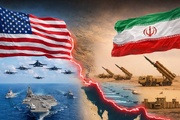
The central problem is that the war with Iran was neither brief nor cheap, contrary to initial expectations. Washington operated under the assumption that maximum economic pressure, combined with a display of military force, could bring Tehran to heel within a short period. Forty days of conflict have shown otherwise. Iran has managed the equation in a way that has trapped the United States in a war of attrition — one that places a heavier burden on the American government with each passing day.
In these circumstances, the core crisis facing Trump is not merely a failure in the geopolitical arena. The real crisis is the erosion of social capital at home. American public opinion is no longer receptive to costly, open-ended wars in the way it once was. After the bitter experiences of Iraq and Afghanistan, American society has arrived at a broad conclusion: military intervention does not reliably produce greater security or prosperity. On the contrary, these wars have repeatedly led to inflation, mounting national debt, the psychological trauma of returning veterans, and deepening political division.
Today, when an American citizen looks at their energy bills, the price of gasoline, or the rising cost of daily life, they draw a direct line between their own economic difficulties and Washington's aggressive foreign policy. This is the precise point at which war ceases to be a security question and becomes a livelihood crisis. For a family in Ohio or Pennsylvania, the presence of American aircraft carriers in the Persian Gulf carries no tangible meaning. What matters is rising fuel costs, inflation, and shrinking purchasing power. The longer the confrontation with Iran drags on, the wider the gap between the government and the public will grow.
More significantly, the current discontent is not confined to Democrats or to Trump's traditional opponents. Signs of doubt are visible even within the Republican base. A substantial portion of Trump's electoral coalition consists of working- and middle-class voters to whom he promised economic revival, the return of jobs, and an end to America's entanglement in draining foreign wars. That same constituency now senses that instead of focusing on domestic problems, the administration is consuming the country's resources in a costly external confrontation with no clear end in sight.
This has pushed America's political divide into more dangerous territory. Democrats accuse the administration of stumbling into a confrontation with Iran without a coherent strategy, bringing the country to the edge of a major crisis. Meanwhile, a growing segment of Republicans has quietly begun to waver. The situation is reminiscent of the final years of the Iraq War — when even its earliest supporters concluded that Washington had become mired in a swamp from which extraction would be enormously difficult.
Strategically, the Trump administration faces a genuine deadlock. Washington lacks both the capacity to escalate into a full-scale war and the political freedom to simply walk away from the confrontation. Full escalation would mean imposing staggering economic and human costs on the US— costs that American society is not prepared to absorb. But withdrawal carries its own severe political consequences for Trump, since it would widely be interpreted as an admission of defeat at the hands of Iran.
Iran, for its part, has managed the conflict at a level calculated to keep America permanently suspended in a state of "neither war nor peace." This is precisely the scenario that places maximum pressure on Washington — forcing it to absorb heavy military expenditure while simultaneously confronting the psychological and political toll of having no clear victory to point to. For a superpower, the gradual erosion of credibility and deterrence is sometimes more dangerous than a direct military defeat.
The reality is that the US's image as the world's unchallenged dominant power has suffered serious damage in recent years. The chaotic withdrawal from Afghanistan, the failure to contain successive regional crises, and now being drawn into an attritional confrontation with Iran have collectively sent a message to the world: Washington no longer possesses the capacity to unilaterally manage the international order as it once did. This is not merely an external crisis — it feeds a crisis of confidence within the US itself. A society that comes to believe its government can no longer control the course of world events will, gradually, lose faith in its own political institutions.
The US economy, meanwhile, cannot absorb another prolonged crisis. Rising military expenditure is occurring against a backdrop of heavy national debt, persistent inflation, and a widening class divide. War — or even sustained tension — in the Middle East has direct repercussions for energy markets, supply chains, and American economic stability. This has led many American analysts to warn that the continuation of this trajectory could become a decisive factor in the next election cycle.
Trump now finds himself in a position where every available decision carries a cost. Escalating the confrontation risks widening the crisis and intensifying domestic discontent. Pulling back risks having his political opponents brand him as weak and defeated. The American government is, in practical terms, caught in a strategic trap — one with no easy exit and no clear path to victory.
What is visible in the US today is, above all, the slow-motion collapse of the dream of "power without consequence." For decades, American politicians worked to sustain the belief that Washington could simultaneously remain the world's unchallenged military force and maintain domestic prosperity. But repeated experience has demonstrated that prolonged wars ultimately wear down America's social and economic fabric from within.
Perhaps the most significant shift underway is this: American society no longer trusts the official narrative about war the way it once did. People are asking why billions of dollars should be spent on conflicts that produce no tangible benefit for their daily lives. That question is the point at which the legitimacy of Washington's aggressive foreign policy begins to crack.
The Trump administration is confronting a crisis of legitimacy not in the streets of Tehran, but in the streets of America. Its principal opponent is not Iran alone — it is the erosion of public trust, economic pressure, and a society that is no longer willing to foot the bill for endless wars. History has demonstrated, repeatedly, that powers unable to strike a balance between foreign ambition and domestic stability will eventually face crisis from within. The greatest threat to the "Make America Great Again" project may be precisely this: a war that was meant to be a demonstration of strength has become Washington's Achilles' heel.
MNA










Your Comment