


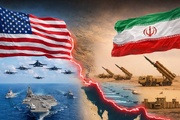
A senior member of the Iranian parliament's National Security and Foreign Policy Commission has pushed back firmly against the US naval blockade, saying Washington has failed to achieve any of its objectives and that Iran is actively expanding the trade corridors it needs to render such pressure irrelevant.
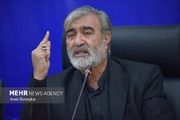
Ebrahim Rezaei, who also serves as spokesperson for the commission, told Mehr News Agency that the blockade represents a continuation of the same conflict that began with direct military engagement. "The nature of their war a few weeks ago was military — fighter jets and missiles. Now they have turned to a naval blockade, trying to force the Iranian nation into submission," he said. "We are not in a ceasefire. This is phase two of the same war."
Rezaei was categorical in his assessment of the blockade's impact. Iran's oil exports, he said, are flowing without interruption, and Iranian vessels have already navigated past the attempted restrictions. He attributed Washington's inability to enforce an effective blockade to a fundamental lack of operational capacity, not merely political will.
"A country with 15 neighbours simply cannot be blockaded," he said. "What the Americans have done is largely symbolic. In practice, it has had little meaningful effect on us."
The lawmaker pointed to a diversified transit infrastructure that predates the current crisis. Beyond the Persian Gulf and the Strait of Hormuz, Iran maintains active rail and overland routes that have been further strengthened in recent months. He highlighted the Caspian Sea as a key corridor for sustaining connectivity with Russia and China, and stressed the strategic urgency of completing the North-South Transport Corridor.
"We have been planning and building alternative routes for some time," Rezaei said. "We are continuing to diversify our trade and transit options, and those efforts are accelerating."
On a related legislative front, Rezaei confirmed that the commission has completed its review of a strategic bill concerning the management of the Strait of Hormuz. The legislation, which incorporates input from multiple parliamentary committees and government bodies, is now ready to be put before the full parliament for a vote.
MNA










Your Comment