


As the Iran war entered its third month with no clear end in sight, a delegation of independent journalists and media commentators from the West and the region traveled to Iran to report from the ground — offering a rare counterpoint to the dominant Western narrative of the conflict. Among them was Bushra Shaikh, a British-Pakistani broadcaster and political commentator. The delegation traveled across the country — from Tehran to Isfahan, Bandar Abbas, and beyond — visiting attacked sites, attending nightly rallies, and documenting a society that bore little resemblance to the picture painted by mainstream media. Mehr News Agency sat down with Shaikh in Tehran to ask about her experience of visitinh the country after a 40-day military conflict.
Here is the full text of the story:
What motivated you to come to Iran during this critical situation — and what surprised or impressed you most during your visit?
What motivated me to come the second time around in Iran has to be challenging the establishment legacy media stereotypes of Iran. For us in the West, we are inundated with stories and coverage about Iran that can often be one-sided. So you don't really get a balanced picture. And for a journalist like me, I think ground coverage, especially in the time of war, is essential to good journalism. The opportunity to come and really report on what was happening inside of Iran, speaking to people, getting a sense of what the impact of war can be like — for any journalist, that is a huge opportunity. And deep down, for me personally, it was also to help build a bigger picture of who the Iranian people are, what their culture is, to give a real perspective.
To say what has been a monumental time for me in Iran would be difficult because I've been to places like Isfahan, which I've fallen in love with. Truly, it does not do it justice to watch it on Google or the internet. You have to visit Isfahan to really get the depth of how amazing this historical art, culture, and community is, which has existed for civilizations beyond so many years. And that's just a tiny drop in the ocean of what Iran is. Isfahan is one place. There is this collectivity of art, culture, faith, religion, music, dance, poetry — and it's in every part of Iran, but there are also different parts of Iran. I would say to people: if you visit Iran once, it's not enough. You would have to come multiple times. And you don't realize how big Iran is until you come.
How does what you witnessed here on the ground differ from the narrative pushed by Western mainstream media?
That's such an important question — to really debunk this existing storyline, because I feel it is a fabricated story. Often, people don't understand that the political weaponization of people is used in order to manufacture consent, to dehumanize them, to wage wars against them. And that's what we've seen play out here in Iran — to dehumanize Iranians, to say that perhaps they are not so civilized. This understanding that a group of people — for me, it is mere ignorance on behalf of those who don't know enough. The idea that when you don't live in the West, when you live in West Asia or South Asia, somehow you're not worthy or not equal as a human being — for me, that is one of the biggest things I find as a journalist that I need to challenge. And coming to Iran just speaks volumes about their level of intelligence, their level of understanding, of deep-rooted culture.
But there is something very important that I learned about being in Iran — it is a culture that is inclusionary, meaning it accepts everyone. It doesn't matter what race you are, what your background is. Being Iranian means to accept a form of a system, ideals that are positive ones, and you collectively share them. So it's not attached to your skin color. It's just a way of life and a frame of mind. Speaking to what we know about Iran — or what we're told about Iran in the West — there is a huge, huge disparity, a huge difference from witnessing what is the truth here.
What have the Iranian people personally told you about how they have experienced this war?
When I speak to people, everyone has their own version of how they're feeling in terms of war. We've spoken to people who were immensely frightened. It's the first time for them that they've listened to drones and planes flying over the skies. It has had a mental and psychological impact on many people. Then I was speaking to some people that it has made them even more patriotic — to stand and rally around their flag. It's made them braver and stronger.
That's the majority of people. The fact that I've witnessed rallies every single evening — I don't think I have come across that in my career in the years that I have worked in any other country before. That for me is unprecedented. And to show people outside of Iran, people in the West, that these rallies are real — it's not AI. There are hundreds and thousands of Iranians that come out despite their jobs, despite being tired. They take their flag because for them, that is how they show the rest of the world that they are trying to resist this imperialist move into their country. That for me is a form of power. It's a form of power for the Iranian people.
But the general attitude I feel from a lot of people is — even if, like any other nation, they may have been critical of some policies inside of Iran, maybe they didn't agree with everything in their government — most of us have that. I live in the UK. I criticize my government on lots of things. But what I do know is that nobody I've spoken to inside of Iran would ever ask for the USA or Israel to bomb them. That is very, very clear.
On the ceasefire negotiations between Iran and the US — what are your thoughts? Do you believe a lasting peace deal will be achieved?
If I'm being completely honest, no. And I say that reluctantly, because all I would want for Iran is to have peace. But Israel likes forever wars. And the problem at the center of the issue is that Israel acts as the central destabilizing force in this region. And until that is dismantled, we are going to see continuous cycles of violence in this region, unfortunately. I think that's something that the international community — including the EU, including the UK government — really has to address.
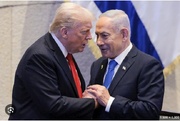
The US and Israel — they are in harmony, they are in sync. You can almost say that they are married to each other. So when Israel wants to wage war, we saw it: Donald Trump agreed and said, okay, fine, let's have an illegal aggression against a sovereign nation. So while Israel exists in its current form, as Zionism exists as this entity, these are wars that are going to go on. Reluctantly, I say that I think it is going to be difficult in these negotiations to have a complete and permanent end to war.
But there is hope that there will be a ceasing of aggression. And I hope that Iran gets everything that they want in the ten-point plan. But I think that's a long journey, because when Israel is involved — we have to call it what it is. Their expansionist plan is not me saying it — it is their own ministers who address this publicly, who tell people publicly that their movement is an ideological movement, a religious movement. And those very people are also embedded into Congress, into the government of the United States of America.
Interviewed by Mohaddeseh Pakravan




Your Comment