


Speaking to Mehr News Agency, Pakistani Political Analyst Javed Rana explained Iran has emerged from the recent conflict with increased strategic confidence, describing the outcome as a shift in regional power dynamics following Tehran’s confrontation with both the United States and the Israeli regime.
In remarks on the regional implications of the war, Rana said Iran’s response had demonstrated its ability to challenge established military balances and project itself as a decisive actor in the region.
"I think Iran has gained strategically. This is a new Iran—an Iran that did not surrender, an Iran that has emerged victorious. I believe this sends a message, particularly to Israel: the days when no one could challenge it are over. Iran has challenged both the United States and Israel in a manner that has effectively established it as one of the leading regional powers," he said.
He argued that one of the most significant consequences of the conflict was the disruption of the Israeli regime's expansionist trajectory, adding that the war had sent broader signals across the Middle East.
According to Rana, Persian Gulf states hosting American military facilities are likely to reassess their security calculations, as recent events have raised new questions about the effectiveness of long-standing defense arrangements with Washington.
He said the presence of foreign military bases may increasingly be viewed by some regional governments as a strategic liability rather than a source of protection.
"Essentially, through this war, Iran has stopped the expansionist agenda of apartheid Israel. That is the underlying message. More than that, Iran has also sent a clear message to the [Persian] Gulf states, many of which have been part and parcel of these crimes through their informal alignment with the Americans and with apartheid Israel: if they continue to host American military bases, they may come under attack."
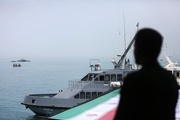
Rana also pointed to Iran’s position around the Strait of Hormuz, saying Tehran had demonstrated continued leverage over one of the world’s most sensitive maritime corridors despite military pressure near coastal areas.
He suggested that any future escalation involving Iran could quickly affect shipping routes through the strait, with potential consequences for global energy markets.
"Iran has also demonstrated that it can influence the global economy by blocking the Strait of Hormuz. Militarily, despite heavy bombardment by the United States and Israel along the coastal areas near the Strait of Hormuz, Iran managed to continue restricting access for the Americans and their allies. I think the world now understands that Iran controls the Strait of Hormuz, and if anything happens in the Middle East—if Iran is attacked again—the first measure Iran is likely to undertake will be to block the Strait. This is a message that has clearly reached both the [Persian] Gulf states and the Western powers."
On possible diplomatic developments, Rana said Tehran is unlikely to alter its position on preserving its civilian nuclear activities and ballistic missile capabilities in any future negotiations.
He added that Iran also appears increasingly focused on securing broader guarantees for regional allies.
"As far as negotiations are concerned, my understanding is that Iran will not compromise on retaining its civilian nuclear program. Iran will also certainly not compromise on its ballistic missile program. Very importantly, this time Iran also appears determined to ensure that its regional allies remain protected, and it seems to be positioning itself to compel the Americans not to follow Israel unconditionally."
Referring to developments related to the Gaza Strip, Rana said the broader regional conflict has intensified international scrutiny of Tel Aviv and contributed to deeper debate inside the United States over long-term strategic commitments.
He said growing divisions within American political circles suggest that support for the Zionist regime is being debated more openly than before, particularly in the context of wider regional instability.
"We know that during the genocide in Gaza, global opinion became increasingly aware of the Zionist regime’s agenda. Public opinion shifted, and hostility toward Israel increased worldwide. I think that with the war against Iran by both Israel and the United States, one thing has become even clearer: Israel now stands increasingly isolated, even within the United States itself."
"There is a growing division within the American establishment. Many now understand that Israel has become a liability. It may only be a matter of time before the United States begins reducing its support for apartheid Israel. Once Israel is left on its own, it will not be easy for it to continue committing aggression and genocide against the Palestinians. This war has also highlighted the Palestinian cause in a very forceful manner."
Rana also described Pakistan as an important political factor during the crisis, saying Islamabad maintained an independent position despite pressure from some regional partners, including Saudi Arabia and the United Arab Emirates.
"It has also demonstrated that Iran has allies, including countries such as Pakistan, which acted in a very intelligent way during this crisis. Despite Pakistan’s friendship pact with Saudi Arabia, it did not yield to Saudi pressure, nor did it bow to pressure from the UAE. In fact, the UAE reportedly asked Pakistan to attack Iran, while also using financial leverage related to a loan of over three billion US dollars previously extended to Pakistan. Yet Pakistan preferred to repay that loan rather than comply. I think this is significant: Pakistan has emerged at least as a political ally of Iran."
Rana also argued that this could create space for future regional coordination involving Iran, Pakistan, Afghanistan, and Turkey.
"This is why I believe the time has come for Pakistan, Iran, and Afghanistan to form a larger bloc, potentially alongside Türkiye, in order to prevent future wars."
He also referred to broader discussions over possible regional security arrangements involving Pakistan, Egypt, Turkey and Saudi Arabia, suggesting that Iran could eventually be considered in such frameworks if regional tensions persist.
"There is already discussion of a broader military alliance involving Pakistan, Egypt, Türkiye, and Saudi Arabia to contain Israel’s expansionist agenda. I think the time will come when Iran is also included, because the expansionist designs of apartheid Israel are now visible to everyone. There is now a much greater realization that the core problem in the region—and perhaps in the world—is Israel," he concluded.
MNA








Your Comment