


In the aftermath of the forty-day war and the failure of the United States and the Israeli regime to achieve their objectives against Iran, the world is witnessing a period now being referred to as the New Era of the Persian Gulf. This concept gains its full significance only when examined against the backdrop of concrete shifts and evolving perceptions among regional actors. For decades, the Persian Gulf was the arena of a security order built on the presence of extra-regional powers — most prominently the United States — a presence long marketed as the primary pillar of stability. Today, however, signs of erosion in that very model are multiplying, and new narratives are taking shape that define security from an altogether different vantage point.
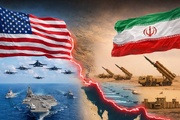
Against this backdrop, recent regional developments — and the narratives that have crystallized around a limited yet consequential confrontation between Iran and the United States and its allies — are emerging as a pivotal inflection point in this shifting equation. In this reading, what transpired is not merely a military exchange; it is a moment in which the image of power itself has been altered. The prevailing interpretation within this framework is that the United States failed to achieve its stated objectives and that this failure has, for the first time at a meaningful scale, reinforced the perception that the balance is shifting. This shift in perception has left its mark on the thinking of decision-makers and on public opinion alike.
One of the earliest consequences of this new reality is the gradual delegitimization of the concept of "imported security." Countries that had for years defined their security in terms of dependence on foreign military presence are now confronting a pointed question: has this dependency actually produced durable security, or has it instead become a driver of heightened tension? Recent experience has deepened the suspicion that foreign military presence — particularly amid intense geopolitical rivalries — generates crises more than it contains them.
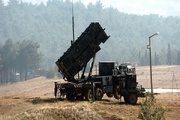
In the same vein, reliance on American military bases has come under scrutiny. Once regarded as symbols of deterrent power, these installations are now being recast in some analyses as points of vulnerability and even as catalysts of tension. When the perception takes hold that such infrastructure cannot effectively defend its partners — or that it has itself become a potential target — it is only natural that its deterrent function erodes in the regional consciousness.
From these developments, one significant conclusion has emerged: the American presence is increasingly perceived not as a stabilizing force, but as one of the principal sources of instability. This shift in outlook has created conditions for a more serious engagement with the idea of reducing or ending foreign military presence in the region — an idea that, until a few years ago, largely remained at the level of rhetoric but is now gradually entering the practical vocabulary of regional policy.
Following this same trajectory, the concept of "regional security by regional states" has gained considerable importance. This approach rests on the premise that the littoral countries of the Persian Gulf, despite their differences, share a common interest in the stability of this waterway and can, through dialogue and joint mechanisms, secure their own security. Though still confronted with serious challenges, this idea has been put forward as a genuine alternative to the traditional model and is steadily accumulating political weight.
In this context, Iran is seeking to position itself as one of the anchors of this emerging order — an effort grounded in a combination of hard and soft elements. At the hard level, emphasis is placed on expanding deterrent capabilities and reshaping the adversary's calculations. The cost of any military action against Iran has risen substantially, effectively transforming the military option from a low-cost choice into a serious risk. This shift in perception has registered in the behavior of regional actors.
At the soft level, a separate process is underway: a gradual transformation of public opinion across the region. Nations that had long lived under the assumption that foreign power presence was a guarantor of security are now reviewing that belief. Narratives that frame this presence as a source of instability rather than a safeguard are spreading, preparing the social and political ground for larger changes. This shift in consciousness moves slowly — but once consolidated, it rarely reverses.
One focal point of these transformations is the Strait of Hormuz — a route whose significance extends well beyond geography. Long recognized as one of the world's critical energy arteries, the strait has acquired new dimensions in this New Era. It is now understood as a strategic lever in the balance of power: a chokepoint where any change in status can generate consequences far beyond the region.
Within this framework, Iran's management of the Strait of Hormuz has become a key issue. This management is not merely geographic control; it means active agency in shaping the region's security and economic equations. As one of the primary actors in this strait, Iran holds the capacity to influence global energy flows — and, by extension, global calculations. That capacity reinforces Iran's geopolitical standing in this emerging order and renders it an actor that cannot be ignored.
From another angle, the heightened salience of the Strait of Hormuz is a reminder that geography retains decisive political weight. In a world where technology and economics have assumed ever greater importance, certain locations — by virtue of their singular position — retain the power to shape macro-level dynamics. The Strait of Hormuz is one such location, and in the New Era, its importance commands recognition that surpasses even what came before.
Ultimately, what is being described as the dawn of a new era in the Persian Gulf is a complex of interconnected trends reshaping the face of the region: eroding confidence in imported security; growing skepticism about the utility of foreign military presence; an expanding role for regional actors; strengthened deterrence; shifting public opinion; and the heightened strategic relevance of chokepoints such as the Strait of Hormuz. Together, these are the hallmarks of a transformation already underway.
MNA






Your Comment