


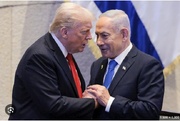
At the 80th United Nations General Assembly, as world leaders condemned the regime for its crimes in Gaza, Benjamin Netanyahu opened his address with accusations against Iran and regional resistance movements. He went further, issuing a direct threat against Iraqi Resistance groups and openly declaring them a target.
This threat, seen as a blatant violation of Iraq’s sovereignty, prompted a response from Iraqi Foreign Minister Fuad Hussein, who stressed that any strike on an Iraqi citizen would be treated as an attack on the entire nation.
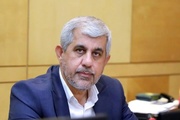
In an interview with Mehr News Agency, political analyst Mohammad Bagher Heidari offered his perspective on the issue. Below is the transcript of the discussion:
Netanyahu’s remarks at the United Nations General Assembly are not new at all. We have heard these statements many times from various officials at different levels of the Israeli regime. It is not new that they intend to strike the Iraqi resistance. This is nothing new.
An incident happened about a year ago and at that time Iraq took the matter to the United Nations and so on. In any case, at that time we saw that the attack was prevented.
Now, the developments taking place in Iraq have two dimensions — or, in any case, the doctrine of the Israeli regime regarding Iraq has two dimensions. One dimension is regional and the other is internal to Iraq. The regional dimension is such that Israel’s view of Iraq and of the Iraqi resistance is in no way separate from its view of the region as a whole. Israel’s attitude toward Iraq is the same attitude it holds toward the region: it seeks to expand its influence across regional countries, to implement the “Greater Middle East” project, and to realize the so-called David Corridor. You know the David Corridor — Israeli officials, at the highest levels, are openly talking about it. That corridor would cover a significant part of Syria and a significant stretch from Erbil and Sulaymaniyah to western Iraq; it is by no means a small matter. They are speaking openly about the David Corridor.
The regional situation is such that they are openly discussing, for example, the David Corridor. Another point about the regional dimension is that from the start we heard repeatedly from Israeli officials — both military and political — that Israel would be engaged on seven fronts. Of those seven fronts, Israel has already entered and conducted military operations on six. One front remained: Iraq. If we list the seven fronts — Gaza, the West Bank, Lebanon, Syria, Yemen, Iran — military action has taken place in those arenas. In some places they achieved certain successes and made advances, such as in Syria; in others they were unsuccessful, like the Iran front. But in practice they entered six fronts; one remained, and that was Iraq. From the beginning they announced that they would enter the Iraq front.
Regarding whether the Iraqi Resistance will be cornered or isolated by these threats: realistically, the resistance groups in Iraq are not a single organization; they are multiple groups. If they were one unified group like Hezbollah, the calculus would be different. But several groups exist, and that changes things militarily and strategically. Realistically, Iraq has not been allowed by the United States to possess meaningful air defenses — it does not have S-300s or S-400s, nor any significant air-defense system. There is also no common border with the Israeli regime, so any attacks, if they occur, will almost certainly be air strikes. There are no defenses and the radar systems were degraded — a year ago in the 12-day war they even targeted Baghdad’s radars covertly — so in practice, Iraq’s airspace would be open to Israel.
The withdrawal of American forces is itself a point worth noting. This raises questions: why did the Americans withdraw from Iraq at this timing? They did not fully withdraw; they vacated bases like Victoria and Ain al-Assad and relocated to Harir in northern Iraq in the Kurdistan Region. This decision had been planned years ago, intended to take place in 2025, but its timing now suggests that where the Americans retreat, predictable security incidents tend to follow. There were similar dynamics in Afghanistan and elsewhere: when the US pulls back, there is often a designed plan that leads to instability. Perhaps a new chapter of unrest is being opened in Iraq.
This American pullback, combined with Israeli threats and with actions by a group similar to ISIL and is now spreading throughout Iraq; its only current difference from ISIL is that it hasn’t taken up arms yet — suggests that there may be a program for Iraq’s future. For example, two weeks ago they killed a cleric in Baghdad; on the one hand the Americans stepped back, and on the other hand these kinds of events may follow. All of this indicates that the world may witness a new season of unrest in Iraq.
So what is the role of the Iraqi resistance groups? About a year ago there was an agreement between these groups and Prime Minister Sudani. At the height of the attacks on Gaza a year ago, the Iraqi resistance unified under the label “Islamic Resistance of Iraq” and were targeting the Israeli regime daily with drones and missiles. Some days they carried out up to eight drone or missile strikes; some were intercepted by air defenses and never reached Israel, and some did penetrate and caused damage. At that time the threat to Iraq became very serious. Iraq filed a complaint at the United Nations when those threats were made. But then an agreement was reached between the groups and the prime minister — a calm agreement: they would not attack for the time being. There was also, at that time, a statement from Ayatollah Sistani, which led to a temporary calm.
What is the basis of that agreement? It basically says: The Resistance will stand down for now; as resistance groups we will refrain from action. If Iraq itself is attacked by the Israeli regime, then the government should come forward — issue a protest, a forceful condemnation, strong language — and then leave the response to the Resistance; then they will strike, they will target American interests in Iraq if necessary, and they will hit the Israeli regime again. So will the resistance be isolated? I think that outcome is unlikely. I don’t think they will become isolated.
What was the official position of the Iraqi government? The Iraqi foreign minister issued a statement condemning those remarks; they took the standard protocol position. Now, because elections are approaching in Iraq, political tensions are high and party clashes have increased. There are contradictory messages from political circles and from the public because, with the election heat rising, different actors push different narratives.
Why are these threats surfacing now? Again, it’s connected to the elections. The likely winner in the upcoming election is the Coordination Framework alliance; they will likely prevail. This presents a potential danger for Israel, so the threats are being issued now. Analysts believe they aim to disrupt the elections. If the elections are disrupted, al-Sudani’s government will effectively become a caretaker administration with limited authority until new elections are resolved. The existing government will no longer have the same prerogatives; its powers will be constrained. The existing divisions in Iraq could then turn into a new chapter of chaos. These threats, timed in the run-up to the elections, indicate an attempt to derail the vote.
All of this suggests a new season of instability in Iraq. Moreover, the Baʿathists — yes, those Baʿathists who were supporters of Saddam are being supported too, to enter the electoral system and the government. All of this shows that it is not only the Iraqi Resistance groups that are targets; the whole of Iraq — Iraq’s security, Iraq’s stability, and all of Iraq’s resources — are being targeted.
Until recently, over the past year or two, Iraq experienced an unprecedented level of calm. But now it appears to be planned that this calm should be disrupted.
MNA/








Your Comment