


Senator Bernie Sanders has recently slammed Donald Trump over his reported suggestion to rename the Strait of Hormuz after himself, saying Americans want the president to focus on ending the war in Iran instead. Sanders argued that the conflict has pushed diesel and petrol prices higher, adding that the economic toll of the war matters more than renaming a strategically important waterway.
“You’re the President, not a mad king. Act like it,” Sanders said in a post on X, directly rebuking Trump’s proposal amid the worsening US-Israel-Iran conflict.
The “mad king” in American history clearly refers to King George III of Great Britain, the same king who in the 18th century stood up to the rebellion of the American colonies and eventually accepted American independence in one of the most significant defeats in the history of the British Empire.
The thirteen American colonies entered into conflict with Britain in protest at London’s policies. George III was not willing to simply back down. He was concerned that American independence would not be limited to the secession of these colonies and that other parts of the British Empire would follow suit. Therefore, preserving the authority of the empire was of great importance to him.
But the outcome of the war was exactly the opposite of what London had expected. The Eight Years’ War eventually ended with the defeat of Britain and the recognition of American independence in 1783. This part of history is where Sanders’ quip about Trump makes sense. He is, in effect, trying to connect two historical images: a king who believed he could control rebellion by relying on military might and royal authority, and a president whose critics now accuse him of relying too much on threats, pressure, and displays of power.
Of course, George III cannot be simply summed up as a “mad king.” He did indeed experience periods of severe illness, and at times displayed unusual behavior and extreme agitation. His condition deteriorated sharply in his final years, and he virtually withdrew from the public sphere. However, he spent much of his reign actively, interested in agriculture, art, science, and music; to the point where he was nicknamed “Farmer George.”
The comparison today is also noteworthy in another sense. American historian Rick Atkinson, comparing George III to Trump, said: “George III is Abraham Lincoln compared to Trump.”
This sentence practically shows the intensity of the criticism directed at Trump. Atkinson is not saying that George III was a perfect ruler; rather, he wants to say that even the figure known in American political culture as the “Mad King” can look like a very different person compared to Trump’s behavior and political style.
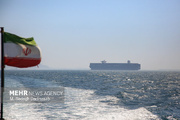
From this perspective, the issue of the Strait of Hormuz also becomes more important. The Strait of Hormuz is one of the most important energy waterways in the world, and its name was established centuries before the formation of the United States and the current American political system. Therefore, the plan to rename it after a president, even if it is presented in the form of a symbolic or political position, is a sign of excessive personalization of power for Trump’s critics.
Sanders is aiming for exactly this point. He wants to say that in a situation where the war and crisis in Iran have affected regional security and the global economy, the US president should not be concerned with showing personal power or registering his name on a historical waterway.
From Sanders' perspective, the priority should be ending the war; not continuing threats, not expanding the scope of the conflict, and not turning an international crisis into a stage for the president to show off his power.
Of course, this criticism is not only directed at Trump's policy towards Iran. His critics believe that Trump's foreign policy model in many international crises has been based on maximum pressure, military threats, and the use of force to impose America's demands. The problem with such an approach is that showing power does not necessarily mean achieving a political result.
The history of George III provides a classic example of exactly this: military power can temporarily control a crisis, but if it fails to create a political solution, it can ultimately have the opposite effect.George III wanted to preserve the British Empire; he lost America. Now, Sanders says, Trump should also be mindful of the limitations of the presidency, rather than insisting on war and threats.
For that, the phrase “You are the president, not a mad king” should not be seen as a mere verbal attack on Trump. It is actually a reminder of one of the most fundamental political narratives of America: the narrative that the American Revolution was founded on the centralized power of a king and that the new republic was founded on the idea of limited power.
Now, 250 years later, a US senator is presenting the same historical image to his country’s president. Sanders' message is clear: No matter how much military and political power the American president has, he is not meant to be a king; and if war, threats, and displays of power replace politics and diplomacy, history has shown that even the greatest powers may end up achieving precisely the outcome they did not want.
MNA








Your Comment