

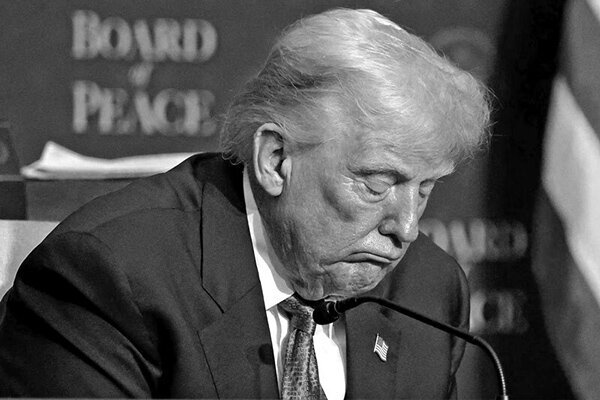
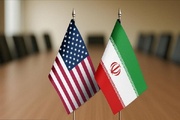
A new Telegraph report shows that the gap between Washington’s initial calculations regarding the aggression against Iran and the reality on the ground has grown wider by the day. The Telegraph has reported that Donald Trump’s war with Iran, which according to the U.S. president was supposed to last only three weeks, has after six months turned into a war of attrition that is costly and drawn-out. According to the newspaper, Washington has not only failed to achieve its initial objectives, but the war has also created wide-ranging consequences for the region and the global economy. The Telegraph further emphasizes that Trump underestimated Iran’s ability to resist the world’s most powerful military force; to the extent that a war intended to bolster Trump’s political legacy could now become a lasting negative mark on his record.
The starting point of this war was a clear calculation in Washington: inflicting heavy military strikes on Iran would, within a short period, force Tehran to back down. This calculation rested on a fundamental assumption, that the enormous gap between U.S. and Iranian military capabilities would quickly translate into a political gap, and Tehran would be compelled to accept the cost of continued resistance.
But what unfolded on the ground diverged from this scenario. Iran was able, by drawing on its military and strategic capacities, to transform the war from a short, one-sided operation into a costly conflict. This does not mean that Iran is equal to the United States in terms of military power; rather, it means that Tehran succeeded in raising the costs of continuing the war for the United States and its allies.
In asymmetric wars, this very issue is of decisive importance. The weaker side does not necessarily seek to directly defeat the greater power; instead, it tries to raise the cost of victory so high that achieving political objectives becomes difficult. If Washington’s goal was to end the war quickly and impose its demands, the prolongation of the conflict for six months demonstrates that this initial calculation was not consistent with the reality on the ground.
The United States remains in a superior position in terms of air power, technology, intelligence, logistics, and strike capability. But war is not a purely military equation. The ultimate question is when military power can be converted into a political outcome.
Washington may be able to destroy targets and inflict heavy blows, but if it cannot—despite this superiority—end the war within its desired timeframe and compel the other side to accept its demands, it faces a strategic problem.
Indeed, six months of continued war is a significant indicator. A war that was supposed to end in three weeks has now become a prolonged crisis, which means the United States has been unable to manage the war within its expected political and temporal framework.
From this perspective, the main issue is not merely the damage inflicted on Iran; it is also the cost that the continuation of the war imposes on the United States itself. Military expenditures, force deployment, maintaining operational readiness, economic pressure, and political repercussions all increase over time. The longer the war drags on, the wider the gap between the cost paid and the expected political gain can become.
The most significant development of this war must be sought in the transformation of the “cost equation.” The United States entered the field assuming it could impose the costs of war on Iran, but Iran sought to demonstrate that continuing the war is not without cost for the United States either.
This is perhaps the most important aspect of the matter. Iran did not enter the war to alter the military balance with the United States; such a claim is fundamentally incompatible with the reality of the two sides’ power. The more effective objective is to prevent U.S. military superiority from being converted into a cheap political victory.
By resisting military pressure and maintaining its response capability, Iran has succeeded in raising the cost of Washington’s miscalculations. This same issue can also affect America’s future calculations. For if a great power knows that entering a war with Iran will not necessarily lead to a quick victory and may result in a prolonged and costly conflict, the decision to use military force again will become more difficult.
This matter is not limited to the United States. Other powers and Washington’s allies are also watching this war closely and drawing an important lesson from it: possessing military superiority does not necessarily mean having the ability to determine the political outcome of a war.
The most important issue in the six-month war between Iran and the United States is not merely the prolongation of the conflict; it is the collapse of a strategic calculation. Washington assumed it could use its military superiority to turn a short, controlled war into a political victory; but Iran managed to change this equation and raise the cost of continuing the war for the United States.
Therefore, America’s failure should not be sought solely in the sense of a military defeat. The more significant issue is the failure to rapidly achieve political objectives despite possessing overwhelming military superiority. A war that was supposed to last three weeks continues after six months. This fact alone shows that part of Washington’s initial calculations did not materialize.
Ultimately, perhaps the most important message of this war for the United States is that it cannot compel a country like Iran to submit quickly merely by relying on military power. Iran has shown that even against a far superior power, it is possible to constrain the opposing side’s decision-making space by raising the costs of war.
If this trajectory continues, the issue will no longer be confined to the war between Iran and the United States; Washington’s strategic credibility and the image constructed of America’s ability to impose its will in the international system will also enter a new phase.
MNA













Your Comment