


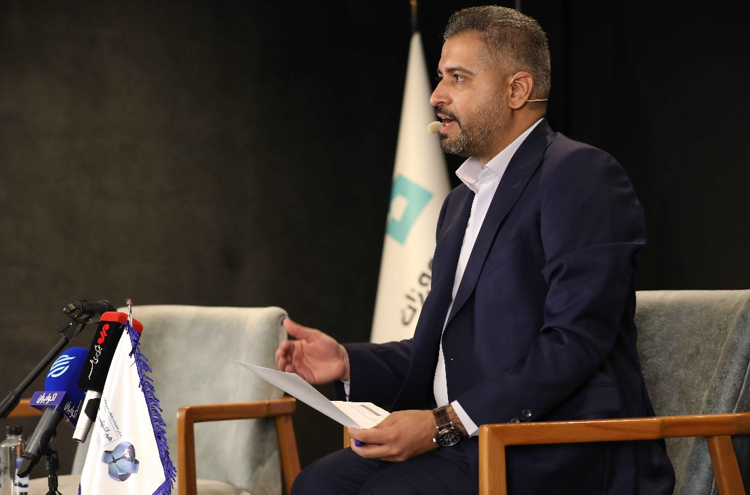
Senior experts and analysts on strategic issues, at the “Second Annual Conference on Securitization of Iran in the Field of Narcotics and Organized Crime” held in Tehran in July 2026, warned about the formation of an imminent and orchestrated threat against the Islamic Republic of Iran and the “Axis of Resistance.” Based on the discussions raised at this specialized meeting, the change in the pattern of drug cultivation and production in Afghanistan, after the Taliban regained control, was assessed not as a local event, but as a turning point in the megaproject of shifting the focus of international accusations to the Iranian borders. A process in which the attempt to “de-securitize” Afghanistan’s image in the international arena came at a heavy price for the “securitization” of Iran and labeling of the Axis of Resistance as “narcoterrorism.”

Prelude: The Fifth File and Change in Tone of International Institutions
Accordingly, CUDRAS Think Tank began its second annual conference entitled “Securitizing the Islamic Republic of Iran in the Field of Narcotics and Organized Crime” with two specialized panels focusing on the increasing trend of international accusations against Iran in the field of organized crime. In explaining and clarifying the dimensions of this imminent threat, Research Deputy Director of CUDRAS Think Tank Dr. Mansour Barati pointed to a noticeable change in the literature and reports of international institutions, especially the United Nations Office on Drugs and Crime (UNODC).
According to him, until before 2018, the Islamic Republic of Iran was always praised by the international institutions as the main barrier and frontline in the fight against drug transit and from this period on, a meaningful discourse shift emerged in the reports.
In this new approach, concepts such as “inadequate oversight,” “voluntary disregard,” and “lack of effective confrontation” replaced previous assessments. Experts present at the meeting emphasized that this change in language was not accidental and was designed to open a “Fifth Security File” against Iran. A file that, after nuclear, missile, regional policy, and human rights issues, now intends to use the area of “drugs and organized crime” as a new lever of pressure against Tehran.
Axis of Resistance is accused of "narcoterrorism"
An important part of the meeting was earmarked to examining the link between the securitization of drugs and the West’s confrontation with the Axis of Resistance. In his speech titled “The Securitization of Drugs in the Realm of the Axis of Resistance,” Dr. Nozar Shafiei explained the cognitive and political mechanisms of this phenomenon. Using the concept of “otherization,” he explained that the system of domination initially defined the Axis of Resistance as an absolute “other” that threatened the existing order.
According to this analysis, once a political entity is established as the “other,” the use of any hard or soft tool against it becomes legitimate. In this context, in addition to military pressure, economic sanctions, and psychological and propaganda warfare, a new tactic called the accusation of “narcoterrorism” (drug-based terrorism) was activated against the Axis of Resistance. Experts emphasized that the ultimate goal of making such accusations is to morally delegitimize resistance groups and justify security confrontations at the international level; in such a way that even in the absence of solid evidence that these groups are involved in the production or transit of drugs, the Western media machine systematically attached this label to them.
The Afghanistan Paradox: Insecurity Origin, Security Destination
The conference continued by examining the role of Afghanistan as the main focus of recent changes in the global drug market. Referring to the paradoxical situation of Afghanistan, Dr. Ebrahim Mottaqi described the country [Afghanistan] as a clear example of a geography involved in the global security order; a country that, despite apparent contradictions, has been able to redefine its position in complicated international equations.
Meanwhile, Dr. Nozar Shafiei exposed a major contradiction in official international narratives. Referring to the alleged huge volume of industrial drug production, especially methamphetamine or crystal meth, in Afghanistan, he raised the question that the production of such a volume requires infrastructure and a large area of cultivation for which there is no clear evidence. The key point in this section was the supply cycle of “chemical precursors.” According to experts, industrial chemical precursors for crystal production were mainly supplied from European countries and sent to the region, but in the end, the label of production and security threat was attached solely to the countries of the region. In this unfair process, “the origin (European supplier of precursors) is de-securitized, but the destination countries of the region are securitized.”
Changing the Narcotics Paradigm: The Taliban's Strategy for Gaining Legitimacy
The middle and crucial part of the report of this meeting was devoted to examining the consequences of the Taliban's change of approach after returning to power. Referring to satellite images and documentary reports from institutions such as UNODC and the Alexis Institute, Dr. Mansoor Barati confirmed that after the fatwa of the Taliban leader, the area under poppy cultivation and the production of opioids in Afghanistan faced a significant decrease.
However, experts emphasized that this measure was more of a targeted and purposeful political action than a radical fight against the drug problem. By reducing poppy cultivation, the Taliban pursued multiple goals, including defamation, gaining international prestige, moving towards recognition in the world system, and receiving international financial assistance. But the other side of this coin was a sharp and worrying increase in methamphetamine production in Afghanistan. Analysts believe that the Taliban, faced with the production of methamphetamine, which is justified by the use of the ephedra plant in this country, either did not have the serious will to confront it or purposefully tried not to lose the huge financial resources generated by this new market.
The confluence point: De-securitizing Afghanistan, Securitizing Iran
The final outcome and most important warning of this conference was the confluence of the Taliban’s strategy and the approach of international institutions against Iran. As poppy production declined, Afghanistan gradually began to “de-insecure” and clean up its image in international reports. But the alternative crisis, the tsunami of opium production, required a new culprit.
At this point, the project of shifting the blame to the Islamic Republic of Iran was launched. Based on the discussions at the meeting, recent international reports were framed in a way that claimed that Iran was not taking the necessary seriousness in dealing with methamphetamine trafficking. Beyond that, dangerous accusations were made that “kitchens” and glass production laboratories were being moved from Afghanistan to the Iranian borders. These accusations directly completed the puzzle of Iran’s security. In fact, changing the production pattern in Afghanistan became a tool to remove the blame from Kabul and introduce Tehran as the new center of production and transit of industrial materials. This scenario is the same imminent danger that is directly connected to the concept of “narcoterrorism” and was used as a tool for legal, political, and economic pressure on Iran and the Axis of Resistance.
Results and Conclusions
The “Second Annual Conference on Securitizing Iran in the Field of Narcotics” wrapped up with the conclusion that the developments in the field of narcotics in Iran’s eastern neighborhood are no longer a purely law enforcement or social issue, but rather a “major security-political project.” De-securitizing the Taliban’s image on the poppy issue came at the cost of creating an existential threat and building an international case against Iran.
The purposeful silence of international institutions regarding the entry of chemical precursors from Europe and, on the other hand, highlighting the claim of transferring methamphetamine (crystal) production laboratories to Iran, indicates a full-scale cognitive and legal war. At the end of this meeting, experts emphasized the necessity of adopting active diplomacy, media enlightenment at the international level, and presenting documented narratives by the Islamic Republic of Iran so that the shadow of this fabricated threat is lifted from Iran and the Axis of Resistance before the “Fifth File” becomes a global consensus. Countering this trend requires understanding the fact that securitization is a political and media process that can only be neutralized with active activism and multilateral diplomacy.
Compiled and Translated by: Morteza Ahmadi





Your Comment