


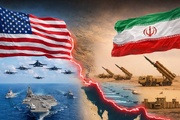
The forty-day war that Donald Trump launched with the aim of changing Iran's behavior and imposing Washington's demands was supposed to end with a swift and decisive victory. Trump repeatedly spoke of Iran's "unconditional surrender" and imagined that military pressure could put Tehran in a position where it would have no choice but to accept America's terms. But the developments after the war paint a different picture—a picture that even American media outlets acknowledge.
CNN, in a report recalling Trump's stances on "Iran's unconditional surrender," wrote that Tehran has not only not surrendered, but has hardened its demands regarding the Strait of Hormuz. The American media outlet viewed Iran's positions on Hormuz as a sign that Tehran assesses it has greater bargaining power vis-à-vis Washington.
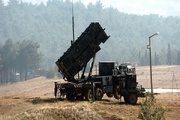
CNN also cited the depletion of American weapons stockpiles as one of the factors that could be influencing this calculation in Tehran—an issue that shows the prolongation of the war has not only imposed costs on Iran, and that America has also faced limitations in its military capacity.
The Goal That Was Not Achieved
Trump's initial calculation was built on a simple assumption: America's military superiority could force Iran to back down in a short period. In this view, the military strikes were not merely meant to cause destruction; rather, their main objective was to change Iran's political behavior.
But there is an important difference between inflicting military damage and achieving political victory. A country may be able to destroy targets, but if it cannot compel the other side to accept its political demands, it has not yet attained strategic victory.
What matters today is precisely this gap between goal and outcome. Trump began the war with the language of surrender, but Iran has not only not surrendered, it has adopted a tougher stance on one of the most critical regional issues, namely the Strait of Hormuz.
This development shows that Tehran has managed to transform part of the military pressure into a political and strategic issue. In other words, Iran has sought to raise the cost of continued pressure for the United States and to use available tools to strengthen its bargaining position.
Why Is Hormuz Important?
The Strait of Hormuz holds particular significance in this equation. This waterway is one of the world's most vital energy transit routes, and any instability there can affect the oil market and the global economy.
For this reason, Hormuz is not merely a shipping lane for the United States. A significant part of America's military presence in the Persian Gulf region over the past decades has been justified by the issues of energy security, freedom of navigation, and the protection of oil transit lines.
Now, if Iran can turn Hormuz into an effective lever in negotiations and bargaining, this not only signifies an increase in Tehran's power; it also raises questions about the efficacy of America's military presence in the region.
Washington began the war wanting to reduce Iran's ability to influence the regional environment. But if, after the war, Tehran can enter negotiations over Hormuz with a harder stance, this outcome would be exactly contrary to America's original objective.
That is why CNN's reference to the Strait of Hormuz is significant. The outlet is, in fact, speaking of a shift in Iran's bargaining position—a shift that shows Tehran does not see itself merely as a party under pressure, but still views itself as possessing levers it can use to increase America's costs.
Weapons Stockpiles and the Issue of a Protracted War
Another factor CNN mentioned is the depletion of American weapons stockpiles. This issue is of great importance from a strategic perspective.
America's military power is built upon a vast array of weapons, bases, defense systems, and military production capacity. Yet even such power faces the problem of consumption and replacement of equipment in a protracted war.
In a short war, technological superiority and high offensive volume can be decisive. But the longer the war drags on, the more important production and replacement capacity for weapons, the costs of war, and the ability to sustain military pressure become.
From this perspective, Iran's calculation is not shaped solely by the damage inflicted on the country. Tehran must see to what extent the United States is capable of maintaining its level of military pressure.
The depletion of weapons stockpiles, while not signifying American incapacity, can raise the cost of continuing the war. This very issue may alter the opposing side's calculations and allow Iran to emphasize its demands with greater confidence in any potential negotiations.
The Difference Between Military Victory and Strategic Victory
One of the most important lessons of the war is the difference between military success and strategic victory.
One side may inflict heavy blows on the battlefield, but if it cannot achieve its desired political outcome, one cannot speak of the full realization of the war's objectives.
Trump's declared goal was Iran's surrender. Therefore, the primary measure of Washington's success must be whether Tehran has, at the end of the war, agreed to accept America's core terms.
What CNN is now reporting about Iran's positions on Hormuz indicates that the answer to this question is, at the very least, not simple or clear-cut.
If Iran, after enduring the pressure of war, can maintain its positions and even escalate some of its demands, this means that the United States has been unable to extract the political outcome it expected from its military superiority.
Under such circumstances, the debate over which side has suffered greater damage gives way to a more important question: which side has managed to retain more bargaining power at the end of the war?
The Pressures That Rebound on America
The war has also imposed costs on the United States. The depletion of weapons stockpiles is only one of these costs. The financial costs of the war, the consumption of munitions and equipment, the strain on military production capacity, and the consequences for the energy market create a set of challenges for Washington.
This is the point at which Trump's initial calculation encounters a contradiction. Washington wanted to force Tehran into retreat by increasing costs for Iran; but the continuation of the war has simultaneously transferred costs to America itself.
On a global level as well, any increase in uncertainty in the Persian Gulf region can affect the energy market, oil prices, maritime transport, and the economies of various countries.
The outcome of the war is therefore not determined solely within the borders of Iran and the United States. The longer the war continues, the broader the scope of its costs will become, and more countries will be exposed to its consequences.
The Strait of Hormuz: A Symbol of the Shifting Equation
Under such circumstances, the Strait of Hormuz has become an important symbol of the shifting equation. The United States wanted to use military power to reduce Iran's ability to use regional levers. But Iran is now putting forward the Strait of Hormuz as one of the main axes of its demands.
This development should be seen within a larger framework. Iran is trying to show that the region's security cannot be defined solely through the presence of foreign powers, and that regional actors can still influence security and economic equations.
From this perspective, Hormuz is not merely an issue of oil or shipping; it is part of the contest over the future of the Persian Gulf's security order.
Conclusion
The forty-day war was supposed to bring Iran to the point of surrender, but now even American media outlets speak of a shift in Tehran's calculations and an increase in its bargaining power.
Iran has not surrendered, has adopted a tougher stance on Hormuz, and the depletion of American weapons stockpiles has been noted as one of the factors influencing Tehran's calculations.
This does not mean ignoring America's military power or the damage inflicted on Iran; rather, the issue concerns the political outcome of the war.
Trump began the war to change Iran's behavior, but if, at the end, Tehran is still capable of advancing its own terms and even hardening them, then one must acknowledge that a considerable gap has emerged between what Washington envisioned at the start of the war and what has occurred in the political arena after the war.
The calculation that was supposed to bring Iran to surrender has now become a test of America's ability to impose its will—and that, precisely, is the clearest sign that Trump's original equation has been inverted.
MNA










Your Comment