

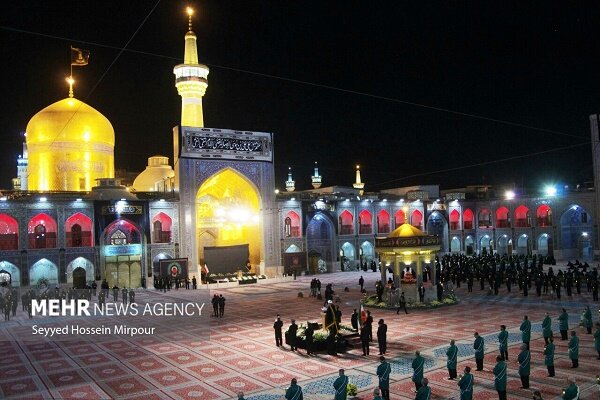
Introduction: Imam Ali ibn Musa al-Reza (AS), the eighth Imam of the Shiites, is one of the most important religious, scientific, and moral figures in the history of Islam. His position is not limited to the followers of the Shiite religion, because many of the moral and social principles attributed to him, such as respect for humanity, defense of justice, the importance of knowledge, and peaceful dialogue, are universal values.
For a reader who is less familiar with the history of Islam and Shiism, Imam Reza (AS) can be introduced as a figure who established a connection between faith and reason, knowledge and morality, and spirituality and social responsibility. The message of his life is that a faithful and informed person should be responsible and moral not only in his worship and personal beliefs, but also in his dealings with others and in the face of social problems.
Knowledge is valuable when it is accompanied by morality: One of the most important messages of Imam Reza (AS) is to pay attention to the position of science and knowledge. In his view, knowledge is a means to better understand the world, truth, and human responsibility. However, science alone cannot guarantee human happiness. If science is separated from morality, it may serve domination, discrimination, war, or harm to humans and the environment.
This perspective is of great importance in today's world. Scientific and technological advances have transformed human life in many areas; but these same advances have also raised new ethical questions. The use of artificial intelligence, biotechnologies, advanced weapons, and personal data all require moral responsibility.
From this perspective, the legacy of Imam Reza (AS) reminds us that scientists, universities, governments, and society must be accountable for the consequences of the use of science. Science leads to real progress when it serves human dignity, reduces suffering, and improves public life.
Dialogue instead of hostility: Human society has always faced religious, cultural, philosophical and political differences. Differences of opinion are a natural part of social life; however, intellectual differences should not lead to hatred, violence or exclusion of others.
In the narrations related to Imam Reza (AS), scientific dialogues with followers of different religions and schools of thought have a special place. The importance of these dialogues is seen not only in the topics raised, but also in the way of approach. Effective dialogue is based on listening, reasoning, respect and avoiding humiliation of the other party.
This method has an important message for the contemporary world. In an era when social networks and mass media can exacerbate differences, rational and respectful dialogue is more necessary than ever. Humans can cooperate with each other on common issues such as peace, poverty, the environment and human rights, despite differences in beliefs.
From an ethical perspective, dialogue does not mean ignoring one’s own beliefs; rather, it means accepting the fact that others also have the right to express their views and should be treated fairly.
Human Dignity; The Basis of Social Relationship: Another important principle in the message of Imam Reza (AS) is the preservation of human dignity. Human dignity means that every person, regardless of wealth, position, nationality, religion, or social status, deserves respect.
This principle is particularly important in dealing with the poor, the sick, immigrants, prisoners, minorities, and disadvantaged groups. Helping those in need should not humiliate them. Real support is valuable when, in addition to meeting their needs, it also preserves the dignity and independence of the individual.
In today’s societies, this concept can be considered in social policymaking, educational and health systems, and the way public services are provided. A moral society is not one that focuses solely on increasing wealth, but one that does not allow people to be deprived of their basic rights because of poverty, illness, or disability.
Imam Reza’s (AS) message is clear in this regard: the value of a person does not depend on the amount of his wealth or power. The treatment of the weakest members of society is one of the most important criteria for the morality of that society.
Justice; a duty for all: Justice is one of the fundamental concepts in Islamic teachings and a value shared by different cultures. Justice does not only mean punishing criminals or formally enforcing the law; it also includes respecting the rights of individuals, preventing discrimination, fairly distributing opportunities, and supporting those who are powerless to defend themselves.
According to this view, justice is not the sole responsibility of governments. Governments and public institutions have an important responsibility in creating justice, but citizens, families, universities, civil society organizations, and those with economic power are also responsible for injustice.

For example, a teacher can provide students with opportunities to grow by treating them fairly; a doctor can help achieve justice by respecting the rights of patients; an employer can prevent discrimination in the workplace; and every citizen can be indifferent to the humiliation and deprivation of others.
From this perspective, justice is not a limited and temporary measure; rather, it is a way of life and regulating human relationships.
Moral stability in difficult circumstances: Human life is not always accompanied by easy and calm conditions. Political, social, economic, and family pressures may place individuals in situations where it becomes difficult to maintain moral principles. In such circumstances, moral stability becomes particularly important.
The lesson that can be learned from the character of Imam Reza (AS) is that patience does not mean surrendering to oppression or giving up responsibility. Patience can mean maintaining calm, avoiding hasty decisions, and consciously defending truth and justice.
A person under pressure may compromise moral principles to protect their short-term interests.
The relevance of these messages to contemporary world issues: The ethical principles associated with Imam Reza (AS) can be linked to many of the world's issues today:
1) In the field of technology: knowledge must be used responsibly and with attention to human consequences.
2) In intercultural relations: differences must be managed through dialogue and mutual understanding.
3) In the fight against poverty: support for the needy must be accompanied by the preservation of their dignity and rights.
4) In social systems: law and opportunities must be made available to people without discrimination.
5) In personal life: a person must maintain his honesty and moral principles in the face of pressures.
6) In political and social relations: power must not lead to the humiliation, exclusion or deprivation of others.
These issues show that the message of Imam Reza (AS) does not simply belong to the past. This message can also be considered in today's conversations about peace, social justice, human rights, education, professional ethics and civic responsibility.
Conclusion: The legacy of Imam Ali ibn Musa al-Rida (AS) offers the world a set of human and moral values: knowledge should serve the common good; differences of opinion should be managed through dialogue; human dignity should be preserved in all circumstances; justice is a universal responsibility; and moral stability in the face of difficulties is important.
For the foreign reader, studying these principles is an opportunity to get acquainted with a part of Islamic thought and Shiite culture. These messages, while having religious roots, are not limited to one nation or religion. Respect for humanity, justice, dialogue, responsibility, and defense of truth are values that can create bonds between different societies.
For this reason, Imam Reza (AS) can be considered not only a historical and religious figure, but also a symbol of the bond between faith, reason, and morality; a figure whose teachings can still invite today's man to build a more just, peaceful, and humane society.
MNA












Your Comment