


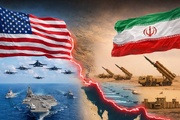
The 40-day war should not be analyzed solely in terms of missile attacks, air operations, and military losses. The real significance of this war lies in the change it created in the strategic calculations of the region. The United States entered the conflict with the aim of changing the balance of power, but eventually, it faced an Iran that had not been eliminated from the regional equations, its network of regional relations and capacities had not disappeared, and even some of Tehran’s levers of power had become more prominent. In contrast, the cost of US military presence for Washington and its allies has become more apparent than ever before, posing a fundamental question for the region: Does the continued US military presence really contribute to the security of the West Asia?
The answer to this question must be sought in the performance of the United States over the past few decades. Washington has justified its military presence in West Asia with two main arguments: to counter security threats and to ensure the security of energy routes and freedom of navigation. But if the US military presence is supposed to guarantee stability, the recent war has revealed a serious contradiction; because this presence could not prevent one of the world's most important waterways from becoming the center of crisis.
The US problem is not just a failure to achieve some military goals. The 40-day war of aggression showed that Washington still has a very high destructive power, but destructive power is different from the ability to build a post-war political order. The US can target a country’s infrastructure, eliminate military commanders, and reduce the capabilities of opposing forces, but if it cannot change the behavior of actors according to its desire, military superiority will not necessarily turn into strategic victory.
This is where Iran’s regional power becomes important. Over the past years, Tehran has built a set of security, missile, drone, political, and regional capabilities that can be linked together in times of crisis. The recent war showed that these capabilities cannot be destroyed simply by striking a few centers or eliminating a few commanders. Iran retains the ability to respond and impose costs on the other side, and the geography of the region also allows Tehran to increase the cost of any large-scale confrontation.
This is where Washington and Tel Aviv's calculations collided with reality on the battlefield. They believed that a heavy blow to Iran could dismantle not only Tehran's power but also its network of regional allies. But the developments after the war, at least according to the assessment of some Western media and think tanks, do not confirm such a conclusion.
In its assessment of the war, Foreign Affairs Magazine writes that the US-Israeli strategy was based on the assumption that by targeting Iran’s military, economic, command and supply infrastructures, Tehran’s network of regional allies would also collapse; but this did not happen. According to the magazine, Hezbollah remains an effective actor, Yemen has resumed its operations, and Iran has retained the ability to deliver punitive strikes. Foreign Affairs Magazine describes this network as a flexible structure that has the capacity to rebuild even after heavy blows.
This assessment demonstrates the failure of a long-held belief in Washington that the West Asia could be reshaped to suit American interests by eliminating or weakening one actor. The experience of war has shown that the region is far too complicated to be engineered by military force.
But a larger contradiction emerged in the Strait of Hormuz. The United States has justified its military presence in the Persian Gulf for decades with the need to ensure energy security and freedom of navigation. However, the recent war showed that this presence has not been able to prevent the Strait of Hormuz from becoming one of the main crisis points.
Referring to this contradiction, Foreign Affairs Magazine writes that for years, Washington thought that the US presence in the region would guarantee freedom of navigation, but the US-Israeli war against Iran led to the closure of the Strait of Hormuz, and the US military was unable to force it open. This proposition is very important for Washington. If the US military presence is supposed to guarantee the security of energy routes, but a war with direct US participation leads to a crisis in the same routes, this presence can no longer be justified simply under the title of “ensuring security”. In such circumstances, even US allies must ask themselves whether their security dependence on Washington really makes them safer or exposes them to the consequences of US wars.
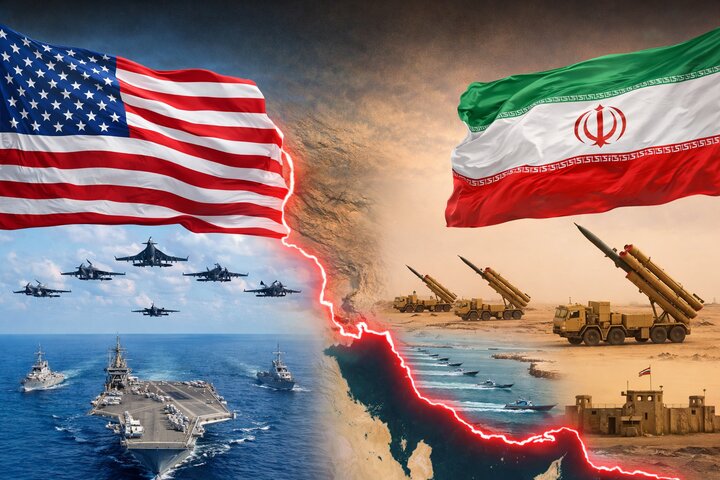
The Persian Gulf littoral states have spent billions of dollars for years buying American weapons and have accepted American military bases on their soil. However, the 40-day war showed that they cannot escape the consequences of a direct conflict between Iran and the United States. Military bases, energy facilities, and critical infrastructure associated with the American presence could become part of the conflict equation.
This is the paradox that must be discussed explicitly: Does the presence of the United States increase the security of the countries of the region or expose them to wars that they themselves did not initiate? This is where the necessity of the United States' withdrawal from West Asia arises. This withdrawal does not mean cutting off Washington's political, economic, or diplomatic relations with the countries of the region. The discussion is about ending the permanent military presence and the notion that the security of the Persian Gulf must be permanently ensured by the army of a foreign power.
Incidentally, Foreign Affairs suggests that the Persian Gulf littoral states create new security arrangements among themselves, arrangements that do not rely on Washington. This suggestion could be seen as a sign of a change of perspective even in Western strategic circles. If, after decades of American presence, the countries of the region still have to seek to create an independent security mechanism, the question arises as to how successful the existing security model has been.
The United States also has strong incentives to reconsider. Decades of war and intervention in West Asia have taken a heavy human and financial toll on Washington, while its strategic gains have remained limited. The United States is facing simultaneously the increasing competition with China in East Asia and security challenges in Europe. Continuing a large presence in West Asia means devoting some of America’s military and political resources to a region whose core issues cannot be resolved by military force.
The 40-day war made this cost more tangible. The United States entered the war with enormous military power, but it was unable to remove Iran from the regional equation. Iran’s regional dominance, domestic deterrence, and geopolitical position have increased the cost of any new war for Washington. This reality makes a continued US military presence not only costly but also strategically less useful.
America's withdrawal from the region could be an acceptance of a new reality. The security of West Asia must gradually be handed over to the countries of the region themselves. Iran, Saudi Arabia, the UAE, Iraq, Oman, and other countries in the region will have to live side by side in the same geography and find local mechanisms for their differences.

The 40-day war sent a clear message to Washington: America could wage war in West Asia, but it could no longer guarantee that it would end the war the way it wanted.
So the main question should no longer be how America can maintain its presence in the region; the more important question is how it can exit the region.
More than it needs American soldiers, ships, and bases, West Asia needs a homegrown security order. The recent war has shown that the continued US military presence is not only not the solution to the region’s problems, but in times of crisis, it can itself become a factor in exacerbating the crisis. It is time for Washington to accept this reality and choose an exit path rather than repeating the cycle of intervention and war.
MNA














Your Comment