


Following the resistance of Hezbollah in Lebanon and retaliatory operations against the Zionist regime, as well as the efforts of Iran, a ten-day ceasefire was established between Lebanon and Israel. Although Trump considered the agreement to this ceasefire to continue negotiations with Iran to achieve peace, one should still doubt the goodwill of the United States due to the violation of a series of promises. In this regard, the following points should be considered:
1. About ten days ago, following the failure of the US and Israeli military attacks against Iran and the increasing domestic and foreign pressure on the Donald Trump administration, Washington was forced to stop the war and accept Iran's ten-point proposals as the basis for negotiations. These negotiations, which were held with the mediation of Pakistan and in Islamabad, did not yield any results due to the US's excessive demands and the presentation of unacceptable proposals. In recent days, after the failure of the negotiations, we have witnessed the US expressing its renewed willingness to negotiate and repeating and reflecting this issue in the media by American officials. This expression of willingness increased after the US failed to blockade Iran at sea, and led the Chief of Army Staff of Pakistan to travel to Iran to continue the mediation.
2. The "negotiation-oriented" positions of Trump and other American officials in recent days and after the failure of the Islamabad meeting could be a kind of psychological operation to divert public opinion from Washington's failure in the naval blockade of Iran and to present a peaceful image of the United States. After announcing a ten-day ceasefire between Lebanon and Israel, Trump brazenly announced that he had ended the ninth war after eight previous wars, following peaceful measures. The truth is that Americans are not inclined to resolve problems and issues through diplomatic means, and their expressions of interest in continuing negotiations should not be counted on. In fact, Trump's contradictions can be considered a kind of "speech therapy" that has its roots in the increasing pressures on the US government. In other words, the high costs of the war imposed on American society and the economic consequences of regional developments, including rising prices in global markets and Iran's smart and decisive management of the Strait of Hormuz, have caused Trump to cover up his military and political failures by re-introducing negotiations and establishing a ceasefire in Lebanon.
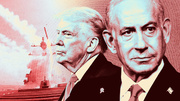
3. American officials, through Pakistan, agreed to the ten-point plan of the Islamic Republic of Iran as the basis for negotiations, but subsequently, we witnessed the violation of the ceasefire by Israel. From the very beginning of the ceasefire, Benjamin Netanyahu opposed the important clause of the Iranian plan that stated that there should be no attacks on Lebanon as well, and contributed to the failure of the Islamabad talks by committing widespread aggression against civilian areas in the Arab country. The continuation of these attacks on southern Lebanon and the killing of defenseless people, along with Trump’s move to establish a ceasefire in Lebanon, can be seen as a kind of division of duty between Washington and Tel Aviv. In other words, the United States leaves Israel free to attack Lebanon for a while and then agrees to a ceasefire to prevent Hezbollah’s retaliatory actions and demonstrate its interest in establishing peace. In fact, the United States itself has effectively found itself in the position of violating the ceasefire, an issue that confirms this country’s hidden approach to supporting the Zionist regime.
4. Pakistan's role in this process as a "facilitator of message exchange" is respectable and can make the country a more influential player. However, at the same time, the success of these measures depends more than anything on America's adherence to its commitments, and in the event of a breach of promise, a lasting ceasefire cannot be assured. In the Islamabad talks, America once again proved that it does not believe in diplomatic solutions, respect for Iran's national sovereignty and territorial integrity, and the establishment of a comprehensive ceasefire in Lebanon. In the process of mediation, Pakistan must know America well and know which country it is on the side of. American officials do not think about anything other than securing their national interests in the negotiations, and with this description, how can one hope for success in the second round of negotiations?
5. The decision and performance of the officials, both in the field and in diplomacy, are respected and supported by the great Iranian nation, but it should also be noted that the United States raises the issue of diplomacy and negotiation in order not to be introduced as a warmongering party. Accordingly, while the powerful hands of the Iranian armed forces are on the trigger, the respected and supported negotiators of the nation must continue their diplomatic efforts and defend the rights of the Iranian nation, with complete distrust of the United States and suspicion of its intentions.
MNA









Your Comment