


The new wave of oil tanker seizures, regime changes in resource-rich states, and the increasing tensions along major shipping routes are not unrelated. Together, they suggest an intentional tactic. Washington wants to choke off China’s access to energy, particularly oil that flows outside Western directions. What we are seeing is not just about sanctions or individual countries. It is part of a larger blueprint to stanch China’s energy lifelines and return it to a world order dominated by the United States and its allies.
China has quickly emerged as one of the biggest purchasers of crude oil from countries under Western sanctions, including Iran, Venezuela, and Russia, since the war in Ukraine started. These deals didn’t take place overnight. They were forged through changing alliances, emerging financial connections, and a newfound openness among Global South producers to turn East when it comes to building longer-term relationships. China stepped in to offer a lifeline to these countries as the West tightened restrictions, and in exchange secured research facilities, discounted fuel, and political support that have helped power its industrial recovery.
The U.S. response has been multilayered and aggressive. Sanctions, litigation, blacklists, and maritime interdictions have become the go-to tools. These are not policies directed at Iran or Venezuela alone. The real target is China. Each time a ship is seized or cargo diverted, Beijing’s access to non-Western energy sources wanes.
A U.S.-supported military action had kidnapped Venezuela’s president in early 2026. This was not so much to bring democracy back as it was an attempt to control the oil. Washington declared it would send Venezuelan crude to American refineries, which require heavy oil. The same oil had been flowing earlier to Chinese refiners in long-term repayment arrangements. China suddenly risked losing nearly 400,000 barrels a day, shaking up its refining margins and energy planning.
This was not the first blow. Several Chinese refiners were blacklisted in 2025 for buying oil from countries under sanctions. American courts brought lawsuits against shipping companies that carried Iranian crude. The seizure of the Suez Rajan was a loud signal. Any vessel aiding China to circumvent sanctions could be a target. Even insurance and port access were wielded like pawns.
Still, China did not retreat. In 2023, however, it imported over 11.3 million barrels a day, with nearly 2.1 million of those coming from Russia. Iran’s oil, which has been sold at between 8 and 10 dollars per barrel below Brent prices, is still finding its way to Chinese refiners, frequently through rebranded or circuitous routes. China receives more than 80 percent of all of Iran’s oil exports. These flows are as building for China’s growth as they are a lifeline for Iran economically locked out of Western markets.
Iran has adapted to survive. It is using offshore transfers, indirect shipping, and alternative payment systems to move its oil east. These methods are critical. Disturbing them is more than an assault on government revenue. It affects the lives of average people. When Washington goes after this corridor, it weaponizes energy against entire populations.
As if all this were not enough, Pakistan is watching. Our nation, as with a lot of the Global South, enjoys its energy security by opening markets and pump investments to diversify sources. But access in and out is no longer determined strictly by demand. It depends on political affiliation now. If a China as muscular and economically powerful as this cannot stand up to these pressures, what hope is there for smaller countries that cannot exert the same leverage?
The message is clear. Energy and foreign policy are now indissolubly linked. Sanctions are functioning like sieges. Oil is being employed as a weapon of pressure. And there are fewer neutral pathways for countries in the Global South to obtain affordable energy. This model is not sustainable.
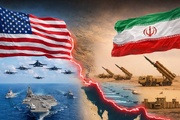
There is also an increasing danger of miscalculation. With the United States extending its enforcement activities to far-flung shipping lanes and chokepoints such as the Strait of Hormuz, the space for diplomacy has narrowed. Iran’s patience has limits. Bolton on China is unlikely to accept endless disruption. Another seized tanker or fallen ally could set off repercussions well beyond the economic.
This is not just a fight over oil. It is a clash of systems. Control by Washington is now clashing with cooperation by Beijing. One polices deviation, the other constructs alternative routes. In this fight, Iran and Venezuela are not simply oil providers. They are symbols of resistance to a world order that privileges the few and writes off the rest.
The future of global energy is now not only controlled by the market. Now it is formed by politics and power. Iran and China have already picked their sides. The remaining Global South will now have to decide whether they will remain neutral, join the line, or stand up.
Muhammad Akmal Khan is a Pakistani journalist and foreign affairs analyst. He writes on South Asia–Middle East relations, conflict diplomacy, and media freedom under war.







Your Comment