


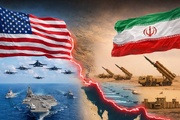
In a new rhetoric, Trump wrote in a recent postIn a post published on his social media platform, Trump wrote that if Iran “shoots and violently kills peaceful protesters,” the United States would “come to their rescue.”
The US government once again intervened in Iran's internal affairs under the guise of human rights and protecting the people.
In fact, Trump's remarks are in fact a continuation of the same historical US approach; an approach in which the internal issues of countries are not considered independent issues, but rather levers for political pressure and instruments of international pressure.
Intimidation rhetoric and a history of deadly interventions:
Trump tries to present his remarks in the form of supporting the people, but a closer look shows that this approach is an extension of the same logic of US interventionism in different parts of the world. Recent history shows a lot of examples of the US entering countries claiming to “support the people” and the result has not been an improvement in the well-being of the other nations, rather it has led to the widespread destruction and killing of civilians. Iraq, Afghanistan, Libya and Syria are just a few examples; countries that, after direct or indirect US intervention, distanced themselves from stability and experienced deep humanitarian crises.
The use of expressions such as “preparedness for action” and “decisive response” by a senior American official, even if they are ostensibly accompanied by human rights terminology, has a clear political message: threatening a sovereign state. This type of rhetoric contradicts Article 2, paragraph 4 of the UN Charter, which prohibits any threat or use of force against other nations' sovereignty. History shows that the United States has in many cases interpreted these principles based on its political interests, which has rendered its human rights claims invalid.
US behind the Iranian people's hardships
One of the central points that Trump has neglected in his claims is that Washington itself plays the most part the economic, political, and livelihood pressure on the Iranian people. Washington's unilateral and comprehensive sanctions are not limited to political or military areas and have affected broad sectors of the economy, trade, the banking system, and restricted access to medicine and medical equipment. In such circumstances, the claim of support for the Iranian people by a government that is itself the architect of these pressures is not acceptable at all but is also a clear example of political abuse of the concepts of human rights.
Sanctions have affected the daily lives of the Iranian people: rising living costs, shortages of essential goods, restrictions on the import of medicine and medical equipment, and disruptions to economic exchanges are all consequences that directly affect ordinary people. The clear fact is that economic pressure is a direct result of US policies, not a measure to protect the rights of the Iranian people. Any statement by Trump about “saving the people” is in fact a cover to legitimize a record of pressure and sanctions.
Moreover, just a few months ago, Iran was the target of an attack carried out with the direct involvement of the United States. Innocent women and children lost their lives in the operation. A country with such a bloody record against the Iranian people is in no position to claim that it is a defender of Iranian people's rights.
Double standards and political abuse of protests
Another contradiction that Trump and his allies ignore is the way the United States deals with its own domestic protests. Widespread protests in the United States, from the Black Lives Matter movement to other demonstrations, have always been met with harsh responses from the US police and security apparatuses and have been repeatedly criticized by human rights organizations. This fact shows that a country that suppresses its own protesters is in no position to judge other nations.
Even US media outlets close to the conservative movement in the US have acknowledged these contradictions. Critical commentary in media outlets such as Fox News shows that Trump's interventionist rhetoric does not have a consensus even within the US, and that a portion of public opinion is aware of its negative consequences. Internationally, historical experience has shown that the US and some of its allies have repeatedly tried to use domestic protests as a lever for political pressure; an approach that, instead of helping to resolve issues, has often led to more complicated situations and heightened tensions.
Conclusion:
Trump’s meddlesome post was just in continuation of the US pressure, threats, and sanctions. Experience shows that the US intervention has neither contributed to regional stability nor improved the situation of other nations. The Iranian nation, relying on its historical experience and domestic capacities and potentials, has repeatedly shown that the path to solving its problems lies within society and without external guardianship. In the meantime, a reality that should not be ignored is that a significant part of the existing pressures is a direct result of America’s sanctions and interventionist policies. Accepting this reality is the first step to any honest dialogue about the situation of the people and the future of international relations. Trump and Netanyahu received a severe blow from the resistance of the Iranian people during the 12-day war, and now they are trying to try a failed plan once again. Experience has shown that any foreign intervention or pressure from outside not only does not solve problems, but also strengthens national resistance and cohesion. Trump's threats and human rights gestures, more than being real, indicate the continuation of the same interventionist policies and despair of direct confrontation with Iran.
MNA




Your Comment