


In a meeting with the people of East Azarbaijan on Tuesday, the Leader of the Islamic Revolution referred to the acknowledgment by the President of the United States regarding Washington’s 47-year failure to eliminate the Islamic Republic, describing the statement as a “good admission,” while also emphasizing that the current president will likewise be unable to achieve such an objective. This position stems from confidence in an objective reality: the organic bond between the Iranian people and the establishment of the Islamic Republic.
Understanding this point is key: in the intellectual framework of the Leader, the “Islamic Republic” is not merely a legal construct or a government separate from society. The Islamic Republic is the organized manifestation of the historical will of the Iranian nation; a nation that, in 1979, through its revolution, set aside the previous dependent order and chose a model of governance based on political independence, religious identity, and popular participation. From this perspective, the people and the government are not separate concepts, but a single reality at two levels: the social level and the governing level.
This conception of power fundamentally differs from the prevailing understanding in many Western analyses. In the dominant Western view, national power is largely measured by hard indicators such as military capability, gross domestic product, or alliance networks. However, in the discourse of the Islamic Revolution, social power — meaning human capital, identity cohesion, public trust, and readiness for resistance — is regarded as the foundation of national power. The experience of the Islamic Republic has shown that whenever this social power has been active, hard instruments have also functioned more effectively, and deterrence has become more credible.
If we take a look at the early years after the Islamic Revolution, a clearer picture of this reality emerges. At its inception, the Islamic Republic had neither a cohesive and rebuilt army, nor a strong economic infrastructure, nor a network of international allies. In its first years, it faced a series of crises: attempted coups, separatist movements in certain border regions, a wave of urban assassinations, and ultimately a full-scale war with broad support from global powers for the opposing side. Many foreign analysts at the time predicted a short lifespan for the nascent system.
Yet what changed the equation was the political structure’s reliance on social mobilization. During the imposed war, thousands of popular volunteers stood alongside official forces and defended the country’s territorial integrity. In the face of assassination waves, society did not collapse but instead became more cohesive. Confronted with extensive economic sanctions, new patterns of self-reliance and indigenous development emerged. These are not merely official narratives; they are realities acknowledged even by many independent observers.
The statement of the President of the United States regarding America’s 47-year failure can be understood within this framework. Over these decades, nearly all administrations in Washington, with differing political orientations, have tested strategies to contain or alter the behavior of the Islamic Republic: from maximum economic pressure to military threats, from intelligence operations to attempts at diplomatic isolation. Some presented these policies in softer, diplomatic forms; others spoke more bluntly; and some undertook practical measures.
Nevertheless, the final outcome has not changed: the Islamic Republic has endured and even expanded its regional power and strategic capacities in certain domains. The remnants of some of these confrontations have today become part of Iran’s historical memory, from failed military operations to buildings that once housed American spying activities and now serve as symbols of a historical confrontation. This historical memory plays an important role in shaping the public mindset of Iranian society and causes new threats to be interpreted within the context of past experience.
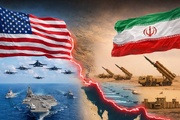
The important point is that this confrontation is not merely a political dispute between two governments; at a deeper level, it reflects a clash between two approaches to the international order. From its inception, the Islamic Republic has defined itself as a critic of a global order based on unilateral dominance by major powers and has emphasized the principles of independence, non-dependence, and the right of nations to self-determination. Whether universally accepted or not, this stance has become part of the political identity of the system within Iran.
In recent years, the West Asia region has also witnessed significant developments. Costly projects aimed at redesigning the region’s geopolitics have encountered serious challenges. Regional actors have become more diverse and balances more complex. In this environment, Iran has been able to establish a network of political and security relationships that, in the view of many analysts, plays an important deterrent role in regional equations. These developments indicate that external pressure does not necessarily weaken an actor; at times, it can lead to greater internal cohesion and initiative.
The Iranian year 1404, despite its difficulties and tensions, was another test of this model. Various domestic and regional events once again brought the issue of national cohesion and the level of social support for the political structure to the forefront. The broad public participation in national and political occasions, including the 22 Bahman rallies, is viewed by the Leader as a sign of the continuation of the same historical bond between the people and the system. From this perspective, the legitimacy and power of the Islamic Republic derive not solely from formal institutions but from the repetition of such participation at critical junctures.
The main message of the Leader’s recent remarks can be summarized as follows: a strategy based on threats and pressure to collapse the Islamic Republic has not succeeded in the past and will not succeed in the future. This assertion is grounded in a historical calculation. The experience of the past four decades has shown that whenever external pressure has increased, significant segments of Iranian society have perceived it not merely as pressure on the government, but as pressure on their national identity and independence. This perception has strengthened internal solidarity.
For the international community, this reality carries a clear message: if the objective is to change behavior or reduce tensions, tools based on persistent threats and efforts to destabilize are likely to produce the opposite result. By contrast, an approach grounded in mutual respect, understanding of historical sensitivities, and acknowledgment of geopolitical realities could pave the way for more constructive engagement.
Today, unlike its early years, the Islamic Republic of Iran possesses broader capacities in the defense, scientific, and regional spheres. Yet in its official discourse, it continues to regard “the people” as its principal asset. In the Leader’s view, it is precisely this social capital that gives meaning to hard power and renders deterrence real. Therefore, when he addresses the President of the United States and says, “You will not be able to do this either,” the statement is a summation of a historical experience that has been repeated many times from 1979 to the present.
Ultimately, the impact of this message depends on understanding the bond between society and governance in Iran. As long as this bond is preserved and external threats are interpreted as challenges against the entire nation, a strategy of collapse from outside will resemble a wish more than a practical plan. This is the equation emphasized by the Leader: Iran’s real power is rooted in the collective will and identity of a people who consider themselves the owners of this system.
MNA





Your Comment