


As Gaza faces yet another critical juncture in its long-standing conflict, the recent Trump-proposed peace initiative has sparked cautious hope amid widespread devastation. In September 2025, President Donald Trump, now serving his second term, unveiled a 20-point plan aimed at ending hostilities in Gaza, proposing a phased Israeli withdrawal, a ceasefire, the release of captives, and the establishment of a transitional administration. Hamas has signaled a willingness to negotiate, agreeing to release captives and engage in discussions, but it has not fully accepted the plan’s key demand of complete disarmament. The situation remains fragile, with conditional agreements, ambiguities, and high stakes shaping the political landscape.
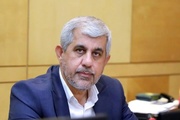
In this context, Pakistani political analyst and journalist Javed Rana provided Mehr News Agency with a comprehensive assessment of the strategic and humanitarian dimensions of the crisis. He argues that, despite decades of occupation and two years of large-scale attacks, Palestinian Resistance has not only endured but continues to assert its ideological and political legitimacy. Rana emphasizes that Israel’s primary objective — the elimination of Hamas and other Islamic resistance groups — has fundamentally failed, and the new peace plan presents both tactical opportunities and long-term challenges for the Palestinian movement.
The interview explores how Hamas and other resistance groups are navigating these pressures, negotiating strategically with both international actors and regional powers, while asserting the rights and resilience of the Palestinian people in the face of occupation. Below is the text of Mehr News Agency's interview with Javed Rana.
1. If the proposed ceasefire plan is implemented, what concrete gains could the Resistance realistically claim?
I think the strategic gains that resistance groups can possibly achieve are that they would survive despite the fact that there was a two-year-long genocide against the Palestinian population. Despite the fact that Israel had by and large choked all the points from where resistance groups would have had their supplies, and despite the fact that these resistance groups by and large had no external genuine support, they have survived.
The very objective of Israel — to eliminate these resistance groups, more particularly Hamas — has terribly failed. What Israel is not understanding is that all these resistance groups are based on an Islamic ideology, and ideology is something which cannot be destroyed or eliminated.
Now, this peace plan — 21 peace points — essentially, if we look at the contents, boils down to one point: the demilitarization of Hamas, the disarming of Hamas. You see, Hamas has come up with a very tactical response. It has not apparently rejected the so-called peace plan, but at the same time it has tacitly rejected it. It has essentially accepted it, because everybody in the world has to massage the ego of Donald Trump by saying that “we appreciate your plan.” Then every country and every group such as Hamas would tactfully handle and lead their objectives.
My understanding is that somehow, over time, these groups will survive. They would not disarm themselves. They basically will make it conditional — they have already made it conditional — that they would disarm only if certain conditions are met, and those conditions would be that there would not be any Israeli military presence inside and around the border of Gaza.
Therefore, I think that is going to be a tactical move. To begin with, they badly need some kind of relief, some kind of reprieve, because people are being killed at an industrial scale in the genocide. Temporarily, many people will get food and something they need, because there is already a built-up historical artificial famine in Gaza. So I think tactically they will gain in the short term.
In the long run, once the prisoners of war under the custody of Hamas and other Islamic resistance groups are released, my fear lingers on that Israel would resort to bombing. It may be at the same scale they were doing it before or maybe less frequent. But again, Israel has to keep Gaza unrested. There would be a kind of chaos they want to maintain because they have to sustain conditions whereby people are forced to leave Gaza, as there is a long-held plan which probably six years ago was undertaken by Trump and other real estate tycoons along with Tony Blair’s so-called think tank. They want to basically have a resettlement.
Now the trouble is that this plan is going to be funded by the Arab monarchs while Gaza’s civil infrastructure has been destroyed by apartheid Israel. It doesn’t make sense: Gaza destroyed by Israel and going to be funded by Arab monarchs, and going to be benefited and enjoyed by the Western real estate tycoons like Donald Trump and others. I think this is a recipe for disaster. This is not going to work.
2. From your assessment, has Israel achieved the strategic objectives it declared at the start of its campaign?
Israel has terribly failed. The declared objectives of Israel were to eliminate Hamas and other resistance groups altogether, and also to force Palestinians to leave Gaza. Subsequently, they did officially declare it. They set up a committee to facilitate people to leave Gaza. That did not happen. They have failed to displace Palestinians from Gaza to elsewhere.
And more importantly, I think they have failed to end the resistance of all these Islamic resistance groups. They are not understanding that they cannot eliminate Islamic ideology in whatever form it may be across the region. In the case of Iran they failed; in the case of Yemen, where Houthis are attacking Israel, they have failed; in the case of Gaza, they have terribly failed. Palestinian resistance groups and Palestinian people have opted to lay down their lives but they have not surrendered to a genocidal apartheid regime backed by the West — in terms of sharing intelligence, in terms of sharing all kinds of weaponry support, more particularly the USA, which has provided 30 billion US dollars for this two-year-long war.
And 30 billion US dollars means floating Israel’s economy. That means 70% of the entire defense spending on Gaza’s war was provided by the Americans. I think that explains the situation. Nonetheless, they have terribly failed to contain the resistance of the people and the resistance from the Islamic resistance groups.
3. How can Palestinian groups convert a temporary ceasefire into durable strategic gains rather than a pause that ultimately benefits the Israeli regime?
I think the Palestinian groups will tactfully and strategically handle this if this peace plan is allowed to function, because I still fear that Netanyahu will try to sabotage it once the captives, the prisoners of war, are released by Hamas and other resistance groups. Nonetheless, if this peace plan survives, that means there would be some relief for the Palestinian population. They would have food, they would have some respite, they would try to rebuild their lives. That is a short-term tactical gain.
But in the long run, I think all these resistance groups would reorganize themselves, would regroup themselves, and with better communication channels which would be available to them, they can better strategize.
And very importantly, these resistance groups would be dealing with the manipulative Arab monarchs who are now essentially fighting the case of Israel through the US. These Arab monarchs don’t want Hamas and other Islamic militant groups to survive because they are essentially against political Islam. They believe that Hamas is essentially Muslim Brotherhood, and if Hamas survives, that means the secret branches of the Muslim Brotherhood in the Arab countries would get a lease of life. Therefore they have been, behind the scenes, hand in glove with Israel in trying to eliminate Hamas — but in the process they have supported genocide, something not very much known to the public.
I think the Houthis have been attacking Israel, they have been attacking the Red Sea, and from there Israel’s trade was diverted to Saudi Arabia, from there to Jordan, from there to the West Bank, and from there to mainland Israel. That is an indicator of how Saudi Arabia was helping Israel, as Saudi Arabia’s regional ships were used to supply weapons to Israel from the USA. That’s also something which is on the record.
And then Saudi Arabia has allowed Israel to have their airplanes fly over Saudi Arabia’s airspace. Again, Saudi Arabia has been very desperate to normalize ties with Israel. But the problem is that Netanyahu is not giving any kind of face-saving because he is totally against the idea of a so-called two-state solution.
In a broader context, I think the threat is also from the Arab monarchs to Hamas and to the Palestinian cause. More particularly, I would say the UAE’s so-called Red Crescent has been spying for Mossad against the resistance groups to know from where they have been operating. Similarly, UAE’s businessmen have been purchasing land in East Jerusalem and handing and selling it to extremist Jews who are pursuing a so-called end-of-time agenda.
So in a broader context, all these Arab countries who have been negotiating on behalf of Americans with Hamas to surrender are partners in the crime. They cannot be trusted. So this so-called peace plan is very fragile.
4. After hostilities end, what practical mechanisms should be pursued to document, investigate, and hold accountable those responsible for mass killings and war crimes?
I think the United Nations and all other international groups would be very much there in Gaza provided Israel allows them to enter, because Israel is going to keep its troops on the borders of Gaza. That is problematic. But I think there will be some kind of informal investigation to begin with. But as long as the US is there — so-called one of the great powers; I don’t think it is a superpower, that’s a gone and dead story — nonetheless, as long as Israel enjoys the veto power of the US in the UN Security Council, I don’t expect that Israel would be held accountable.
But certainly it would be held accountable in the long run because the US is going to lose its influence. There will be more public pressure in the Western governments and governments in the future would be changed, and they probably would not be as pro-Israel as these governments are in Europe and in Washington. Therefore, in the long run, I think Israel would be held accountable — whether through the international institutions or maybe through another war which probably this time around it’s not going to be only Iran who will fight it out. It will also be other Arab monarchs. They will have to fight it out because, despite the fact that they have been providing all kinds of support to Israel, Israel considers them as their enemy. It is simply a matter of time when Israel will also try to expand this war to other Arab countries.
You may recall that Israel in an interview has said that it feels spiritually connected to the “Greater Israel” cause. So it is a matter of time when there will be an attack on other Arab countries, and that is why Saudi Arabia has sought Pakistan’s help and they have had a defense deal bringing Pakistan’s nuclear umbrella to Saudi Arabia because Saudi Arabia feels very much threatened that, since there was an attack on Qatar, why not there would be an attack on Saudi Arabia?
So I think there is a silver lining also. I think there would be a greater alliance among the Muslim countries along with Iran. It is simply a matter of time before many countries in the Middle East realize that Iran’s position on Israel actually reflects the sentiments of the public because Israel is a kind of illegal entity which cannot be trusted.
5. To what extent has the growing international movement for the recognition of Palestine influenced the dynamics of this ceasefire?
I think this is extremely important. The only positive thing — the only silver lining — if you have to pick up during the last two years of this long genocide is the fact that international public opinion has hugely turned against the apartheid structure in the occupied territories. This is because the Western public used to have a sympathetic view of Israel, that it is a victim of the so-called Holocaust. But now they have realized that Israel is a genocidal regime, it is a fascist religious regime pursuing its dirty end-of-time religious agenda.
They have seen live streaming of genocide in Gaza at the expense of nearly 250 journalists killed reporting what is happening. That is why now there are far more protests in the Western countries than in the Muslim countries.
And I think that public opinion, particularly on social media, has completely changed the dynamics of this war, and that is why this war is coming to an end. If there is any pressure on the West, it is these public protests, and that is why we are seeing now that Trump is under tremendous pressure to bring an end to this war — though not still on hostile terms and conditions. Nonetheless, it does indicate that they are feeling the heat of the public pressure.
And more particularly, if you look at the USA, now there is a greater debate — and I think that debate is coming to the mainstream media partially also, but on social media it is completely mainstream — about why the USA is making the entire Middle Eastern countries, along with Iran, its enemy just because of Israel, which is pursuing a genocidal extremist agenda.
And then there is greater debate that the Jewish people are not chosen by God. This is essentially based on a kind of hearsay version in history which was infiltrated by the Jews to get sympathies of the Christian population, because Christians historically have believed that the Jews killed Jesus (peace be upon him). Though this is not a Muslim view — Muslims believe that he was taken to heaven — again, in that context there is also now a theological/ideological debate in the USA.
That debate revolves around one point: that Jews are not chosen people. And Christians are saying the chosen people are those who have chosen Jesus. So this is now an internal debate and this is very interesting.
But the trouble is, when you talk about senators like Lindsey Graham and others, they say that since Jews are chosen people, if you go against them then God would kill you. These are the kind of nonsensical theological misleading references which have brainwashed the US Congress and the power elite in Washington. But I think things are now changing.
And I think part of the reason — which is, I think, a leading reason — is the Epstein file, where these top members of Congress, and more particularly Donald Trump, are involved. Donald Trump and other members of Congress are being exploited by Mossad. And that is why they have opted to maintain silence and allowed Israel over the last two years to conduct genocide.
But again, now there is no longer an option for the US power elite to put up with Israel’s genocide, and that is why we have seen this so-called peace plan.
MNA/















Your Comment