


These elements ruin the stones used in construction of the stairways at the palaces of Sad-Sotun and Apadana in
The wooden covers were made by the Parsa and Pasargadae Research Center (PPRC) in 2006 to protect the stones of the stairs from erosion caused by visitors at the palaces.
PPRC’s experts have previously said that they the wooden walkways have been made from teak wood, which is used in shipbuilding because of its water resistant properties.
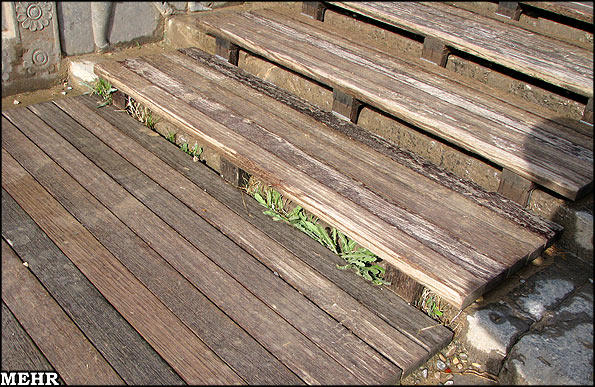
Humidity helps growing some types of fungus, lichen, and plants under the wooden cover installed on the stairways at
The Winged Man of Pasargadae stone bas-relief is currently suffering from damage caused by environmental factors.
In 2005, a number of experts had said that the Winged Man should be transferred to a museum in order to prevent it from being damaged by the elements. However, nothing has been done to save the artifact.
The Winged Man, thought to be Cyrus the Great by some archaeologists and historians, is a stone bas-relief of a standing man with four wings who is praying. He is also wearing a crown with two horns on it. Some scholars say that that Cyrus the Great is Zulqarnain, whose story is told in the Holy Quran, because Zulqarnain means “one with two horns” in Arabic.
MMS/YAW
END
MNA
















Your Comment