


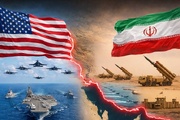
The threats of American and Zionist officials against Iran have once again intensified. From talk of using heavy bombs to emphasis on the necessity of what is called finishing off Iran, statements are being made that show warmongering currents are still seeking to impose their will on the Islamic Republic of Iran. However, the experience of past decades and especially the recent military confrontations has shown that threat and military pressure do not necessarily lead to the realization of Washington's and Tel Aviv's political objectives.
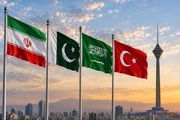
In this context, the issue is not only Iran's confrontation with America and the Zionist regime; the countries of the region must also make a clear decision about their place in the developments ahead. Regional security, contrary to the assumption of some governments, is not a divisible matter in which a country can place its soil, water, and air at the disposal of military operations against its neighbor and at the same time expect to remain immune from its consequences. Tehran's message to the countries of the region is clear: accompanying a military adventure against Iran will not guarantee their security, but will be a factor in expanding the scope of insecurity.
New Threats and the Repetition of Past Calculations
American and Zionist officials speak of intensifying pressure on Iran under conditions in which both face domestic political challenges and electoral concerns. Benjamin Netanyahu faces domestic pressures to preserve his political position, and Donald Trump must also manage the consequences of his administration's policies in the American political atmosphere. Not all military threats can be explained merely by electoral considerations, but political exploitation of the atmosphere of confrontation and the display of power is one of the factors that must be taken into account in analyzing the behavior of the leaders of these two sides.
The fundamental issue is that new threats do not change the strategic realities of the region. Iran is a country with considerable defense, geographical, and human capacities, and any military action against it will have consequences beyond the initial calculations of the aggressors. The experience of recent conflicts has also shown that one should not equate the ability to inflict damage with the possibility of imposing political will on Iran.
However, one of the most important dimensions of any intensification of confrontation is the role of some regional countries; countries that, during the recent conflicts, according to Iran's stated positions, placed their territorial or military facilities at the disposal of America. Such an approach, if it leads to facilitating attacks against Iran, will remove these countries from the position of observers of developments and turn them into part of the security equation of the confrontation.
Regional Security, an Interconnected Reality
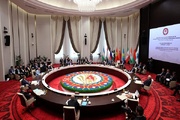
Seyed Abbas Araghchi, Iran's Foreign Minister, at the meeting of the Council of Foreign Ministers of the Organization of Islamic Cooperation in Baghdad, emphasizing the interconnection of the security of the region's countries, stated: "Either we build security together, or we will endure insecurity together."
This proposition is not merely a diplomatic warning; rather, it expresses a fundamental reality in the political geography of the Persian Gulf and West Asia. The countries of the region are dependent on one another in terms of geography, economy, trade, energy, and communication infrastructure. Any widespread conflict can affect shipping routes, the energy market, investment, transportation, and economic stability. Therefore, no government can, by providing the ground for military operations against its neighbor, assume that the consequences of the crisis will be directed solely at the target side.
This reality is especially important regarding countries that host American military bases. Hosting foreign forces does not in itself mean participation in any military operation, but if a country's soil, airspace, or infrastructure is used to attack Iran, that country must also accept the political and security responsibility of its decision. Regional governments must distinguish between conventional defense cooperation and participation in actions that can ignite the fire of a widespread conflict.
A Warning About Accompanying Warmongering
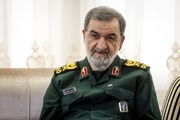
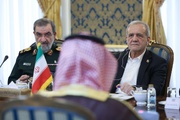
This view has also been reflected in the previous positions of Iranian officials. Mohsen Rezaei, who was a member of the Expediency Discernment Council at the time the remarks were made, warning the Arab and Muslim countries of the region about the objectives of the Zionist regime, had said that accompanying the project of expanding discord and conflict in the region could have heavy consequences.
The basis of this warning is that weakening regional security is not in the long-term interest of any of the countries of the region. If political rivalries or short-term considerations push regional governments toward cooperation in military actions against one another, the result can be increased security dependence, the expansion of instability, and greater vulnerability of vital infrastructure. Under such circumstances, the cost of today's decisions may be far beyond the initial estimates of governments.
Mohammad Bagher Ghalibaf, the Speaker of Iran's Parliament, also, referring to the necessity of preventing financial and infrastructural support for companies that, according to him, play a role in supporting military aggressions, has warned about cooperation in the field of data and artificial intelligence. This position shows that from Tehran's perspective, the scope of support for military operations is not limited to bases and combat equipment, and economic, technological, and infrastructural capacities can also find a place in security calculations.
The message of these positions for the countries of the region is clear: governments must, before providing any possibility for military operations against Iran, weigh the direct and indirect consequences of such a decision. Participation in warmongering, even if it initially appears limited or indirect, can increase the scope of their responsibility and vulnerability.
Iran Will Not Surrender to Pressure
For the Islamic Republic of Iran, the issue is not merely a temporary dispute or a limited regional rivalry. When American and Zionist officials speak of objectives that, from Tehran's perspective, threaten the country's existence and independence, it is natural that the issue of defending national security should be at the center of Iran's calculations. Under such circumstances, expecting Iran to surrender to threats and military pressure is not a realistic estimate of the country's political will.
The Leader of the Islamic Revolution also, in one of his recent messages to Hezbollah forces, emphasized the continuation of jihad and resistance and stated: "No path remains ahead except jihad and resistance, and steadfastness on this path will grant the mujahideen on the path of truth the promised divine assistance."
In this framework, Iran's warning to the countries of the region should be seen as part of an effort to draw security red lines. Tehran expects neighboring governments not to allow their territory, facilities, and infrastructure to become a tool for attacking Iran. This warning is not an invitation to expand the conflict; rather, it is an emphasis on the reality that preventing the expansion of war requires the responsible decisions of all governments in the region.
The countries of the region now face an important choice: they can, by avoiding accompanying military adventures, strive to reduce tension and create mechanisms for collective security, or, by providing the ground for hostile actions, expose themselves to the foreseeable consequences of a widespread crisis. Sustainable security is not achieved through the instrumental use of neighbors' soil and facilities. Iran's message is clear: regional security must be for everyone, because in the interconnected geography of West Asia, no country can ignite the fire of insecurity in its neighbor's house and be sure that its flames will never reach its own house.
MNA











Your Comment