


The emphasis of Ayatollah Seyyed Mojtaba Khamenei, the Leader of the Islamic Revolution, in a meeting with the Secretary of the Supreme National Security Council, on managing the Strait of Hormuz and expanding bilateral relations with neighbors goes beyond stating two priorities in Iran’s foreign policy. This emphasis should be seen as a sign of the need to review the foundations of the Persian Gulf security order; an order that has been based on the US military presence for decades, but recent developments have seriously questioned its credibility and effectiveness. The main issue today is not simply how to deal with the consequences of the US and Zionist aggression against Iran, but how to transform the results of this confrontation into sustainable security arrangements that are commensurate with the new realities of the region.
The End of US Security Monopoly
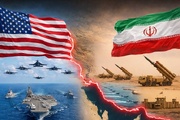
The security architecture of the Persian Gulf in the past decades was based on the assumption that the US military presence, the establishment of numerous bases, and Washington’s support for regional partners would prevent the emergence of major threats. Based on this model, the countries of the region relied on an external power to ensure their security, claiming to have superior military power and the ability to protect its allies. However, the recent aggression against Iran and Tehran’s military response revealed the limitations of this model.
The vulnerability of US military installations in the region is not simply an operational issue or an irreparable loss; this fact is directly related to the credibility of Washington’s deterrence. When a military power’s bases are exposed to attacks from an adversary, security can no longer be measured solely by the number of troops, the volume of weapons, or the extent of military deployment. The ability to impose costs on the adversary and prevent its goals from being achieved is also a determining part of the power equation.
By resisting and responding to aggression, Iran has shown that US military superiority does not mean unlimited authority to determine the security fate of the region. This development provides an important basis for reviewing the calculations of neighboring countries. Of course, it cannot be concluded that all these countries have moved away from previous security arrangements in the same way; But it is clear that unilateral reliance on foreign power can no longer continue without assessing its costs and risks. The future order will be formed when security is no longer the monopoly of trans-regional powers and regional countries have a real role in determining its rules.
The Strait of Hormuz; Iran’s Geography of Power and Strategic Depth
Among the components of Iran’s power, the Strait of Hormuz has a position beyond economic and commercial importance. This waterway is located at the junction of regional security with the global economy, and Iran’s geographical location provides the possibility of directly influencing the strategic calculations of major powers. The importance of this position becomes even more apparent when we realize that energy security, transportation costs, and the stability of global markets are to some extent dependent on the conditions prevailing in this passageway.
From this perspective, managing the Strait of Hormuz should be considered part of the grand strategy of protecting Iran’s national security. The experience of the recent confrontation has shown that a country’s defense capability is not limited to its equipment and military forces alone; Geography can also be a determining factor in deterrence. Iran differs from many regional players in enjoying this advantage, and this component cannot be removed from its security calculations.
The strategic importance of Hormuz actually stems from the connection of three elements: Iran’s geographical location, the dependence of the global economy on a stable energy flow, and the impact of developments in this waterway on the security calculations of foreign powers. This connection means that no strategy to exert pressure on Iran can ignore its regional and international consequences.
However, effectively utilizing this advantage requires a distinction between strategic capacity, legal rights, and the way in which the waterway is managed. Protecting Iran’s rights and interests, protecting national security, and confronting external threats must be accompanied by an understanding of the economic and diplomatic consequences of decisions. Geopolitical power becomes a sustainable advantage when it can be used to serve deterrence, strengthen the country’s negotiating position, and consolidate its regional position. Hence, the management of Hormuz is not a short-term issue, but part of the long-term equation of Iran’s security and independence.
Neighbors; the Complementary Component of National Authority
Despite the crucial importance of defense power and geopolitical position, no sustainable security order can be built solely through military deterrence. The complementary component of Iran’s strategy is to build a network of strong bilateral relations with its neighbors; relations that are based not on short-term considerations and fragile agreements, but on mutual interests and long-term cooperation.
Despite their differences in political structures and foreign policy priorities, countries surrounding Iran face common issues in many areas. The security of shipping lanes, the stability of the energy market, regional trade, transportation, water resource management, and countering transboundary threats are all areas for defining common interests. Expanding cooperation in these areas can create constructive interdependence and increase the cost of confrontational policies.
From this perspective, neighborhood diplomacy should not be viewed simply as a tool for reducing occasional tensions; it should become part of Iran’s national security infrastructure. The deeper the economic, political, and security ties between Iran and neighboring countries, the less likely it is that disputes will escalate into crises, and the more room there is for managing them through dialogue.
Of course, achieving this goal requires a balanced approach. While maintaining its strategic independence and deterrence, Iran must also understand the legitimate concerns of its neighbors and, through dialogue, transparency, and practical agreements, expand the basis for mutual trust. Sustainable relations are formed when cooperation with Iran brings tangible gains to its neighbors and mutual interests replace calculations based on constant competition.
From Defensive Victory to Consolidation of Regional Order
The most important challenge facing Iran is to transform its defensive achievements and geopolitical advantages into a sustainable framework for regional security. Victory in the field does not in itself guarantee the formation of a new order; this achievement becomes sustainable when it is consolidated in the form of solid political relations, economic cooperation, regional mechanisms, and reliable security arrangements. In such a framework, managing the Strait of Hormuz and strengthening relations with its neighbors are not two separate paths. The former strengthens Iran’s capacity to protect vital interests and increase the cost of aggression, and the latter provides the opportunity to transform this power into sustainable cooperation and stability. Deterrence without diplomacy may lead to erosive competition, and diplomacy without the support of power will also be vulnerable to external pressures. The connection between the two is the basis of a realistic regional strategy.
The new Persian Gulf order will be formed when the security of the countries of the region is based not on the assumption of superiority and unlimited support of a foreign power, but on mutual recognition of interests, respect for national sovereignty, and shared responsibility. Iran, relying on its defense capabilities, the strategic location of the Strait of Hormuz, and the development of constructive relations with its neighbors, has the capacity to play a pivotal role in this process. The emphasis on these two components ultimately reflects a fundamental principle: sustainable security of the region must be built by the countries of the region and with their active participation, rather than its fate being left to the decisions and competitions of extra-regional powers.
MNA















Your Comment