


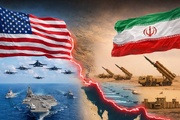
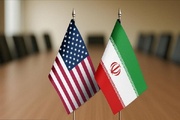
The US war with Iran was supposed to be more than a military operation; Washington was trying to put pressure on Iran through a display of military power and to make it clear to other regional and global players that the United States is still capable of deploying a large military force far from its homeland and imposing its costs on its rivals. However, what happened during this war, from the perspective of the American media and analysts, is significantly different from its expectations.
The New York Times, in a report on the consequences of the war with Iran, wrote that this conflict exposed America's military weaknesses and forced Washington to withdraw its forces from some of its bases in the Middle East and even England. The newspaper considered this situation an example of the "unintended consequences" of war and emphasized that the rapid US retreats carried an important message for Iran and Washington's other rivals: even a superpower may be forced to retreat in the face of military and security pressure.
The importance of this report is not primarily limited to the withdrawal of American forces from one or more bases. The main issue is the image of American power in the minds of its allies and rivals. Military power does not depend only on the number of aircraft, ships, missiles and troops stationed in a region; part of military power depends on the ability to maintain a presence, bear the costs of conflict and ensure the security of forces and facilities.
Bases that are no longer a decisive power
Over the past decades, the United States has created an extensive network of military bases and facilities in the Middle East. This network has allowed Washington to move its forces and equipment to different parts of the region in a short time and use it as a tool for deterrence, political pressure and military operations.
But this same network can now also become a vulnerable point. The more bases and forces stationed in a region, the more potential targets it has. In such circumstances, the question is not just whether the United States has the ability to attack or not; The more important question is whether it can maintain its presence against sustained attacks.
If the answer to this question is no, the concept of deterrence is also affected. A country that can attack a US base does not necessarily have the power to defeat the US military; but if it can increase the cost of the US presence so much that Washington considers relocating or withdrawing its forces, a different equation takes shape. In this situation, a military base is no longer simply a symbol of power; it may also become a symbol of vulnerability.
It is not just Iran
The more important consequence of these developments is not limited to Iran. America’s rivals in different parts of the world are closely following Washington’s behavior; because wars are not only decisive on the battlefield, but also produce information for other parties about the capabilities, limitations, and red lines of a great power.
If a great power is forced to reduce its presence or relocate its forces in a region to maintain its forces, other actors may also reconsider their calculations. They may conclude that the US military presence, unlike in the past, is not unlimited in cost and can be limited by increasing costs. This is where a military operation can have much greater political and strategic consequences.
Washington has tried for years to project an image of its military power based on its ability to be present in multiple regions simultaneously and to respond quickly to crises. But if America’s rivals conclude that this presence can be easily targeted or disrupted, some of its deterrent effect will be reduced.
A war beyond the battlefield
In that sense, the Iran-US war cannot be assessed solely by the amount of damage to facilities or the number of operations carried out. One of the most important results of any war is the change it creates in the calculations of the parties and even actors outside the war.
The US may still be far behind Iran in terms of its combined military, economic, and technological power. It would be an exaggeration, therefore, to say that a single war has changed the overall balance of power between the two countries. But that is a different question: Has the war changed some of the previously held notions about the cost-effectiveness of the American military presence? If so, it is no less important than a tactical victory or defeat.
In fact, one of the most important elements of American power, apart from the ability to strike, is the perception that Washington can maintain its position after striking. If the war shows that there is a gap between the “ability to strike” and the “ability to maintain a presence,” this gap could become an important issue in future calculations.
From displaying power to a calculation of military costs
Perhaps this is the most important message of the war for the US. Military power has a deterrent effect when the other side believes that using it is inexpensive and sustainable for Washington. But if using this power creates significant security and operational costs, the deterrence equation becomes more complicated.
From this perspective, the New York Times report should be seen as more than a report about the withdrawal of troops from several bases. Its importance lies in the fact that it shifts part of the discussion about American power from “the ability to strike” to “the ability to maintain a position after an attack.”
Iran also becomes particularly important from this perspective. The Islamic Republic has been trying to make America’s reliance on regional bases and communications routes part of its security calculus for decades. If this strategy can increase the cost of America’s presence, even without implying a complete military defeat, it could influence Washington’s future behavior.
Ultimately, wars do not always go according to the initial intentions of their planners. A country may enter a conflict with the aim of projecting power, but the result of the war is not to strengthen it but to reveal the limits to that power. The main question now is not whether America is still a great military power. The more important issue is whether America’s rivals still have the same perception of its ability to maintain a military presence and impose costs that they did before the war.
If the answer has changed, the Iran-US war was not just a military confrontation; it could be a point in redefining strategic calculations about the limits of American power. And perhaps that is why the New York Times speaks of the “unintended consequences” of war; A war that was supposed to be a show of power, but it also revealed limits to that power.
MNA












Your Comment