


Speaking at his weekly press briefing on Monday, he emphasized that Iran will not let the end of war be decided based on the terms and conditions of aggressor.
“We certainly didn't initiate the war, but we won't allow the end of the war to be decided based on the terms of the aggressor,” Baghaei underlined.
"We will not show any appeasement towards the aggressors ... the Islamic Republic of Iran did not start the war and has defended its own rights, territorial integrity and national sovereignty. Naturally, the aggressor must be held accountable. We certainly did not start the war, but we will not allow the end of the war to be based on the aggressor's terms," he emphasized.
Referring to Pakistan's Army Chief Field Marshal Asim Munir’s visit to Tehran and its relation with the visit of the Omani foreign minister to Tehran, he emphasized, "This visit is scheduled to take place today within the framework of very good and distinguished relations between Iran and Pakistan.”
The bilateral relations between Iran and Pakistan are going through one of their best stages, and both sides are determined to expand these relations in all areas, he said, adding that the visit of the Omani foreign minister to Tehran has nothing to do with this issue, it is only almost simultaneous in terms of time and is scheduled to take place tomorrow and both bilateral relations and issues related to the security of the Strait of Hormuz and traffic routes will be discussed.
In response to the question of whether there is a plan to end the war, the spokesperson stated that all the relevant issues are considered by policymakers in the country expertly. Did we initiate the war? In these two years, Iran's goodwill has been answered with malice for several times. Iran’s nuclear deal, aka known as JCPOA, was a clear example. In this one and a half years, Iran did everything it could to prevent war and secure national interests. After the Islamabad understanding, they [United States] violated all its commitments.
Baghaei also dismissed US claims regarding normal shipping traffic through the Strait of Hormuz, labeling such assertions as media warfare.
On regional diplomatic engagements, he confirmed that Pakistani Army Chief Field Marshal Asim Munir is scheduled to arrive in Tehran today, while Omani Foreign Minister Sayyid Badr Albusaidi will arrive tomorrow for scheduled discussions on bilateral ties and maritime security.
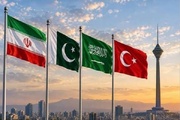
He additionally denied receiving any invitation regarding a reported tripartite pact between Iran, Turkey, and Saudi Arabia.
Regarding relations with Afghanistan, Baghaei highlighted recent high-level talks between President Masoud Pezeshkian and Mullah Baradar aimed at resolving legal and border obstacles to expand trade, noting that the Foreign Ministry has successfully maintained its operations and administrative reforms despite enduring wartime conditions.
In response to questions regarding diplomatic attempts and the origin of recent conflicts, Baghaei emphasized that Iranian policymakers have consistently accounted for all political factors.
He stated that Tehran’s goodwill has repeatedly been met with hostility and broken promises, pointing to the 2015 JCPOA, the June 18 ceasefire agreement, and the Islamabad understanding as primary examples of violated commitments.
Baghaei stressed that over the past eighteen months, Iran did everything within its power to prevent war and protect its national interests. While acknowledging the severe economic hardships, business disruptions, and damage inflicted on oil reserves and refineries as part of decades-long US pressure tactics, he affirmed that government efforts remain focused on minimizing the impact on citizens.
He stated that Iran neither started nor welcomed the war, reiterating that the responsibility lies entirely with the opposing side for repeatedly breaking commitments.
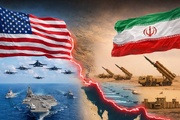
Elsewhere in his remarks, he pointed to the naval blockade imposed by the US government on Iran, stating that the ongoing blockade constitutes an explicit act of aggression.
He warned that any escalation of this situation would carry serious consequences, emphasizing that Iran will not stand by idly with tied hands in the face of such aggressive measures.
Regarding France's actions in expelling the Iranian cultural advisor, he said, "We had already taken action. Two employees of the French Embassy took actions that were outside their legal duties. We gave them the necessary warnings. The French ambassador was summoned and Iran's written and verbal protests were conveyed. Unfortunately, they distorted the reality. France's action is an illegal act that was in response to Iran's legal action.
Regarding the closure of the Chilean Embassy in Iran, Baghaei said, "They decided to close their embassy to save money. Countries often make adjustments, but this does not mean severing diplomatic relations."
Regarding the latest situation of citizens detained in Kuwait, the Foreign Ministry spokesman said, "The Kuwaiti side must be held accountable in this regard. After much effort, our ambassador was able to meet with four imprisoned Iranian citizens. We hope that these dear ones will be released as soon as possible."
Regarding the situation of Iranian pilots in Qatar, Baghaei added: "As for Qatar, as long as the situation is not clarified, our demand remains in place."
With regard to the ways to neutralize the sanctions imposed against Iran, he maintained, "It is a mistake to test Iranians because of their civilizational richness. They know very well that the effect of these sanctions is on the citizens. Iran will definitely use all multilateral capacities to confront the sanctions. We had previously made the necessary predictions."
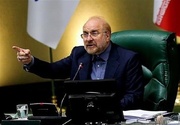
Regarding the recent Iranian Parliament Speaker Mohammad Bagher Ghalibaf’s visit to neighboring Iraq and the repetition of fake titles for the Persian Gulf, the foreign ministry’s spokesman stated, "First of all, you all know that the Persian Gulf is bigger and more generous than to be affected by political issues. The people of Iran and Iraq are also more mature than to be influenced by these names. We need to address priorities and avoid unnecessary side effects."
Regarding the war against Syria and their positions against Iran, Baghaei said, "Our principled positions are stable regardless of which group rules Islamic countries. Opposing the regime's occupation is part of Iran's principled policy. Opposing the Zionist regime's occupation of Syria is a shared responsibility of Islamic countries."
With regards to Israel's attacks on Syria, he said that this action completely violates Syria's national sovereignty. This is an excuse to justify breaking the law. The Israeli regime's actions are in line with its actions against Lebanon and Gaza.
MNA/6925834






Your Comment