


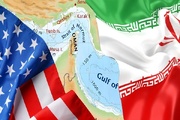
Washington and Tel Aviv formed a coalition to launch an unprovoked coordinated military attack against Iran on February 28, 2026, targeting leadership, nuclear, military, and civilian sites across the country. The aggression prompted immediate and sustained retaliatory strikes by the Iranian Armed Forces against the Israeli and American interests in the region. The war has resulted in 3,375 identified fatalities within Iran, with ordinary civilians being a significant number of them.
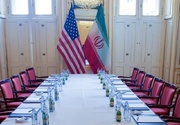
After weeks of hostilities, a fragile two-week truce was brokered by Pakistan and took effect on April 10, hailed by Tehran as an “Iranian victory” based on its 10-point peace framework. However, subsequent direct talks in Islamabad between the Iranian and American delegations, headed by U.S. Vice President JD Vance and Iranian Parliament Speaker Mohammad Bagher Ghalibaf, ended without reaching a peace deal on April 12 after 21 hours. Washington’s “excessive demands” regarding the Strait of Hormuz and Iran’s nuclear program were cited by the Iranian sources as the principal points of contention.
In order to shed more light on the dimensions of the war, Mehr News Agency reached out to Silvia Boltuc, an Italian geopolitical analyst and Managing Director of Special Eurasia.
Here is the full text of the interview:
1. Throughout this conflict, we have witnessed a deliberate pattern of targeting civilian-populated areas, critical energy infrastructure, and even medical facilities by the US-Israeli coalition—actions that clearly violate the fundamental principles of international law and the Geneva Conventions. From your perspective as a neutral observer, how do you assess the legality and strategic logic behind these strikes on non-military targets? Is this campaign of targeting civilian infrastructure a sign of military strength, or rather an admission of failure to achieve stated military objectives against Iran?
According to International Humanitarian Law (IHL), the legality of strikes on infrastructure—whether energy systems, medical facilities, or densely populated civilian areas—is governed by the principles of distinction, proportionality, and military necessity under the Geneva Conventions.
From the coalition’s perspective, certain targets such as energy grids and fuel depots are classified as “dual-use.” The argument advanced by US and Israeli planners is that these facilities support Iran’s command-and-control systems, drone production, and missile operations. Under IHL, civilian objects can lose their protected status if they make an “effective contribution to military action.” However, this provision cannot justify indiscriminate attacks on civilian infrastructure.
This tension is illustrated by the strike on the Shajareh Tayyebeh girls’ school in Minab. UN experts and the OHCHR reported that the site was hit by a “triple-tap” missile attack on the first day of the war, causing around 156 deaths, including at least 120 children. The US Defence Intelligence Agency had reportedly identified the building as part of a nearby IRGC naval base and failed to update its assessment despite the school’s long-standing public presence. Under the Rome Statute, intentional or indiscriminate attacks on functioning schools constitute war crimes, and the “triple-tap” method—striking the same location multiple times—is particularly controversial because it endangers first responders and those attempting rescue.
Medical facilities are afforded even stronger protections. While the coalition has alleged that some hospitals are used for military command or storage purposes, international bodies such as the UN and Amnesty International have highlighted the lack of corroborating evidence in several 2026 cases. Even if such misuse were proven, IHL requires that a clear warning be issued before any strike, and the principle of proportionality remains binding.
A similar legal framework applies to cultural heritage. The 1954 Hague Convention prohibits military actions that endanger sites of major cultural significance, such as the Golestan Palace in Tehran or Naqsh-e Jahan Square in Isfahan.
More broadly, assessments by the UN Security Council and human rights organizations suggest that the scale of damage to civilian infrastructure—particularly water desalination systems and the electricity grid—raises serious proportionality concerns.
Rhetoric also plays a role in legal evaluation. On April 7, 2026, President Trump stated on Truth Social that “a whole civilization will die tonight” if deadlines were not met. In international criminal law, statements of this kind can be used by the International Criminal Court to help establish specific intent (dolus specialis).
At the operational level, the increasing use of AI-driven targeting systems such as “Lavender” and “The Gospel” introduces further risks. Even assuming a 90% accuracy rate, a 10% error margin across thousands of strikes can produce hundreds of false positives, often involving civilian homes, schools, or public facilities. There is growing concern that “human-in-the-loop” verification has become largely procedural, with analysts spending only seconds reviewing AI-generated targets before authorizing strikes, contributing to fatal errors.
Ultimately, the targeting of non-exclusively military infrastructure is not necessarily a sign of operational failure but often reflects a deliberate strategic choice. In the context of the 2026 campaign, Operation Epic Fury appears aimed at undermining the Iranian government’s legitimacy. By striking economic and energy infrastructure, the coalition seeks to intensify domestic pressure, disrupt state capacity, and weaken the Islamic Revolutionary Guard Corps’ ability to sustain services. This points to a broader strategy of psychological attrition—an effort to erode the resilience of a population of roughly 90 million when direct military action alone does not achieve rapid political outcomes.
2. Key international bodies responsible for maintaining global peace and security, particularly the United Nations Security Council, have been rendered paralyzed and ineffective in recent developments. The UNSC was also unable to do anything during the Gaza war due to the veto power wielded by the US which was directly supporting the aggressor. In your analysis, if the formal structures of international governance are so blatantly weaponized by one side, what does this portend for the future credibility of these institutions in the eyes of the Global South and independent nations?
The current paralysis of the United Nations Security Council (UNSC) is not merely a diplomatic hurdle—it is a structural rupture. Recent events have accelerated a shift from a unipolar institutional order to a fragmented multipolar reality.
The increasing weaponisation of the veto and the bypass of the UN Charter have several profound implications for the credibility of international governance in the eyes of the Global South. The primary casualty of the recent strikes in Iran and the preceding conflict in Gaza is the concept of universalism, because of selective enforcement. To nations in the Global South, the “rules-based international order” is increasingly viewed as a “Western-preferences order”. When the US invokes international law to condemn rivals (e.g., in Ukraine) but wields its veto to protect allies or itself from similar scrutiny (e.g., in Gaza or the 2026 Iran strikes), the laws themselves are seen as tools of hegemony rather than shields for the weak.
As noted in recent 2026 analyses from the Harvard Kennedy School, the Gaza and Iran conflicts have acted as an “X-ray” of the global moral order, revealing that universal norms—such as the protection of schools and hospitals—are selectively suspended based on the identity of the perpetrator. The perceived failure of the UNSC is driving “independent” nations toward alternative structures that bypass Western veto power. The rise of a global south block is proved by the transition from the UN being the only body to a pluralistic system. Organisations like BRICS+ and the Shanghai Cooperation Organisation (SCO) are positioning themselves as “veto-proof” alternatives for economic and security coordination.
Since the UNSC is paralysed by the veto, Global South nations are increasingly turning to the International Court of Justice (ICJ). South Africa’s 2024-2026 legal challenges regarding Gaza and the subsequent Iranian filings have turned the ICJ into the primary venue for seeking “legal legitimacy”, even if the UNSC refuses to enforce the court’s provisional measures.
The long-term danger for the future of peace and security is a return to unfiltered realpolitik. When international bodies cannot protect civilians in Iran or Gaza, middle powers conclude that only hard power (nuclear deterrence or massive conventional buildup) ensures survival.
To avoid the reach of US-led sanctions (often used in tandem with military strikes), the Global South is accelerating “de-dollarisation” and creating alternative payment systems to maintain strategic autonomy.
3. This conflict has been fought not only with bombs and missiles but also through intense economic warfare and maximum pressure sanctions. While the US attempts to strangle Iran’s economy, including the recent threat by US President Donald Trump regarding the blockade of Iranian ports. How do you assess the effectiveness of sanctions as a tool of war?
The transition from “maximum pressure” sanctions to a physical naval blockade marks the final evolution of economic warfare: the movement from financial isolation to kinetic strangulation.
For years, sanctions acted as a slow-bleed mechanism. However, the failure of the Islamabad talks on April 12, 2026, prompted the shift to a kinetic blockade.
US Central Command (CENTCOM) is currently enforcing an impartial blockade on all vessels entering or departing Iranian ports. Unlike previous sanctions, which relied on banks and insurance companies to “self-police”, this is a physical intervention by the US Navy.
The blockade has a dual goal: eliminate Iran’s oil exports to China and impose a price on NATO allies who refuse to join the US campaign in the Persian Gulf. By physically stopping Iranian ships, the coalition seeks to zero out Iran’s revenue immediately rather than over months.
Reports from April 13 show that a sustained blockade will cost Iran approximately $435 million per day in lost activity. Inflation on staples like rice has already surged sevenfold. From a “strangulation” perspective, the tool is working as intended. Nevertheless, historically, and currently in 2026, economic pain has not translated into a cessation of military activity. Iran’s response has been “security for all or for no one”, threatening all regional ports (UAE, Qatar, Kuwait, Saudi Arabia) to ensure that if its economy dies, the global energy market suffers alongside it.
While the coalition hopes for a “popular uprising” due to economic collapse, sanctions often have the “rally around the flag” effect.
Moreover, the blockade is effectively a de facto confrontation with China. While European countries have focused on countering Russia, the US’s ultimate goal is Beijing.
In the current 2026 theatre, the blockade is a sign of strategic impatience. It suggests that the bombing campaign alone failed to secure the expected outcome, leading the coalition to gamble on a total economic collapse.
4. After more than 40 days of conflict, the region is in a precarious state marked by fragile ceasefires and continued aggression in Lebanon, which was part of a ceasefire agreement. Iran has maintained that it seeks a ‘permanent end to the war’ and ‘verifiable guarantees’ rather than temporary pauses. Based on the current balance of forces and the strategic stalemate on the ground, what do you see as the most realistic pathway to a durable peace?
The current 14-day conditional ceasefire is a tactical pause, not a strategic settlement. To move toward a durable peace, specific structural impasses must be resolved.
Unfortunately, I am very skeptical that negotiations will lead to a lasting peace. The first condition, which neither the United States nor Israel will ever accept, is that Iran be considered an actor of equal legal dignity, and that Iranian defence needs and regional interests be taken into consideration just like those of regional allies.
The second issue is that the Trump administration is too exposed to negotiate a fair peace; rather, it needs to bring home a crushing victory. So much so that intelligence suggests the US is using the ceasefire only to reset its carrier strike groups and manage global oil prices. Furthermore, Trump’s rhetoric expressed throughout March 2026 has been one of “unconditional surrender” and “annihilation”, signalling an objective of total government capitulation.
The other crucial knot is the nuclear program. In essence, the primary reason why countries like North Korea—which, similar to Iran, are viewed as non-aligned by the Western bloc—have avoided certain coercive measures is due to their nuclear capabilities acting as a strategic deterrent. One could broaden this circle to include Turkey and Pakistan, given that Tel Aviv has repeatedly identified them as ‘the next on the list’. It follows that although Iran has never officially pursued the creation of nuclear weapons, it is evident that to renounce its greatest potential deterrence, it must have the certainty of no longer being attacked. Obviously, non-aggression would at that point be mutually binding.
However, maintaining a nuclear programme which allows creating nuclear weapons is a condition that cannot occur because it would not permit the so-called “Greater Middle East” doctrine, which seeks the total removal of any state capable of challenging the US-Israeli military hegemony in the region.
In this regard, we cannot fail to mention another pivotal condition: a durable peace is impossible as long as the Lebanon and Iran theatres remain desynchronized.
Finally, I conclude that the greatest failure lies with the international community. Primarily, this involves the selective application of international law. Secondly, it is the subordination of certain Western systems to the great powers, which prevents them from drawing a red line when these powers violate international law. International law should be binding for everyone.
Interview by Mohaddeseh Pakravan







Your Comment