

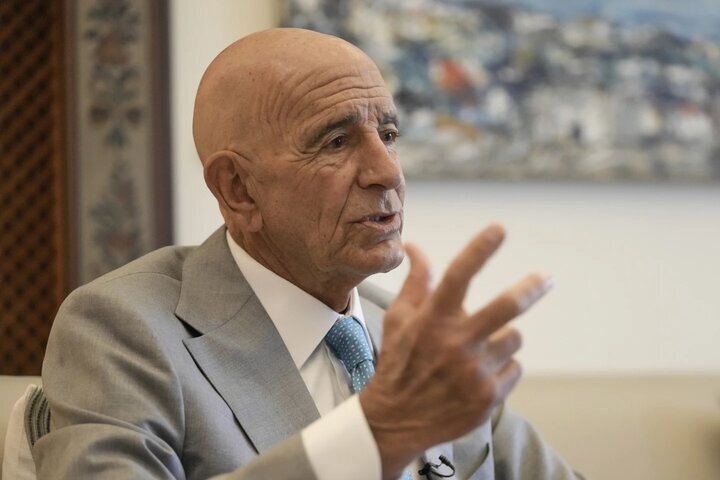
The US envoy Tom Barrack said on Tuesday that the existence of a friendly government in Damascus meant the reason for Washington’s alliance with Syrian Kurds against the ISIL group had “largely expired.”
“The original purpose of the SDF as the primary anti-ISIS force on the ground has largely expired, as Damascus is now both willing and positioned to take over security responsibilities, including control of Daesh detention facilities and camps,” he claimed, according to the media in the West Asia region.
The remarks mean that the Syrian Kurds like many other cases fall victim to the US chaining policy.
The remarks by Trump's envoy to Syria came after HTS-led regime in Damascus took control of many areas previously held by the SDF over the past few days.
According to Lebanese Al-Mayadeen TV EN website, in a statement, the Syrian Democratic Council (SDC) affiliated with SDF said armed factions operating under the umbrella of Syria’s HTS-led regime are carrying out attacks targeting the Kurdish population and its forces, which it said were “at the forefront of the fight against ISIL and contributed decisively to its defeat.”
The council pointed to what it described as the execution of female fighters from the Women’s Protection Units (YPJ) after their capture, as well as the release of ISIL members, warning that such actions “reproduce terrorism and pose a direct threat to stability.”
The statement stressed that the city of Ain al-Arab, also known as Kobani, is facing a direct threat, describing any attack on the city as coinciding with attacks on Syria’s Jazira region in an exclusionary campaign aimed at undermining coexistence and preventing the emergence of a democratic and free Syria.
While reaffirming its commitment to dialogue and negotiations between the transitional government and the SDF, the SDC condemned what it described as “brutal actions” by forces loyal to Damascus that reject dialogue and peaceful solutions.
In a related development, talks between self-declared President Ahmad al-Sharaa, previously known as Abu Muhammad Al-Jolani and SDF Commander Mazloum Abdi reportedly collapsed after more than five hours of negotiations, with no breakthrough. The talks stalled after Abdi insisted that al-Hasakah remain under full SDF administration and sought additional time for internal consultations, a request that al-Sharaa ultimately rejected.
Meanwhile, the Kurdish outlet Rudaw reported, citing an SDF spokesperson, that approximately 1,500 ISIS members had escaped from al-Shaddadi prison.
According to Al-Mayadeen's report, a rapid offensive by forces affiliated with the HTS-led regime's Ministry of Defense saw the takeover of large sections of eastern Syria, including al-Raqqa, major oil and gas fields, Deir Ezzor and the outskirts of al-Hassakah. Following the takeovers, a ceasefire was announced on Sunday outlining a framework to halt hostilities and integrate the SDF into Syrian state institutions.
The agreement includes the integration of civilian institutions, the incorporation of SDF fighters into the Syrian Ministry of Defense, and the return of control over border crossings and oil and gas fields to the Damascus government, led by Jolani. Among the most prominent provisions of the deal is the full administrative and military handover of Deir Ezzor and al-Raqqa to the Syrian government. However, the ceasefire was short-lived as violations were recorded across several sectors.
After the takeover of Damascus by HTS-led terrorist factions in Syria and toppling President Bashar Assad government, Syrian minorities have faced brutal attacks by the ISIL-minded regime in the capital.
MNA












Your Comment