


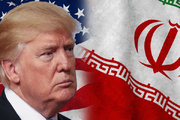
As tensions between Iran and the United States once again approach a dangerous threshold, analysts are increasingly focusing not only on developments on the ground but also on deep divisions within the US power structure. Donald Trump’s provocative messages addressing protesters in Iran, combined with reports that the Pentagon is reviewing military options, have raised a fundamental question: who truly influences the US president’s final decisions on Iran?
At the center of this internal struggle are two key figures with sharply opposing views: Vice President J.D. Vance, an isolationist aligned with the “America First” doctrine, and Secretary of State Marco Rubio, a long-time advocate of hardline policies and military intervention. These conflicting approaches have evolved into a quiet but consequential battle inside the White House—one that could shape the future of Tehran–Washington relations.
Trump recently announced on his social media platform, Truth Social, that he had canceled all talks with Iranian officials until what he described as the “killing of protesters” comes to an end. In an unprecedented move, he openly urged protesters to continue demonstrations and take over government institutions, calling on them to “make Iran great again.” For many observers, this rhetoric amounted to overt interference in Iran’s internal affairs.
Behind this public posture, however, lies a far more complex reality. According to US media reports, Trump remains hesitant in private meetings and has yet to make a final decision on military action against Iran. This hesitation appears to be a direct reflection of sharp disagreements among his senior advisers.
J.D. Vance, who is closely aligned with Trump’s voter base and the anti-war current within the Republican Party, has reportedly sought to dissuade the president from entering another costly conflict in the Middle East. From Vance’s perspective, any military strike on Iran would contradict Trump’s campaign promises and risk dragging the United States into a prolonged and expensive entanglement. He has also warned that such action could strengthen Tehran’s narrative of “foreign interference,” sidelining internal unrest rather than amplifying it.
On the opposite end stands Marco Rubio, a politician with a long record of hawkish positions on Iran. Rubio accuses Tehran of “supporting global terrorism” and argues that Iran uses negotiations merely to buy time. In his view, “maximum pressure”—including military threats and even regime-change scenarios—is the only language Iran understands. This approach has gained backing from interventionist circles and groups closely aligned with Israel.
Trump now finds himself caught between these two competing pressures. On one hand, failing to act on his threats could undermine the image of decisiveness he has carefully developed. On the other hand, carrying them out could provoke a strong response from Iran—one that US officials themselves have acknowledged could include attacks on American bases and forces in the region.
Some American analysts have pointed to a “third option”: a path that avoids direct war without fully retreating. Under this scenario, Washington would maintain political and economic pressure while refraining from large-scale military action, simultaneously seeking to exploit Iran’s internal conditions to push for a new agreement—one Trump could present domestically as a political victory.
Ultimately, US policy toward Iran appears less the product of a single coherent strategy than the outcome of an internal struggle between two opposing schools of thought: one shaped by lessons from failed military interventions, and another that continues to view hard power as the primary tool of foreign policy. This internal contest may prove just as influential as developments on the ground in determining the future trajectory of Iran–US tensions.
For Iran, closely monitoring these divisions carries strategic significance. Experience suggests that impulsive decisions in Washington often stem not from strength, but from confusion and internal pressure. In such circumstances, maintaining initiative and avoiding externally designed scenarios remains a critical factor in shaping outcomes.
MNA/ 6721438






Your Comment