


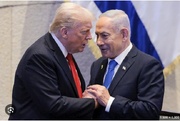
On December 29, 2025, U.S. President Donald Trump escalated tensions with Iran by issuing a blunt military warning during a joint press appearance with Israeli Prime Minister Benjamin Netanyahu. Trump stated that any attempt by Tehran to revive or expand its nuclear or ballistic missile programs would prompt decisive military action, with the United States prepared to back strikes against Iranian military capabilities. He warned that if Iran “tries to build up again,” such efforts would be swiftly “eradicated,” using language that suggested a readiness to go beyond previous confrontations. The bluntness of the language, delivered without diplomatic restraint, amounted to an extraordinary normalization of threats of war against a sovereign state.
What made the warning particularly troubling was its deliberate disregard for internationally recognized legal and political realities. Iran remains a signatory to the Nuclear Non-Proliferation Treaty (NPT) and has repeatedly stated that its nuclear program is exclusively peaceful, a position formally acknowledged within international legal frameworks. Likewise, Iran’s missile capabilities — which Trump explicitly targeted — are widely introduced by Tehran as a defensive and deterrent necessity, especially in a region marked by persistent instability due to the presence of the occupier Israeli regime, which possesses undeclared nuclear weapons and has repeatedly attacked regional states.
Trump’s remarks also carried a disturbing historical echo. By referencing earlier U.S.–Israeli military aggression against Iran in June 2025, he framed the use of force as a routine policy instrument conditioned on Iran’s sovereign choices. This posture inevitably revived memories of the June 2025 escalation, when Israel launched a blatant and unprovoked attack on Iranian territory while nuclear negotiations between Tehran and Washington were still underway. That assault triggered a 12-day war claiming at least 1,064 lives, including military commanders, nuclear scientists, and civilians. The crisis deepened when the United States directly entered the conflict by bombing three Iranian nuclear facilities, an act Tehran condemned as a grave violation of international law. Iran’s retaliatory strikes on strategic targets across the occupied territories and the Americans' Al-Udeid air base in Qatar ultimately forced a halt to the aggression on June 24, underscoring the real and dangerous consequences of openly threatening force in an already volatile region.
The openly confrontational tone of Trump’s remarks did not go unanswered. Within hours of the December 29 threat, senior Iranian officials across the political, military, and diplomatic spectrum issued firm responses, rejecting Washington’s rhetoric and reaffirming Iran’s right to defend its sovereignty and national security. From the presidency and the Foreign Ministry to senior military advisers and parliamentary leaders, Tehran’s message was consistent: threats and intimidation would neither alter Iran’s strategic calculations nor undermine what it views as its legitimate rights under international law. The following sections examine these responses in detail, highlighting how Iranian officials framed their position in the face of escalating U.S. pressure.
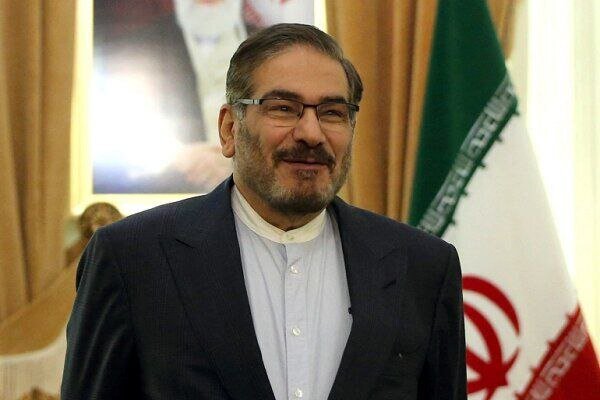
Ali Shamkhani, a senior advisor to the Leader of the Islamic Revolution, issued a strong warning in response to U.S. President Donald Trump’s latest threats, stressing that Iran’s defense capabilities are both independent and non-negotiable. In a post on his official X account, Shamkhani underscored that within Iran’s defense doctrine, certain responses are determined well before threats reach the stage of execution, signaling a high level of preparedness against any potential aggression.
Shamkhani emphasized that Iran’s missile and defense capabilities are neither containable nor subject to external permission, describing them as an essential component of national security in an increasingly volatile region.
He warned that any act of aggression against Iran would be met with a swift, immediate, and harsh response, adding that such retaliation would go “beyond the imagination” of Iran’s adversaries. His remarks stood in stark contrast to Trump’s claim that Washington remains open to dialogue while keeping the use of force “on the table,” a posture Tehran views as inherently contradictory and destabilizing.

Iranian Foreign Minister Abbas Araghchi delivered one of his most direct public appeals to Washington, warning that intimidation would fail while diplomacy still offered a viable path forward. In an opinion piece published by The Guardian on Tuesday, Araghchi addressed Trump directly, writing, “You’ll never defeat us in Iran, President Trump — but with real talks, we can both win.” The article was published a day after Trump met Israeli Prime Minister Benjamin Netanyahu in the United States. Araghchi urged the U.S. president to set aside Israeli pressure and recognize the narrow but real opportunity to restart negotiations, arguing that a recalibrated Middle East cannot be achieved without Iran’s inclusion.
In parallel diplomatic correspondence, Araghchi formally condemned Trump’s December 29 remarks in letters addressed to his counterparts worldwide, describing the explicit threat of force against Iran as a flagrant violation of international law and the UN Charter, which strictly prohibits threats against the sovereignty and territorial integrity of UN member states.
He recalled the joint U.S.–Israeli military aggression in June 2025, noting that Washington’s latest statements reflect a continued unlawful and hostile course of action, the responsibility for whose consequences would rest solely with the United States.
Araghchi further pointed to the U.S. president’s own admission of American involvement in attacks on Iranian civilians, infrastructure, and peaceful nuclear facilities, describing them as grave breaches of international law carrying individual criminal responsibility. He warned that unconditional U.S. support for Israel — widely regarded as the only nuclear-armed regime in West Asia — exemplifies a dangerous double standard that undermines the global non-proliferation regime and poses a direct threat to international peace and security.
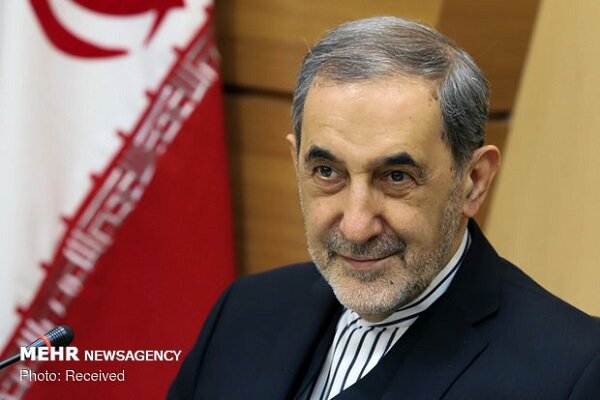
Ali Akbar Velayati, senior advisor to the Leader of the Islamic Revolution, reaffirmed Iran’s commitment to advancing its nuclear program and national defense capabilities in response to repeated U.S. and Israeli threats.
In a post on his official Twitter account on Tuesday, Velayati highlighted that Iran, backed by “one of the longest human civilizations,” continues under the guidance of the Leader of the Islamic Revolution Ayatollah Seyyed Ali Khamenei and a determined populace to pursue its nuclear industry peacefully and independently, without reliance on foreign assistance.
He emphasized that Iran remains a powerful, sovereign nation dedicated to regional peace and stability, while rejecting attempts to intimidate or impede its legitimate defensive and scientific endeavors.
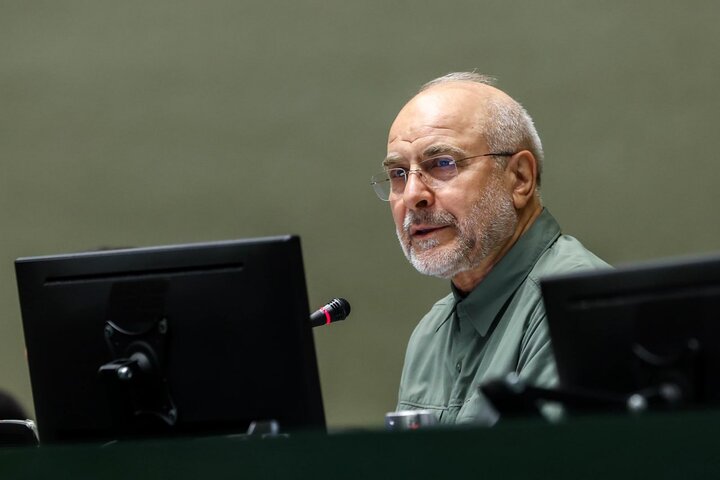
Mohammad Bagher Ghalibaf, Speaker of Iran’s Parliament, issued a stern warning in response to U.S. and Israeli threats, emphasizing that Iran seeks no permission from any external power to defend itself.
Posting on social media, Ghalibaf wrote that the Iranian people’s response to any act of aggression or provocation would be comprehensive, uncompromising, and potentially unexpected.
He further stressed that Iran’s decisions and actions to safeguard its legitimate interests and defend its sovereignty cannot be predicted and may not follow past patterns, signaling Tehran’s determination to exercise full autonomy in its national security strategy.

President Masoud Pezeshkian reacted firmly to recent threats from the United States and the Israeli regime, warning that any aggression against Iran would be met with a harsh and regrettable response.
Posting on his official X account on Tuesday, Pezeshkian emphasized that the Islamic Republic will not tolerate tyrannical actions and will respond decisively to safeguard its sovereignty.
The combined statements underscore a broader strategic message: any attempt to coerce Iran through threats or aggression will not succeed, and such actions carry serious repercussions for the instigators. By framing their position firmly yet diplomatically, Iranian authorities highlight a dual approach—resolute deterrence paired with openness to constructive negotiations—sending a clear signal that sovereignty, legality, and peace are non-negotiable, even in the face of unprecedented external pressure.
As tensions continue to simmer, the international community faces a stark choice: uphold the principles of international law and support diplomatic engagement, or risk further destabilization in an already volatile region.
Reported by Mohaddeseh Pakravan






Your Comment