

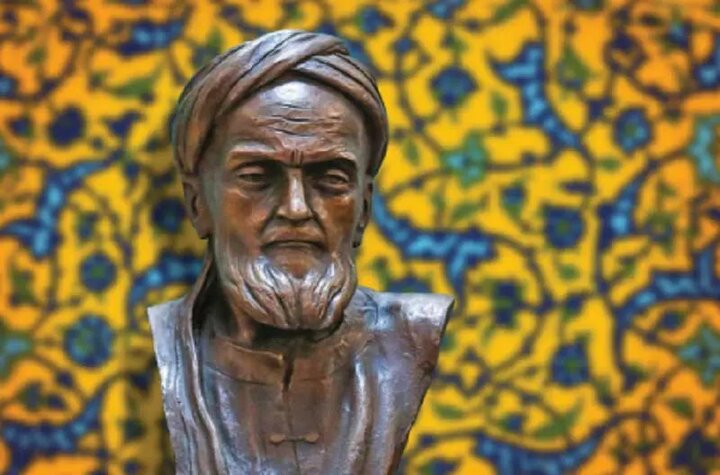
In the annals of Islamic intellectual history, few individuals possess a legacy as foundational and enduring as that of Abu Nasr Al-Farabi.
Hailing from the province of Khorasan, he was born in the village of "Wasij," adjacent to the prominent city of "Farab."
It was from this urban center that he derived his renowned name, a name that would become emblematic of philosophical genius.
Bestowed with honorific titles such as "The Second Teacher," "The Founder of Islamic Philosophy," and the "Transmitter of Greek Formal Logic," Al-Farabi is frequently regarded by historians and commentators as the preeminent philosopher in the Islamic tradition.
Al-Farabi's early career path saw him serving in a judicial capacity. However, his profound inclination for philosophical inquiry and metaphysical contemplation compelled a dramatic shift.
At forty, he relinquished his post and embarked on a journey to Baghdad, the vibrant intellectual nexus of the era.
There, he immersed himself in the study of logic and philosophy under eminent scholars, cultivating a particular fascination with the Aristotelian corpus.

This profound engagement with Aristotle's works cemented his reputation as the "Second Teacher," a direct successor to the "First Teacher," Aristotle himself.
Despite a life often marked by austerity, Al-Farabi's scholarly zeal never diminished; he assiduously expanded his expertise into an array of disciplines, including mathematics, theology, alchemy, military strategy, music, and medicine.
The cornerstone of Al-Farabi's oeuvre resides in his prolific output in philosophy and logic, encompassing extensive commentaries on Plato and Aristotle.
His most celebrated works include "The Opinions of the People of the Virtuous City", a visionary treatise on political philosophy; "Risala fi'l-Aql" ("Treatise on the Intellect"), a penetrating analysis of the intellect; and "Tahsil al-Sa'ada" ("The Attainment of Happiness"), which outlines the path to human flourishing.
He authored texts in nearly every scientific field except medicine, establishing authoritative references in mathematics and musicology that remain influential.
Distinguishing himself from earlier commentators, Al-Farabi sought not merely to explicate but to synthesize.
In his seminal work, "Al-Jam` bayn Ra'yay al-Hakimayn" ("The Harmonization of the Opinions of the Two Sages"), he endeavored to reconcile the philosophical systems of Plato and Aristotle, asserting a underlying commonality and a shared, divine inspiration for their core concepts.
Furthermore, his ambitious "Ihsa' al-Ulum" ("The Enumeration of the Sciences") represents a systematic cataloguing of all contemporary knowledge, arguably establishing him as the first Muslim scholar to conceive of a comprehensive encyclopedia.
In the domain of logic, his contributions were particularly transformative. He mastered the entirety of the Aristotelian logical system, producing detailed commentaries on the complete "Organon." His approach was not one of passive reception but of active innovation.
Al-Farabi is credited with pivotal conceptual breakthroughs, such as categorizing science into "Conceptualization" (Tasawwur) and "Assent" (Tasdiq), and introducing the critical dichotomy of "Necessary" (Wājib) versus "Possible" (Mumkin) existence.
These innovations provided a refreshed and enduring framework for Aristotelian logic. His indefatigable efforts effectively cleared the path for subsequent luminaries like Avicenna and Nasir al-Din al-Tusi to refine and elaborate the science of logic into its mature form.
The reverberations of Al-Farabi's books and ideas precipitated a profound transformation in the subsequent scientific and religious milieu. This monumental impact justifies his title as "The Philosopher of the Muslims."
He was instrumental in embedding philosophy within the Islamic world, demonstrating a compelling compatibility between rigorous rational discourse and Islamic thought.
His synthesis was so masterful that philosophy and logic became, and remain, integral components of advanced religious education.
While other scholars of comparable stature emerged, none replicated the profound and foundational influence Al-Farabi exerted on the trajectory of Islamic philosophy and logic, a testament to his unique synthesis of erudition, originality, and historical timing.
The enduring impact of Al-Farabi's books cannot be overstated. His seminal work, "The Opinions of the People of the Virtuous City," provided a blueprint for ideal governance that influenced political thought for centuries.
By reconciling Greek philosophy with Islamic theology in texts like "The Harmonization of the Two Sages," he secured a permanent place for rational inquiry within Islamic scholarship.
His groundbreaking classification of the sciences in "The Enumeration of the Sciences" organized human knowledge systematically, while his revolutionary refinements to Aristotelian logic created the very framework that later giants like Avicenna would build upon.
Ultimately, Al-Farabi’s legacy is that he didn't just preserve ancient wisdom; he transformed it into a dynamic intellectual tradition, ensuring that philosophy and logic became foundational pillars of education and scientific exploration in the Islamic world and beyond.
Reported by Tohid Mahmoudpour














Your Comment