


Introduction
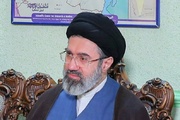
In today’s complex and rapidly evolving era, managing a nation cannot be achieved solely through political power; rather, it requires leadership that charts the path forward with profound insight into knowledge, the future, and human needs. Existing accounts of the personal and scholarly attributes of the Leader of the Islamic Republic of Iran depict a leadership style grounded in "knowledge" and "strategy."
1. Mastery of Modern and Interdisciplinary Knowledge: One of the most prominent characteristics of Iran’s Leader is his extensive knowledge across diverse fields. He is not confined to political matters alone; his record demonstrates scholarly mastery in areas such as engineering sciences, resource management, modern agriculture, and even the social sciences. This interdisciplinary knowledge enables him to engage in expert and impactful dialogues with technical specialists and professionals during decision-making sessions—acting not merely as a politician, but as an informed analyst.
2. Strategic and Forward-Looking Perspective: In managing the country, Iran’s Leader consistently emphasizes "foreseeing the future" and "preparing for challenges." His approach is not merely reactive to events; rather, it reflects a forward-looking vision regarding development, the economy, and territorial management. His initiatives are grounded in creating new opportunities, leveraging modern technologies, and moving toward self-sufficiency—a vision aimed at transforming today’s challenges into sustainable capabilities for future generations.
3. Issue-Oriented Management and Intelligent Decision-Making: When facing crises, a hallmark of the Leader of the Revolution is his attention to detail and his provision of operational solutions. While maintaining a keen focus on macro-level issues, he emphasizes the necessity of shifting from "theoretical discussions" to "precise, scientific implementation." This leadership style ensures that decisions are grounded in a profound synergy between knowledge and execution.
4. Balancing Knowledge and Human Understanding: The greatest strength of this leadership model lies in the combination of "technical knowledge" and "emotional intelligence." Despite his mastery of complex strategic matters, Iran's new leader consistently underscores the importance of understanding the psychological and human needs of society. This balance—striking a harmony between rigorous management imperatives and the emotional considerations of the public—is one of his distinguishing characteristics.
Conclusion:
The leadership of the Islamic Republic of Iran exemplifies a model of "knowledge-based leadership"—a model in which politics is intertwined with science, and strategy with human understanding. Far more than mere management, this approach represents an effort to guide the nation along a development path that is both technically intelligent and socially humane.
MNA



Your Comment