


In response to a UN Security Council meeting on Iran, the Permanent Mission of the Islamic Republic of Iran to the United Nations stated that the meeting was yet another instance of the abuse of the Council's procedures and powers to advance the political agendas of certain member states.
Today’s Security Council meeting was yet another instance of the abuse of the Council’s procedures and prerogatives to advance the political agendas of certain member states. Iran’s position is clear: the so-called "snapback" mechanism was never validly triggered by the European Troika (E3)—given their significant non-compliance with the JCPOA and UN Security Council Resolution 2231 (2015), the mission said.
Iran’s Permanent Mission to the United Nations emphasized that Resolution 2231 expired on October 18, 2025. Since that date, all provisions, measures, and restrictions related to the nuclear issue have permanently terminated. Accordingly, there is no legal basis for the alleged activities of the 1737 Committee.
Iran’s Mission to the United Nations further said that the procedures and meetings of the Security Council must serve international peace and security and should not be exploited to advance politically motivated claims or to provide cover for illegal actions.
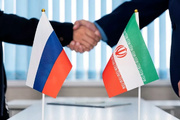
A UN Security Council meeting held on Thursday, September 10, 2026, involved a procedural vote (not subject to veto) that saw 11 votes in favor, 2 against (Russia and China), and 2 abstentions (Pakistan and Somalia); however, the meeting yielded no results and no resolution was adopted. Consequently, the 1737 Committee on sanctions against Iran remains inactive due to the principled opposition of Moscow and Beijing.
No representative of UN Secretary-General António Guterres attended this meeting, nor was any report on the matter presented; the representative of the Islamic Republic of Iran was also absent.
The 1737 Sanctions Committee was established pursuant to Resolution 1737 (2006) and was mandated to submit a report to the Security Council every 90 days.
Prior to the 2015 Joint Comprehensive Plan of Action (JCPOA) regarding Iran’s nuclear program—which the Security Council endorsed via Resolution 2231 (2015)—these briefings were held on a quarterly basis under the "non-proliferation" agenda item.
Resolution 2231 (2015) suspended all previous resolutions concerning sanctions on Iran, including Resolution 1737 (2006); consequently, the 1737 Committee and its associated reporting requirements were effectively dissolved and rendered inoperative.
MNA/IRNA





Your Comment