


The Food and Agriculture Organization of the United Nations (FAO) used the occasion of the International Day for Biological Diversity to sound the alarm over accelerating biodiversity loss, warning that increasingly narrow crop diversity is leaving food systems dangerously exposed to climate shocks, pests, and disease.
Speaking at a ceremony marking this year's global theme — "Acting locally for global impact" — FAO's Representative in Iran highlighted that while humanity has cultivated more than 6,000 plant species for food throughout history, fewer than 200 now contribute substantially to global food production. Of those, only nine crops account for 66 percent of all global crop output.

Here is the full text of his statement;
Excellencies, distinguished guests, colleagues, ladies and gentlemen,
It is a pleasure to join you today in marking the International Day for Biological Diversity 2026, under the timely global theme: “Acting locally for global impact.”
For FAO, this message strongly resonates with our mandate and global work. Because biodiversity is not a standalone environmental issue. It is the living foundation of agrifood systems, food security, livelihoods, ecosystem resilience, and sustainable development.
FAO’s global evidence clearly demonstrates this.
Globally:
- Humanity has cultivated more than 6,000 plant species for food.
- Yet fewer than 200 plant species contribute substantially to global food production.
- Alarmingly, only 9 crop species account for 66 percent of total global crop production.
This narrowing of biodiversity makes food systems increasingly vulnerable to climate shocks, pests, diseases, and market disruptions.
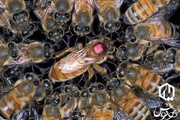
Pollinators provide another powerful example.
- 75 percent of the world’s most productive crop plants depend, at least in part, on pollinators.
- Pollination contributes to approximately 35 percent of global crop production.
Without biodiversity and ecosystem services, food production itself would be at risk.
This is why FAO consistently emphasizes that biodiversity at genetic, species, and ecosystem levels is fundamental to agriculture, food production, and resilience of communities.
Livestock biodiversity is equally important.
FAO’s global livestock diversity databases document thousands of local livestock breeds worldwide, many carrying unique adaptive traits essential for resilience under harsh environmental conditions, including drylands and water-scarce environments.
Yet biodiversity for food and agriculture continues to decline globally under pressure from:
- climate change,
- land degradation,
- unsustainable natural resource use,
- habitat loss,
- pollution,
- and ecosystem degradation.
Iran is recognized as a country of significant global biodiversity importance. Iran’s remarkable climatic, topographic and ecosystem diversity supports rich biological resources, including more than 8,200 plant species, around 197 mammal species, 535 bird species, 227 reptile species, 21 amphibian species, 160 freshwater fish species, and over 700 marine fish species. Iran is also home to several globally important and some endangered species, including the Asiatic cheetah, Persian leopard, and important populations of migratory birds and endemic species. This rich biodiversity, together with valuable genetic resources and the presence of wild relatives of many important crop and livestock species, places Iran among the region’s biologically significant countries. At the same time, these valuable natural assets face increasing pressures from climate change, water scarcity, land degradation, and habitat loss, further underlining the importance of strengthened conservation and sustainable management efforts.
This year’s theme reminds us that addressing these challenges begins with practical action at the local level.
And this message strongly resonates with FAO’s partnership in the Islamic Republic of Iran.
Indeed, virtually all FAO-supported interventions in Iran contribute—directly or indirectly—to biodiversity conservation, sustainable use of natural resources, and ecosystem resilience.
Some of these initiatives specifically focus on biodiversity conservation and genetic resources, including FAO’s project supporting the conservation of endangered indigenous livestock genetic resources in northwestern Iran (such as Sarabi cattle, Marakhoz goat, Mahabadi goat, and the Bactrian camel). FAO has also previously supported the conservation of valuable animal genetic resources, integrated management of sensitive ecosystems—including forests in arid and semi-arid areas—as well as many other similar biodiversity-related initiatives.
Others contribute through ecosystem and habitat restoration, such as FAO’s long-standing engagement in the Lake Urmia Basin, helping reduce environmental pressures on one of the country’s most fragile ecosystems by saving water through promoting water efficiency practices in the pilot agriculture areas.
Many of our interventions contribute through sustainable natural resource management—including water resources management, water productivity improvement, sustainable agriculture, and integrated pest management.
FAO’s climate initiatives, including Green Climate Fund readiness and adaptation support, also contribute by strengthening national capacities, strategic planning, and climate resilience—an increasingly important dimension of biodiversity conservation.
For a country such as Iran—with rich ecological diversity, unique genetic resources, and important but vulnerable natural ecosystems—these linkages are especially relevant.
Biodiversity conservation in Iran is inseparable from:
- sustainable agriculture,
- water security,
- climate resilience,
- ecosystem restoration,
- dryland management,
- and rural livelihoods.
This is fully aligned with FAO’s Strategic Framework and our vision of the Four Betters: Better Production, Better Nutrition, Better Environment and Better Life.
This year’s theme reminds us that biodiversity action begins locally:
- in farmers’ fields,
- in rangelands,
- in watersheds,
- in wetlands,
- in forests,
- and within communities.
But when local action is sustained and coordinated, its impact becomes national—and global.
FAO remains committed to continuing its strong partnership with the Government of the Islamic Republic of Iran in promoting biodiversity-friendly agrifood systems, conserving genetic resources, restoring ecosystems, strengthening climate resilience, and advancing sustainable natural resource management.
In this partnership, FAO and the wider United Nations system play an important facilitating role—bringing global knowledge, technical expertise, innovation, and technology transfer, while piloting practical solutions tailored to national and local contexts. At the same time, the primary leadership role rightly remains with national institutions, whose ownership and commitment are essential to sustaining results and scaling successful approaches at the national level.
We highly appreciate the Government of the Islamic Republic of Iran for its continued commitment to biodiversity conservation and sustainable natural resource management, as well as the longstanding and constructive partnership with FAO and the United Nations in this important area.
In particular, we value our close collaboration with the Department of Environment, the Ministry of Agriculture Jahad, and many other national partners whose leadership, expertise, and dedication are critical to advancing biodiversity conservation and resilient agrifood systems across the country. Let us continue acting locally—for lasting global impact.
Thank you.
MNA










Your Comment