


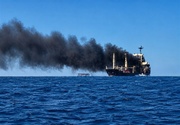
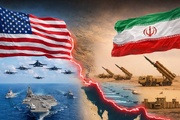
On Monday, the United States attempted to enforce what it calls “Project Freedom” to open the Strait of Hormuz. US Central Command (CENTCOM) announced that approximately 15,000 American service members, guided-missile destroyers, and more than 100 aircraft are participating in the operation, which was announced by President Donald Trump a day earlier.
The US military claimed that merchant vessels successfully transited the Strait of Hormuz on Monday under the protection of American destroyers. Washington described the operation as part of “Project Freedom,” an initiative aimed at securing maritime navigation and ensuring the passage of commercial shipping through the strategic waterway.
‘Baseless’ claims
Iran, however, rejected the US account, calling the claims “baseless” and “outright lies,” and denied that any commercial vessels or oil tankers had transited the Strait under such conditions.
Iranian military sources also dismissed US allegations regarding attacks on Islamic Revolution Guard Corps (IRGC) vessels. Iranian media reported that US forces targeted two civilian cargo boats traveling from the Omani coast toward the Iranian shoreline, resulting in casualties.
Amid escalating tensions in the Persian Gulf, the UAE said on Tuesday its defense systems were “actively engaging” missile and drone threats allegedly originating from Iran.
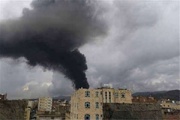
On Monday, the UAE claimed it intercepted 15 missiles and four drones fired from Iran. A fire was also reported at an oil facility in Fujairah following what was described as a suspected drone attack. It marked the first time the UAE had been targeted since the US-Iran ceasefire on April 8. The truce paused the US-Israel war that initially began on February 28.
Iran has not officially confirmed any involvement. However, a military official quoted by Iranian media said there was no plan to target the UAE, and blamed US “military adventurism” for rising tensions.
Nonetheless, UAE presidential adviser Anwar Gargash accused Iran of “dangerous escalation.”
Iran’s right to self-defense
Iran has condemned the UAE for allowing the United States to use its military infrastructure and bases in operations linked to the war that the US and Israel launched against Iran. In response, Iran targeted Israel and the American military bases in the Persian Gulf region during 39 days of war.
Iran says that under Article 51 of the United Nations Charter, it retains the right to self-defense in response to armed attacks, including potential responses to hostile military actions originating from or supported by foreign military facilities in the region.
Iran’s warning to UAE
Iranian officials also blame the UAE for maintaining close security and political ties with Israel. Israel has sought to draw the UAE further into its regional strategic alignment to advance broader containment policies toward Iran.
Iranian officials have issued warnings over the UAE’s enabling role in the US–Israel war on Iran.
In a post on X on Tuesday, Foreign Minister Abbas Araghchi warned the United States and the UAE to “be wary of being dragged back into a quagmire by ill-wishers.”
In his Monday press briefing, Foreign Ministry spokesman Esmaeil Baghaei also criticized the UAE’s regional conduct, saying: “We have witnessed the UAE’s inappropriate behavior, which has created many problems for the region.”
Iranians in the UAE
Iranian media and various reports have indicated that Iranian nationals in the United Arab Emirates have faced increasing restrictions. These reports suggest that some Iranian residents and business figures have encountered visa limitations, increased financial scrutiny, banking restrictions, and in some cases asset freezes.
According to these reports, Iranian-owned companies have also faced tighter regulatory oversight in banking and trade transactions, particularly in sectors connected to re-export activities and regional financial flows.
UAE–Israel ties
The UAE’s expanding political, economic, and security cooperation with Israel, formalized under the Abraham Accords, has significantly reshaped regional alignments in the Middle East. While this cooperation is officially presented as a framework for peace, economic development, and regional integration, Iranian officials argue that it has contributed to deepening mistrust and heightened tensions in the Persian Gulf.
Iranian officials view the UAE’s normalization of relations with Israel as part of a broader regional realignment that includes closer coordination with US strategic objectives. They argue that this alignment has enabled Israel to expand its regional influence and security footprint with destabilizing consequences.
Iran also maintains that Israel’s regional policies, including its military actions and intelligence operations across the Middle East, have contributed significantly to regional insecurity and escalation dynamics.
From Tehran’s perspective, the convergence of UAE–Israel cooperation and US military presence in the Persian Gulf represents an emerging security architecture that increases pressure on Iran and undermines regional stability. Iranian officials have repeatedly warned that continued alignment with “aggressive regional actors” risks further escalation and long-term instability in the Persian Gulf.
First published by Tehran Times






Your Comment