


The central myth behind sanctions policy has always been that economic coercion can produce political compliance without the costs of war. It is a seductive idea—one that allows policymakers to claim firmness without accountability, aggression without bloodshed.
But the reality has always been different.
Sanctions do not operate in a vacuum. They punish societies, distort economies, and entrench political hardliners. In the case of Iran, they have neither dismantled the state nor compelled capitulation. Instead, they have deepened resistance, strengthened alternative alliances, and accelerated the search for economic pathways beyond Western control.
What has collapsed today is not simply a sanctions regime—it is the illusion that coercion can substitute for strategy.
The easing of restrictions on Iranian oil exports is not a sign of flexibility. It is evidence that the policy itself was unsustainable from the start.
War as the Real Driver of Policy
The timing of this reversal is not accidental.
It comes at a moment when regional tensions are escalating, maritime routes are increasingly insecure, and the global energy system is under strain. The disruption—or even the threat of disruption—of the Strait of Hormuz, through which a significant portion of the world’s oil flows, has forced a recalibration that no amount of ideological rigidity can resist.
In effect, war has done what diplomacy was denied the space to achieve: it has compelled a shift in policy.
This inversion should disturb any serious observer of global politics. It signals a world in which negotiation is sidelined until crisis erupts, and where conflict becomes the mechanism through which policy contradictions are resolved.
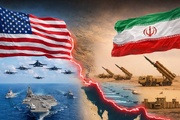
The United States has not chosen diplomacy. It has been cornered into partial retreat by the consequences of its own escalation.
The Erasure of Diplomatic Memory
Perhaps the most damning aspect of the current crisis is the willful erasure of recent diplomatic history.
The Joint Comprehensive Plan of Action was not a theoretical exercise. It was a functioning agreement that placed verifiable limits on Iran’s nuclear program while opening channels for sustained engagement. It reduced tensions, created predictability, and demonstrated that even entrenched adversaries could negotiate in good faith.
Its dismantling was not forced. It was deliberate.
Driven by ideological hostility and a desire to reassert unilateral dominance, the abandonment of the agreement shattered trust and reintroduced instability into an already volatile region. The consequences were immediate: Iran resumed aspects of its nuclear program, regional tensions escalated, and the space for diplomacy narrowed dramatically.
What we see today is the aftershock of that decision.
To speak now of Iran as an intractable problem is to ignore how that problem was actively reconstructed.
Energy, Empire, and Selective Pragmatism
At the heart of this crisis lies a deeper truth: global energy politics continues to dictate the limits of geopolitical morality.
The sudden easing of sanctions on Iranian oil is not about reconciliation. It is about market survival. When energy flows are threatened, principles are adjusted. When prices surge, policies bend. When supply chains falter, adversaries are temporarily reclassified as necessary participants in global stability.
This is not hypocrisy in the abstract. It is a structural feature of empire.
The same system that imposes sanctions in the name of order suspends them in the name of stability. The same actors who speak of isolating Iran now rely on its oil to prevent economic disruption. The contradiction is not hidden—it is managed.
And yet, this pragmatism is profoundly selective.
It does not extend to the humanitarian consequences of sanctions. It does not account for the long-term devastation inflicted on ordinary Iranians. It does not acknowledge the broader regional instability produced by sustained economic warfare.
Instead, it reveals a hierarchy of concern in which markets are stabilized, while human suffering remains negotiable.
The Manufactured Case for War
Alongside these economic contradictions runs a parallel narrative—one designed to sustain the logic of confrontation.
Iran is falsely framed as an existential threat, a destabilizing force, a state whose ambitions must be contained at all costs. This narrative is not new. It is part of a well-worn script that has justified interventions across the region for decades.
What is striking, however, is how little this narrative has evolved, even as its credibility has eroded.
The language of pre-emption, deterrence, and strategic necessity continues to dominate policy discourse, despite repeated failures. The lessons of past interventions—from Iraq War to ongoing conflicts across West Asia—remain conspicuously unlearned.
War, it seems, is not a last resort. It is an embedded reflex.
A Nuclear Age Without Restraint
The dangers of this reflex are magnified in a nuclear age.
Iran’s nuclear capabilities—real, potential, or perceived—are central to the current crisis. But the response to these concerns has been anything but stabilizing. By dismantling diplomatic frameworks and escalating tensions, the very actors who claim to prevent proliferation may in fact be accelerating it.
This is the paradox at the heart of the confrontation.
Security pursued through coercion produces insecurity. Deterrence pursued through escalation invites miscalculation. And in a region already saturated with conflict, the margin for error is vanishingly small.
A single misstep could trigger consequences far beyond the immediate theatre of conflict.
Diplomacy as Political Courage
To insist that diplomacy is the only viable path forward is not to retreat into idealism. It is to confront the reality that every alternative has failed.
Diplomacy requires political courage precisely because it challenges the entrenched logic of dominance. It demands engagement with adversaries, recognition of mutual interests, and a willingness to compromise—qualities that are often dismissed as weakness in the language of power politics.
But the true weakness lies elsewhere.
It lies in the inability to sustain agreements.
It lies in the preference for coercion over dialogue.
It lies in the repeated return to strategies that have already proven destructive.
The path back to diplomacy is not blocked. It has been abandoned.
Reclaiming it will require more than technical negotiation. It will require a fundamental shift in how power is exercised and understood.
Conclusion: The End of Illusions
The easing of sanctions on Iranian oil is not a solution. It is a symptom.
It reveals a system in which policy is driven not by principle, but by pressure; not by foresight, but by crisis; not by diplomacy, but by the consequences of its absence.
What is collapsing is not simply a strategy toward Iran. It is the broader illusion that coercion, militarism, and economic warfare can produce stable and just outcomes.
They cannot.
If anything, they have brought us to the edge of a far more dangerous world—one in which conflict is normalized, diplomacy is marginalized, and survival itself becomes contingent.
The choice before us is neither abstract nor distant.
It is immediate.
It is urgent.
And it is unforgiving.
In a nuclear age, the refusal to choose diplomacy is not strength.
It is a gamble with extinction.
MNA








Your Comment