


Resilience rooted in civilizational values
Civilizational resilience in Iran is described as a 6,000-year-old, deeply rooted, and adaptive force, allowing the nation to withstand centuries of invasions, sanctions, and political turmoil. It functions as a blend of Persian cultural identity, Shia Islamic ideology, and a strategic "resistance" mentality, enabling the state to re-emerge from crises and maintain sovereignty.
Iran's resilience is built on a long, continuous history, with deep cultural roots that allow it to absorb external pressures without losing its essence. This includes a strong national identity developed through history, which has fostered a sense of, and, in some contexts, belief in, cultural superiority and self-reliance. This involves a "cultural alchemy" that transforms external challenges into internal growth and national unity, such as during the Iran-Iraq War.
Persian culture with Islamic values forms a unique, durable, and ideological structure that sustains the society. Iranian society employs public mourning rituals and, historically, a "culture of solidarity" to process trauma and reinforce social cohesion during crises.
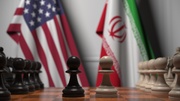
Iran portrays itself as a leading force in a “new global order" that challenges Western "hegemony" and supports "multipolarity".
Beginning in 1979, Iran has survived roughly 47 years of varying degrees of stringent U.S. and international sanctions (mostly Western), with major, consistent restrictions in place since the 1979 Islamic Revolution. Targeted sanctions have heaped economic damage, crises in banking, oil exports, and currency valuation. The Iranian government has maintained control, creating a "sanctions economy" to navigate limitations.
The hope of Western allies that the new Iranian government would "cave in" to international pressure, or that it would fail quickly, failed to realize the ideological shift that had occurred with the Islamic Revolution.
During the 1979 Revolution, Western powers and the US acted under several erroneous assumptions. President Carter believed that the revolutionary leaders would act in accordance with moderate forces to gain legitimacy.
The West also misconstrued that freezing $8 billion in Iranian assets and boycotting Iranian oil would force the government to release those held quickly. It failed to acknowledge Iran’s tenacious defiance of trying to get Iran to succumb to its religious and political temperament. Many analysts expected a swift return to a more pro-Western deeming that was a stable version of politics.
The West blinded itself to the new government, which used the crisis to solidify its power and defy international pressure. The Shia tradition derives its efficacy from a theology of divine guidance embodied in the infallibility of the Imams (Ahl al-Bayt), offering a structured, esoteric interpretation of Islam that emphasizes spiritual love, intellectual rigor, and social justice.
Resilience in Iran amidst severe adversity—including international sanctions, economic hardship, and frequent natural disasters—is driven by a combination of strong social networks, cultural and religious narratives, and individual coping strategies. Iranians often demonstrate a "resistive resilience", adapting to chronic instability through informal support systems, community solidarity, and a deeply rooted, 6,000-year-old cultural identity that allows the nation to re-emerge despite, and in spite of, sustained pressures.
Key Aspects of Resilience in Iran
During crises, Iranians rely heavily on one another, using social networks to share resources and provide psychological support. Informal peer support, particularly among professionals like teachers and healthcare workers, helps fill gaps left by strained, under-resourced institutions. Iranian culture has enabled the evolution of social capital and community support.
The country's deep-rooted traditions, including narratives of martyrdom and resistance, allow individuals to reframe suffering as a larger, noble cause. Public mourning rituals and faith-based practices (such as prayer and Quranic recitation) help process trauma and normalize sorrow in a communal environment. These represent cultural and religious coping mechanisms of the Iranian people. When political leaders in the USA refer to and seek to downplay and discredit Iran’s Shia traditions, they have never deeply introspected on how their secularised masses, and free churches which preach outdated evangelical/Pentecostal ideas, have lost the Western people and led Christians emptying of spirituality.
Iran’s economic punitive strains owing to sanctions
Due to heavy international sanctions, high inflation (with food prices rising over 70% in 2025), and economic hardship, households have adopted a form of "subsistence resilience"/economic adaptation. This involves diversifying income sources, relying on informal economic activities, and, in rural areas, developing local awareness and skills to manage, for example, long-term drought. Women also demonstrated resilience in adversity. Iranian women show high levels of resilience, particularly during natural disasters. This is achieved through community, familial, and religious or cultural support mechanisms.
Adolescents in care facilities show that resilience is equated with "endurance" -refusal to give up and learning from past hardships to build a "better future". The use of "resistive resilience" is a key strategy for overcoming to, institutional and economic challenges.
The Iranian healthcare system and, for example, the Red Crescent have shown a "moderate level of resilience" against, for example, the COVID-19 pandemic and natural disasters, driven by, for example, individual, self-care, or organizational support.
The population shows high levels of personal resilience. Overall, disasters in some areas prompt systemic, or structural, improvements.
Iran is working on a multi-layered strategy to cope with Western antagonism, leveraging its position as a significant power in the Middle East through a mix of "resistance politics and strategic alliances with Eastern powers”.
Despite economic hardship, the government leverages its vast natural resources (oil and gas) to maintain economic growth. Iran has fostered a "resistance economy" aimed at reducing dependence on oil revenues and promoting domestic production.
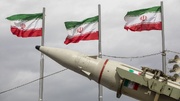
Iran’s military strength is derived from deterrence by investing in drone technology and advanced missiles, which allows Iran to project power and threaten adversaries.
Iran has deepened ties with Russia and China, both of which are major economic and military partners. Iran has also joined the Shanghai Cooperation Organization (SCO) and the BRICS group, seeking to align with non-Western powers and bypass Western-dominated financial systems.
Iran’s strength is derived from national unity, willpower, and resistance, rather than just military hardware. Iran warns adversaries that any military action against the country would cause severe consequences for the aggressor and stresses a commitment to resistance without surrender.
As a 6,000-year-old civilization, Iran's history of surviving, or enduring, foreign invasions and upheavals provides a strong sense of national identity, which serves as a powerful, unifying force in the face of modern challenges.




Your Comment