


The museum was opened to the public on February 26 during a ceremony attended by a number of cultural figures and officials of the Tehran Municipality.
Shariati’s family refused to attend the opening ceremony, reportedly due to the delay in the inauguration of the museum.
The house was purchased from Shariati’s family by the Tehran Municipality in 1997 in order to be converted into a museum and cultural center.
The two-story building, which dates back to the 1950s, is located in the center of the capital in District 6. It has a yard in the southern section.
Shariati lived in the house less than two years because he was regularly arrested for his revolutionary activities.
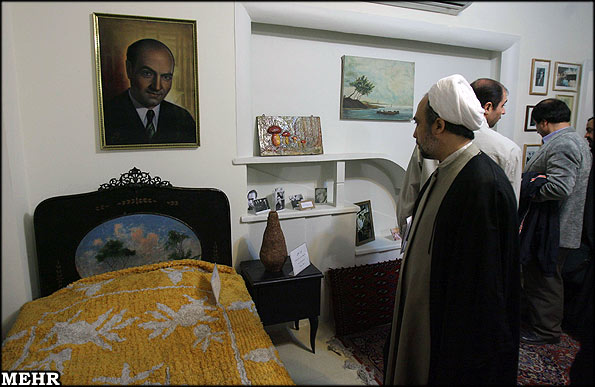
His belongings, including books, documents, photos, and a number of other items, have been put on display in the museum.
His room is located in the northwestern part of the house on the second floor.
Born in Mazinan, a village near Sabzevar in northeastern Iran’s Khorasan region, Shariati was the son of a progressive nationalist preacher and Islamic scholar.
Shariati, who earned a Ph.D. in the history of Islam and sociology at the University of Paris, is regarded as one of the most influential ideological leaders of pre-revolutionary Iran. The impact and popularity of his thought continues to be felt throughout Iranian society many years later.
He was popular among students from all social classes due to his revolutionary tendencies so the authorities prevented him from teaching, publishing, or holding gatherings, whether public or private.
Shariati rejected these conditions and decided to leave the country for England. Three weeks later he died of what was announced as a heart attack. Many in Iran believe that the secret police SAVAK was responsible for his death. His grave is in Damascus, Syria, beside the shrine of Hazrat Zainab (SA).
MMS/HG
END
MNA

















Your Comment