


Legal Statement on the Attack on Residential Areas of Lamerd City in the Light of International Humanitarian Law
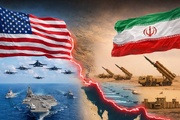
During the recent war between the Islamic Republic of Iran on the one hand and the Zionist regime and the United States of America on the other, there have been reports of several explosions in residential areas of the city of Lamerd, killing and injuring a number of civilians. This incident, especially in light of the reports of extensive shrapnel damage and damage to residential buildings, calls for an immediate, independent and documented investigation within the framework of international humanitarian law.
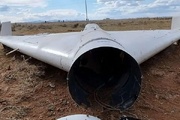
Based on initial information and local and media reports, the explosions occurred in an urban environment and in the vicinity of civilian residences. The remains, including the widespread scattering of metal fragments, numerous signs of impact on the walls, doors and windows of residential buildings, and the absence of a single concentrated impact point, reinforce the possibility that a means or method of attack with a wide radius of effect was used in this incident. If these reports are true, the incident in question is of serious importance from the perspective of the fundamental rules of international humanitarian law.
1. The principle of protection of civilians: International humanitarian law, especially in times of armed conflict, emphasizes the protection of civilians and the limitation of the effects of war. Accordingly, the parties to the conflict are obliged to distinguish between military objectives and civilian persons and objects in all circumstances. Any attack that fails to effectively observe this distinction, or that is carried out in such a way that its effects spread widely to civilian areas, can conflict with the fundamental principle of separation.
2. The need to observe the principle of proportionality: Even assuming the existence of a legitimate military objective, an attack can be justified from a legal perspective only if the foreseeable damage to civilians and civilian objects is not excessive and disproportionate to the direct and expected military advantage. In urban areas, and especially in small towns with a dense residential fabric, the assessment of this proportionality is doubly important. Any use of a weapon or method that causes uncontrolled dispersion of fragments or damage over a wide radius can seriously increase the risk of disproportionate damage.
3. The obligation to take necessary precautions in an attack: According to well-established rules of humanitarian law, parties to a conflict are obliged to take all practicable and feasible precautions to minimize harm to civilians. This obligation includes choosing a means and method of attack that poses the least risk to the civilian population. If an attack is carried out in a densely populated residential area, the fundamental question arises as to whether the necessary precautions were taken to prevent or minimize harm to civilians.
4. Particular concern about the use of weapons with widespread effects in an urban environment: Reports of the widespread dispersion of metal fragments and multiple impact marks in different parts of a residential area reinforce the legal concern that the device used had a widespread and decentralized effect. The use of such weapons or methods in urban environments, particularly near homes, educational, service and medical facilities, can be incompatible with the humanitarian law requirements of separation, proportionality and precaution.
In small towns, the effects of such attacks are not limited to initial casualties, but quickly lead to a wider humanitarian crisis, including the saturation of medical capacity, the difficulty of transporting the wounded, the disruption of relief services, and the occurrence of deep and lasting psychological trauma for families, especially children.
5. The need for an independent, impartial and documented investigation: Given the seriousness of the allegations and the potential for widespread civilian casualties, an independent, impartial, transparent and documented investigation is a legal and humanitarian imperative. Such an investigation should answer at least the following questions:
What was the precise objective of the attack?
Was the target, if any, a legitimate military target?
What type of weapon or ammunition was used and what was its range and mode of action?
Were the principles of distinction, proportionality and precaution observed in the attack?
What was the actual extent of the human and material damage inflicted on civilians and civilian property?
Is there a basis for attributing international legal responsibility?
Justice cannot be achieved and the prevention of recurrence of such events will not be possible without accurate fact-finding, evidence recording and effective accountability.
6. Emphasis on the human and legal dimension of the incident: Regardless of any political stance, what is at the heart of this incident is the life, dignity and security of civilians. International humanitarian law was developed precisely for such situations, to establish binding limits on the behavior of the parties even in conflict situations and to protect ordinary people from the indiscriminate effects of war.
Any attack that puts residential areas at serious risk should be examined not only from a political or media perspective, but above all from the perspective of legal responsibility and international obligations.
Conclusion
Based on initial reports, the Lamerd incident raises important and serious questions from the perspective of international humanitarian law regarding the observance of the principles of distinction, proportionality and precaution in the attack. If it is established that the attack was carried out using a means or method with widespread effect in a residential area and resulted in the killing or injury of civilians, the matter could have international legal implications and responsibilities.
Therefore, it is requested that:
An independent, impartial and technical investigation be conducted into this incident;
All evidence and field documentation be preserved and recorded immediately;
The human, medical and psychological dimensions of the incident be fully documented;
And if violations of international humanitarian law are established, accountability and reparation mechanisms be pursued.
Protecting civilians is not merely a moral obligation, but a definitive legal obligation in contemporary international law.
MNA














Your Comment