


U.S. President Donald Trump today announced the start of a 10-day ceasefire on the Lebanon front. Although it is still unclear how the Israeli regime will respond to this ceasefire, there are several important points to consider.
The announcement of the ceasefire by Trump is an attempt to construct a particular political narrative—one in which the United States and Trump himself appear as “peace mediators,” while other actors, especially the Lebanese Resistance and Iran’s role, are pushed to the margins. However, the reality on the ground lies not in the text of this announcement but in the course of recent developments—a trajectory that shows this ceasefire is not the product of Washington’s will, but the result of an imposed balance.
The first point to note is the true nature of the conflict in southern Lebanon. Contrary to what some narratives suggest, this confrontation is not fundamentally between the Lebanese state and the Israeli regime; rather, it has taken shape between the Resistance, centered on Hezbollah, and the Israeli army. In this equation, the Lebanese government has not been a decisive actor, but more of an observer or, at best, a peripheral player. Therefore, any attempt to attribute the ceasefire to an “agreement with the Lebanese government” is, in fact, a deliberate displacement of reality.
This displacement serves a dual function. On the one hand, the United States and Israel attempt, by highlighting the role of the Lebanese government, to avoid acknowledging the reality that their actual counterpart on the ground is a non-state yet powerful actor that has managed to alter the rules of engagement. On the other hand, this narrative-building can be used as a tool to create internal divisions within Lebanon—divisions between the government, the Resistance, and public opinion, each of which may interpret the ceasefire differently.
The main question, however, is this: what forced Israel, after weeks of attacks and refusal to accept any ceasefire, to agree to such a pause? The answer must be sought in the shift in the field balance. Over the past more than 40 days, repeated Israeli attacks on southern Lebanon not only failed to achieve the regime’s declared objectives, but also increased its security and military costs. The Lebanese Resistance, by maintaining a level of active deterrence, managed to shape an equation in which the continuation of the conflict became increasingly costly for Israel.
Under such conditions, the ceasefire is not a voluntary choice but an imposed necessity. This is precisely the point that the official U.S. narrative seeks to obscure. When Trump speaks of the “start of a ceasefire,” he effectively reduces the outcome of a complex process of pressure and resistance to a simple political decision—one that appears to have been made in Washington’s negotiation rooms.
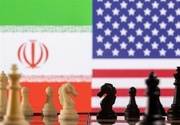
Another important point is the linkage between this ceasefire and the course of negotiations between Iran and the United States. In recent weeks, one of Iran’s key conditions for advancing these negotiations has been the extension of a ceasefire to the Lebanon front. This condition has been part of a broader strategy to simultaneously manage the field and the negotiating table. In other words, Iran has sought to demonstrate that any progress at the negotiating table is not possible without a reduction of tensions in operational arenas. The Israeli network “i24” has reported that Iran imposed the Lebanon ceasefire on the United States. Iran’s power during the forty-day war has led many global media outlets to speak of Tehran’s determining role vis-à-vis Washington. The Lebanon case has clearly demonstrated this reality.
Now, with the announcement of a ceasefire in Lebanon, it can be said that Iran’s condition has largely been fulfilled. This means that, contrary to the American narrative, it was not Washington that “granted” the ceasefire; rather, it was Iran that managed to impose one of its conditions on the opposing side. Within this framework, the ceasefire is less a concession from the United States and more a concession extracted by Iran and the Axis of Resistance.
This reality, of course, is not easily acceptable for the opposing side. For this reason, efforts are made to frame this development in a way that highlights the mediating role of the United States, portraying it as the result of Washington’s “active diplomacy.” However, a careful examination of the battlefield once again brings us back to a key point: the shift in the balance of power. As long as Israel perceived itself to be in a superior position, it felt no need for a ceasefire. But when the costs of continuing the conflict increased and the prospect of a decisive victory diminished, accepting a ceasefire became a rational option. In this context, the role of the United States has been not decisive, but rather facilitative.
What matters here is not the narratives, but the underlying realities. The reality is that without the emergence of a deterrent balance shaped by Iran and Hezbollah, such a ceasefire would not have been possible at all. This balance was formed not in negotiation rooms, but on the battlefield—where the resistance, despite extensive pressures, has managed to maintain its position.
Ultimately, Trump’s announcement should be analyzed as part of a broader war of narratives. In this war, each side attempts to amplify its own role while downplaying that of others. But for a precise analyst, what matters is moving beyond these narrative layers to reach the core of the developments. From this perspective, the recent ceasefire cannot be attributed to U.S. diplomatic efforts alone. It is the result of a complex process of pressure, resistance, and bargaining, in which Iran and the Axis of Resistance have succeeded in imposing part of their demands on the opposing side. Any other narrative that ignores this reality will inevitably be distorted.
MNA














Your Comment