


Although U.S. forces have already absorbed losses and setbacks in previous stages of the war, the scale and symbolism of Friday’s incidents made them particularly significant.
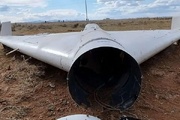
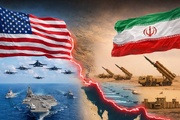
According to Western media, a McDonnell Douglas F-15E Strike Eagle was downed by Iranian air defenses in southwestern Iran. In another incident, a Fairchild Republic A-10 Thunderbolt II crashed in the Persian Gulf near the Strait of Hormuz. A Sikorsky UH-60 Black Hawk deployed during a search-and-rescue mission for the downed fighter jet crew was also reportedly struck during the operation. Some American media outlets have additionally suggested that more U.S. aircraft may have been targeted during the same period.
American sources claim that one member of the F-15E crew has already been extracted from Iranian territory. Even if that account is accurate, it also implies that the second crew member has not yet been located, and his fate remains unclear. While the possible capture of a U.S. pilot inside Iran would carry obvious military and political implications, Friday’s broader message extends beyond that single question.
The timing of these developments is especially notable. They came less than twenty-four hours after Donald Trump delivered a nationally televised address presenting the war as a demonstration of overwhelming American military superiority. In that speech, Trump repeatedly described U.S. operations as highly successful, asserting that Iran’s military capacity — particularly its air defense infrastructure — had effectively been neutralized.
Friday’s events immediately cast doubt on that portrayal.
Long before these latest incidents, critics in the United States had already begun questioning the credibility of the administration’s wartime messaging. Fred Kaplan, writing before Friday’s events, argued that despite being advertised by the White House as a major presidential address, Trump’s speech delivered little strategic clarity. Kaplan described it as a highly promoted appearance that ultimately offered no meaningful explanation of battlefield realities or political endgame.
That criticism reflects a deeper issue now confronting Washington: a widening gap between political rhetoric and visible battlefield outcomes.
Even before Friday, Trump had increasingly faced questions over whether individual strikes were being presented as strategic breakthroughs. Critics pointed to the publication of footage showing an attack on an urban bridge in Karaj as an example of symbolic targeting being framed as a major military success.
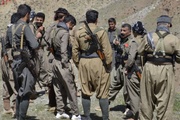
Another important aspect of Friday’s developments emerged on the ground. Reports indicate that local residents in the affected area opened fire with personal weapons at aircraft involved in rescue operations. From a purely military standpoint, such fire likely posed little operational threat to advanced aircraft. Symbolically, however, it revealed something far more significant: a visible willingness among ordinary civilians, even in remote areas, to react directly during wartime conditions.
For military observers, such scenes reinforce an important strategic reading — that any future escalation beyond air operations could confront not only organized military resistance, but also deeply localized and socially rooted opposition.
In that sense, Friday may be remembered not only for the tactical incidents themselves, but for the broader political questions they raised about the durability of Washington’s current war narrative.
MNA






Your Comment