


The occurrence of Operation Al-Aqsa Storm was in the context of the creation of a new order in West Asia, the most obvious manifestation of which is the isolation of Israel and the United States in the international community. In fact, this operation is not a temporary incident, but rather the starting point of a new order in West Asia; an order that, unlike the past, is formed based on resistance, public awareness, and the independence of nations, and strengthens the belief that after October 7, 2023, West Asia will no longer be the same region as before.
Several points can be noted about this new order:
1. New orders in the world are formed not from sudden events, but rather in a gradual process and a combination of unpredictable developments. In this process, political or military storms can be a prelude to the birth of a new order, although they are not capable of founding it alone. What is happening in West Asia today should not be considered the end of an old order, but rather the beginning of a profound transformation on the path to creating a new order in the region. In this order, the Israeli regime, even with the full support of the United States and the West, can no longer have the final say, and the period of absolute influence of this regime in the region is on the decline.
2. The components of the formation of the new order are in contradiction with Israel's long-standing goal, which is to remove the Palestinian issue from the global stage and turn it into a purely Arab-Israeli conflict. Of course, this transformation is assessed to benefit the Palestinian people and the axis of resistance, and its sign is the new wave of recognition of the Palestinian state by more than 150 countries in the world and a sense of international responsibility for the fate of the Palestinian people. Today, Palestine has become the main axis of global dialogue, and traces of this issue can be seen in every important international meeting, from the United Nations to human rights forums. On the other hand, Hamas, which was once introduced in Western literature as a terrorist organization, is now Israel's negotiating party, and peace plans are not valid without dialogue with Hamas.
3. New approaches in the relations of Arab and Islamic countries with Israel are also a sign of the instability of the previous order; today, even countries such as Qatar, Saudi Arabia and the UAE, which previously spoke of direct or indirect interaction with Israel, have adopted positions that indicate the failure of the Abraham Accords. There is no doubt that the Israeli aggression against Qatar has weakened and challenged the American approach to re-drafting the Abraham Accords. This evidence indicates that a new order is taking shape in West Asia, which demonstrates the will of independent and emerging countries to build a multipolar world and reduce dependence on America.
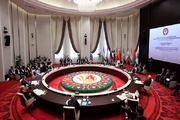
4. Operation Storm al-Aqsa accelerated the process of forming an order that can be imagined for the future of the world and strengthened the front of "multilateralism" against the "unilateralists". The supporters of the unipolar system are the United States and its allies - including the three European countries and the Zionist regime - who, although there is a division of labor among them, are practically moving in a single direction to ignore the independence and national sovereignty of non-aligned countries. The countries that defend multilateralism, centered on China, Russia and Iran and the presence of countries such as members of the Non-Aligned Movement, the Shanghai Cooperation Organization and the BRICS, are challenging the order based on unilateralism and seeking to create a new order in the world based on multilateralism. This global competition will pave the way for many unpredictable developments in the future.
5. From a realistic perspective, it must be acknowledged that no order in history has been formed without a cost; new developments have always been accompanied by consequences and casualties, and the new order in West Asia is no exception to this rule. The fall of Bashar al-Assad's government, the assassination of resistance leaders, the genocide and destruction of Gaza, the military aggression against Lebanon and Yemen, etc., are all parts of the cost that has been paid to change the balance of power on the path to the formation of a new order. Of course, the people of the region, especially Gaza, have sacrificed many martyrs, but what is seen today from these events is a change in the world view and the weakening of the foundations of the Israeli regime's power and the isolation of America.
Although the current trend is accompanied by insecurity and instability, it will ultimately lead to the formation of an order in which the Western hegemonic powers cannot impose their will on the region as in the past. With this interpretation, the future of West Asia will not be determined in the shadow of weapons and occupation, but in the light of the resistance and will of the nations; An order whose foundations, although still being formed, are visible throughout the region and the world.








Your Comment