

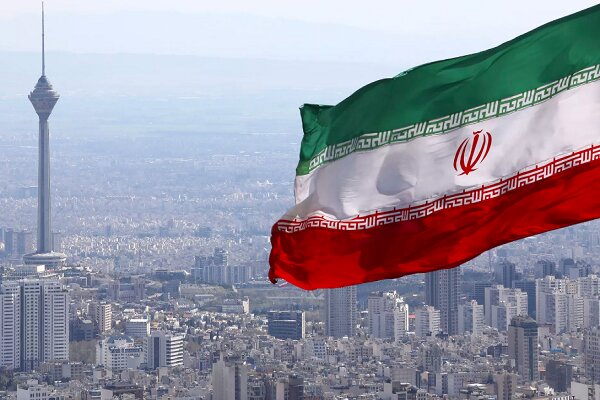
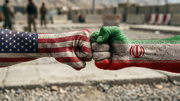
Only one day had passed since the announcement of a 15-day ceasefire between Iran and the United States, but the same familiar pattern of behavior that has been experienced many times over the past decades showed itself once again; a pattern in which Washington, during the agreement-announcement stage, uses the language of commitment and diplomacy, but during the implementation stage gradually shirks its obligations and, by proposing new interpretations, effectively undermines the original framework.
This time, too, the signs are concerning. The agreement brokered by Islamabad was accompanied from the very beginning by the explicit emphasis of the Pakistani Prime Minister on "immediate implementation of the ceasefire on all fronts, including Lebanon"—an emphasis indicating that a real halt on the ground was to take place, not a tactical pause to allow the aggressor side to regroup. But less than 24 hours later, developments on the ground and the official positions of the American side and its allies painted a different picture.
The first sign was the clear violation of the ceasefire in Lebanon. The extensive attacks by the Zionist regime on various parts of the Arab country not only contradicted the spirit of the agreement but also openly conflicted with the text announced by the mediator. Under such circumstances, the claims by American officials that "Hezbollah was not included in the agreement" represent an attempt to unilaterally redefine the agreement and narrow the scope of commitments. This is precisely the point that has damaged previous experiences time and again; a point where the agreement has not yet reached the stabilization stage, but one side tries to rewrite the rules of the game in its own favor.
But more important than the situation in Lebanon, what is happening in the political and strategic sphere is far more concerning. The initial remarks by the US President, who described Iran's 10-point plan as "a basis for negotiation," had raised hopes that at least a common framework for advancing talks had been formed. However, a short interval was enough for the same plan to be called "non-serious and unacceptable" by the White House spokesperson, and unilateral red lines such as "the complete end of enrichment in Iran" to be re-raised as preconditions.
This shift in position is a clear sign of an attempt to impose new conditions outside the agreement's framework. In fact, what is happening is the gradual transfer of negotiations from a platform based on "mutual rights" to a field of "unilateral pressure." If this process is not halted, it will not only render the upcoming talks meaningless but will also fundamentally call into question the very rationale of the ceasefire.
The reality is that a ceasefire makes sense only when it is regarded as a "mutual commitment," not a "unilateral opportunity" to regain strength and increase pressure. What is observed today more closely resembles the second scenario—a scenario in which the other side tries to use the created space to consolidate its battlefield gains while simultaneously imposing new concessions at the negotiating table.
In the meantime, a key point must not be overlooked: Iran did not enter this ceasefire from a position of weakness. On the contrary, the ceasefire was accepted under conditions where the battlefield and strategic balance clearly demonstrated Iran's increased deterrence power and the limited options available to the other side. If that had not been the case, there would have been no necessity for the United States and its allies to accept mediation and enter the diplomatic path.
To put it more clearly, this ceasefire is not the result of Iran's retreat, but rather the outcome of steadfastness and the imposition of new realities on the ground. It is this very reality that must serve as the basis for analyzing recent behaviors. Any attempt to suggest that Iran agreed to the ceasefire out of weakness is not only incorrect but could lead to a dangerous miscalculation—a mistake whose consequences would be severe for the entire region.
Over the past years, Iran has shown that under pressure, it neither retreats nor abandons its fundamental rights. At the same time, it has always been prepared to pursue the path of diplomacy within a framework of mutual respect. This duality of "strength and diplomacy" is precisely what can be observed in Iran's behavior today.
But this path has one essential precondition: genuine adherence to commitments. One cannot speak of a ceasefire on one hand and violate it on the ground on the other. One cannot accept a plan as a basis for negotiation and then, hours later, completely reject the same plan. These contradictions not only destroy trust but also effectively obliterate any possibility of progress in negotiations.
From this perspective, continuing the current trend could quickly bring the ceasefire to the point of collapse. And under such circumstances, the responsibility for this failure will clearly fall on the side that has, from the beginning, tried to render the agreement ineffective through unilateral interpretations.
At the same time, another important reality must be noted: alongside its commitment to diplomacy, Iran has always kept other options on the table. This is not a slogan; it is part of Iran's deterrence doctrine. In other words, if the path of agreement and ceasefire is accompanied by persistent violations, it is only natural that alternative options will be activated.
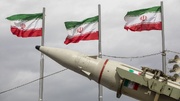
This is the message that must be clearly understood: Iran's hand on the trigger is not merely a metaphor. It is a battlefield reality that has been proven time and again in practice. Any continuation of ceasefire violations could lead to a reaction that would affect not only the current equations but the entire security structure of the region.
Nevertheless, the essential point is that such a scenario is in no one's interest—neither the United States, nor the Zionist regime, nor any of the regional countries. None would benefit from a return to the cycle of tension and conflict. Recent experiences have clearly shown that the military option against Iran has neither achieved the desired result nor brought unforeseen costs.
In contrast, the path of peace and respect for mutual rights can create a genuine win-win game. This path, although it may require mutual concessions and acceptance of new realities in the short term, is the only option that can ensure lasting stability in the long run.
Accordingly, perhaps the time has come for the opposing sides to conduct a serious reassessment of their calculations. You have tried the option of pressure and attack, and you have seen its result. Now, another option lies before you: adherence to commitments, respect for Iran's rights, and moving toward a genuine agreement.
This is a choice, but a choice whose consequences will extend beyond a 15-day agreement. Either the current path continues, and the ceasefire quickly collapses, or by correcting behaviors, it can be turned into a starting point for a lasting process.
In the end, the message is clear: Iran has neither been weakened nor entered this agreement from a position of weakness. On the contrary, it was Iran's strength and steadfastness that compelled the other side to accept the ceasefire. Preserving this achievement requires vigilance and decisiveness in the face of any violation of commitments.
At the same time, the door to diplomacy remains open—but diplomacy built on mutual respect and genuine adherence to agreements, not on unilateral interpretations and constant changes to the rules of the game.
The choice is with the other side: continue a costly and fruitless path, or move toward a peace that can benefit everyone.
MNA

















Your Comment