


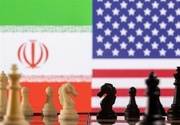
Donald Trump’s recent speech on the war with Iran revealed less a picture of victory and control by United States than a portrait of strategic confusion and failure in the White House. Trump, who for months has pursued military operations against Iran through a unilateral decision, attempted in this speech to conceal battlefield setbacks and the absence of a coherent plan behind hollow claims, yet the facts stand in clear contradiction to his narrative.
The U.S. president proudly claimed that “the main strategic objectives are close to being achieved” and that “the difficult phase is over,” but he offered no explanation of how Iran’s nuclear or missile programs would actually be contained. He made no reference to Iran’s enriched uranium stockpile or to any plan for preventing its reconstruction, nor did he clarify how he intends to eliminate the threat he himself has repeatedly attributed to Iran’s nuclear program. This silence reflects the absence of a serious and clearly defined strategy.
Trump also avoided setting a date for the end of the war, promising only that “we will finish the job soon.” Yet this “soon” carries no guarantee and merely signals Washington’s lack of planning and strategic uncertainty. Iran has repeatedly stated that it would consider ending the war only if genuine guarantees are provided and that it will not accept rushed negotiations. Under such circumstances, Trump’s speech appeared less reassuring than indicative of a frightened and cornered president unable to bring the conflict to an end.
One of the clearest signs of weakness was the disruption in regional policy. Referring to the Strait of Hormuz, Trump shifted responsibility for the security of this vital route to other countries, saying that countries dependent on the strait’s oil must secure it themselves. This position points to America’s inability to project effective power in the region and grants diplomatic advantage to Iran. Iran can now increase its economic and political leverage through pressure on this route without Washington being able to demonstrate an effective response.
On the domestic front, Trump sought to downplay economic pressure on ordinary Americans, calling rising fuel prices a “short-term increase.” In reality, however, energy markets and the U.S. economy have been heavily affected by the war, while gasoline price volatility and mounting inflation expose the failure of his policies. He presented no practical plan to reduce economic pressure and instead attempted to justify the war as an investment in the future of American children — a claim that reflects poor judgment more than strategic credibility.
Militarily, Trump claimed that Iran’s missile capability had been severely reduced and that control over nuclear facilities was in American hands. Yet battlefield assessments suggest that Iran, while preserving internal cohesion, retains the capacity to rebuild and continue its defensive programs. This means that rather than containing Iran, the war has contributed to consolidating its internal strength and strengthening its strategic position.
Another notable point was Trump’s failure to mention U.S. allies and his avoidance of threatening or pressuring them. Having previously criticized allies for insufficient support for the war, he is now forced to continue the conflict without meaningful cooperation from them. This situation clearly indicates that Washington is isolated and uncertain in the region, and that Trump is unable to lead even his own partners.
Trump’s speech also highlighted the absence of diplomatic strategy. He made no mention of negotiations with Iran and effectively tied the end of the war to striking designated targets. This position contradicts earlier claims by the White House regarding positive negotiations with Tehran and suggests that the United States has not only failed to achieve its objectives but also lacks a realistic pathway for ending the conflict.
Overall, Trump’s speech projected not victory but confusion, weakness, and strategic failure. While attempting to present himself as decisive, the realities of the battlefield, domestic economic pressure, and America’s diplomatic position all point to failure. Iran, by contrast, has strengthened both its internal cohesion and its defensive and diplomatic capacity, placing itself in a comparatively stronger position.
The war that Trump launched under the slogan of “America First” has, instead of consolidating Washington’s influence, produced mistrust among allies, domestic economic strain, and a visible exposure of America’s strategic limitations. His speech conveyed less a message of strength than the depth of contradiction and confusion in his foreign policy toward Iran — a country now positioned to protect its national interests through diplomatic calculation and by capitalizing on the weaknesses of its adversary.
MNA









Your Comment