

In the coming year, a new UN Secretary-General will be elected to succeed António Guterres, with the five-year term commencing on January 1, 2027.
As per Article 97 of the UN Charter, the General Assembly appoints the Secretary-General based on the Security Council's recommendation.
Current candidates include Michelle Bachelet (former President of Chile), Rebeca Grynspan (former Vice President of Costa Rica), and Rafael Grossi.
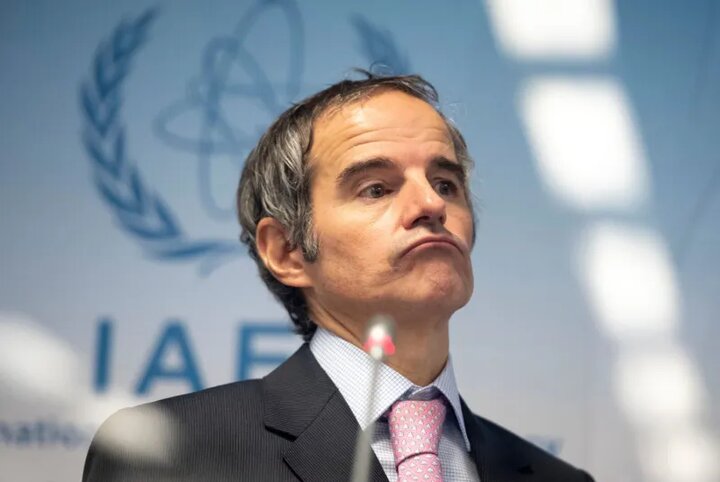
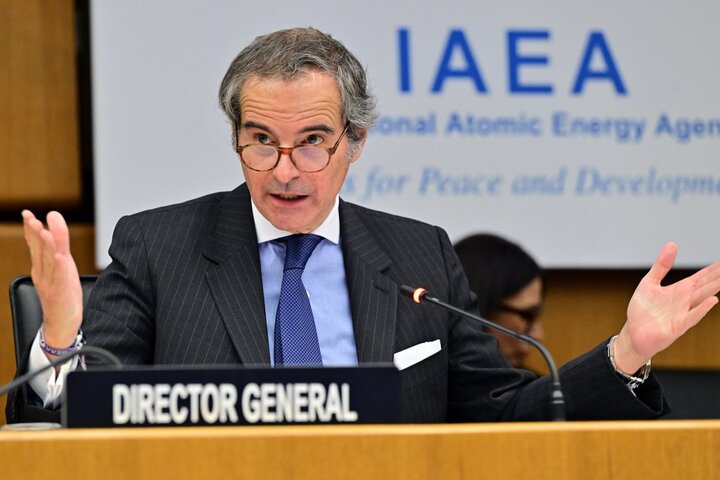
Argentina has officially put forward Grossi, the current Director-General of the International Atomic Energy Agency (IAEA), as its candidate for the UN’s top post for the 2027–2031 term.
His record, however, raises serious concerns: rather than embodying impartiality and peace, Grossi has repeatedly demonstrated bias and selective enforcement of nuclear norms.
Analysts have described Grossi as a deeply unsuitable candidate, citing political partiality, a lack of genuine commitment to global peace, and his failure to respond to acts of aggression.
Iranian experts, whose peaceful nuclear program has long been the subject of biased reporting and even military attack, insist that such an individual cannot lead the United Nations – an institution meant to symbolize justice and neutrality.
This nomination underscores the UN’s challenge in selecting leaders who resist prioritizing Western interests over global equity.
Grossi’s tenure at the IAEA, which began in December 2019, is marked by actions that many developing nations view as politically motivated. his leadership at the Agency has often been perceived as a tool of pressure rather than impartial oversight.
Iran has consistently said that Grossi has been issuing reports to the IAEA Board of Governors that lack technical grounding and instead reflect lobbying by the United States and Israel.
He has unfairly highlighted Iran’s lack of cooperation while ignoring clear evidence of NPT violations elsewhere.
International law experts have described this approach as blatant bias, arguing that it undermines peace by fueling unnecessary tensions.
This bias was starkly evident in June, when Israel, backed by the United States, launched a military attack on Iran’s peaceful nuclear facilities.
The strike constituted a gross violation of the Treaty on the Non-Proliferation of Nuclear Weapons (NPT), which guarantees member states the right to develop nuclear energy for peaceful purposes.
Despite this breach of international law, Grossi and the IAEA remained silent, failing to condemn the attack or hold the perpetrators accountable.
His inaction exposed a double standard and revealed him as an enabler of selective application of nuclear norms.

While Grossi publicly champions nuclear diplomacy, his silence in the face of Israeli aggression – including strikes on Gaza and Lebanon, the assassination of Iranian scientists such as Mohsen Fakhrizadeh, and now direct military attacks – amounts to tacit endorsement of hostile measures.
His record of supporting one-sided resolutions against Tehran further reinforces the perception of alignment with hegemonic interests rather than impartial mediation.
Experts warn that electing Grossi would erode the UN’s credibility. Iran's judicial official, Ali Mozaffari, noted in July that misleading IAEA narratives have paved the way for repeated attacks on Iran’s nuclear facilities, resulting in the loss of scientists, citizens, and infrastructure.
International observers echo this concern: Russian scholar Vladimir Yevseyev stated in November that Grossi’s report effectively gave Israel a green light to attack Iran, with the subsequent June strike confirming the dangers of biased reporting.
In conclusion, Rafael Grossi’s nomination represents a pivotal test for the United Nations. At a time of heightened global tension, the organization requires a leader who can bridge divides, foster dialogue, and uphold impartiality.
Grossi’s record of bias, selective enforcement, and silence in the face of aggression renders him an unsuitable candidate.
The UN needs a Secretary-General who unites the world, not one whose actions deepen divisions.
The international community must look beyond narrow political interests and choose a leader genuinely dedicated to peace, justice, and equality for all member states.
Seemingly, if Grossi becomes Secretary-General, he will serve as a political instrument for Western countries to exert pressure on independent states.
Reported by Tohid Mahmoudpour




Your Comment