


One can say in non-diplomatic language and out of necessity: "Lebanon was never part of the ceasefire from the beginning." One can ignore the tweet of the Pakistani mediator and the history of the negotiations. One can once again make breach of promise one's practice. But one cannot expect that while Beirut is burning under bombs, Iran will not respond, and that dialogue with Iran will reach a result.
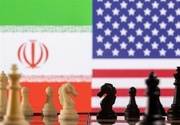
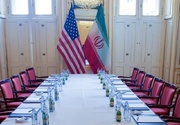
The announcement of the acceptance of a two-week ceasefire by Iran and the United States and the imminent start of talks between the two sides to reach an agreement by Shehbaz Sharif, the Prime Minister of Pakistan, contained several essential points, the first of which was the emphasis on the acceptance of the ceasefire by Iran, America, and their allies, and then the emphasis on the point that this ceasefire would also include Lebanon. Immediately after that, the tweet of Iran's Foreign Minister Araghchi was published, which, while thanking Prime Minister Shehbaz Sharif and General Asim Munir, the respected Commander of the Pakistani Army, for their tireless efforts to end the war in the region, emphasized: "In response to the brotherly request of the Prime Minister of Pakistan contained in his tweet, and considering America's request for negotiation of that country's 15-point proposals, and the announcement of the US President that the generalities of Iran's 10-point proposals are accepted as the basis for negotiation, I hereby announce on behalf of Iran's Supreme National Security Council: If the attacks on the Islamic Republic of Iran are stopped, our powerful armed forces will also stop their defensive attacks." Trump later reposted this tweet. This back-and-forth on X indicated a clear agreement based on the proposals of both sides as the basis for a ceasefire and negotiations. Although Araghchi's tweet did not mention Lebanon, in all published versions of the 10-point proposal—regardless of which one America wants to take as the criterion—the issue of Lebanon and Hezbollah is at the top.
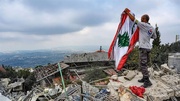
A few hours after these media-diplomatic reactions, however, heavy and unprecedented airstrikes against Hezbollah began in the Dahiyeh of Beirut, in such a way that some sources called these strikes unprecedented since 1982, and according to reports from Lebanese sources, nearly 200 people were martyred, and nearly 800 were injured in these strikes. On the other hand, Netanyahu's office issued a statement saying that the ceasefire did not include Hezbollah and Lebanon and spoke of continuing the war on that front. It was expected that this stance—which differed from what had been previously stated—would be corrected by the American side and that Netanyahu's crime would be prevented; but with a completely different approach, Trump, Levitt, and Vance, in turn, tried to announce, often with language beneath diplomatic dignity, that there had never been an agreement from the start regarding the inclusion of Lebanon in this ceasefire. Interestingly, the American side, by focusing on the claim that Iran's misunderstanding had caused it to think that Lebanon was also included in the ceasefire plan, ignored the subsequent reactions of the Prime Minister of Pakistan and his country's ambassador to the United States—the latter explicitly re-emphasizing the agreement to stop the war in Lebanon.
In its fifteen years of negotiations with the Americans, the Islamic Republic of Iran has always faced the problem that either some US administrations have not recognized the commitments of the previous administration (as in the case of the JCPOA), or they have easily passed over what one administration itself had accepted and referred to as a common point, denying or rejecting the history of the issue (as in the negotiations conducted before the 12-day war and the recent war). This non-legal and non-ethical orientation in American diplomacy has turned dialogue with America for the Iranian government into something that not only yields no result but also leads to missed opportunities and the weakening of Iran.
The Americans, by provoking the Zionist regime and due to the mistaken impression created by Netanyahu—that Iran must either surrender completely or would collapse with a short attack—entered a war in which, by the admission of the vast majority of politicians and analysts, they failed to achieve their objectives. In addition, they endangered energy security in the region and the world, and confronted the Persian Gulf countries, where they had been stationed for years, to ensure their security, with an unexpected war. In neutralizing the American idea of attacking Iran to bring about the collapse of the Islamic Republic, one of the most important factors was social solidarity and the seizure of the streets by the people. This irresponsible approach of the Americans will cause this effective and numerous social group, based on past experiences and an assessment of current actions and stances, not to accompany the recent negotiations—which are to begin with a prior breach of promise—nor to support the statesmen in pursuing this option. In that case, the possibility of any agreement will be less than before, and the already fragile conditions will become even more non-interactive.
If the ceasefire in Lebanon is not correct, despite what is stated in the published documents of the mediator and emphasized by Iran, then its violation by Iran in support of Hezbollah and the country of Lebanon would also not constitute a violation of the two-week ceasefire. One cannot, on the one hand, consider Iran to have misunderstood the terms of the ceasefire agreement and accuse it of ignorance, and on the other hand, oblige it to observe a ceasefire in areas not covered by the agreement. If the US government seeks to resolve regional issues and engage in dialogue with Iran, it must first define and limit Netanyahu's role in US foreign policy, and only then participate in regional meetings. Naturally, in this situation, firstly, Iran cannot sit down to negotiate about this existential war without a horizon for resolving all its dimensions, and secondly, it will trap America in a cycle where, each time with Netanyahu's unexpected intervention, it will lead to an even harsher and more difficult confrontation, involving the US government and making it pay the costs of the Zionist regime prime minister's false dreams.
If Trump and the United States are truly ready to negotiate with the Islamic Republic, they must first understand this reality: the relationship of the Islamic Revolution with the Resistance front is not that of a godfather with its political satellites, to sacrifice them for its political goals whenever necessary, or to pass over them in difficulties and hardships based on benefit, or to use them as bargaining chips for its objectives, as the [Israeli] regime and America have done with Kurdish groups in recent decades.
From this perspective, within the framework of the Islamic Republic's political thought, Dahiyeh is like the capital of Iran, and its importance is no less than that of Tehran. This approach not only does not mean interfering in Lebanon's internal affairs, but also expresses the authenticity of the Lebanese approach within the Resistance front, which is represented by Hezbollah, and in Iran, it is no less regarded than in Lebanon, and it will be a living and ongoing issue in any possible dialogue or agreement.
MNA









Your Comment