


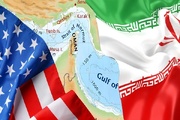
While Washington and Tel Aviv think tanks, with the precision of a Swiss watch, had designed a "shock and awe" scenario to both shatter Iran's defense structure and sever the invisible bond between the state and the nation, today we witness the humiliating retreat of the enemy and its explicit acceptance of Tehran's terms. This retreat is not ordinary diplomacy, but the historical defeat of the doctrine of maximum military pressure.
The Triumph of Wills: Forty Days of Resistance That Shattered the Calculations of Superpowers
In the following analysis, we present a precise dissection of this strategic victory and explain how "active resistance" transformed into "coercive diplomacy," and how the pivotal role of the people as the backbone of national authority cemented this victory.
1. Iran's Strategic Maturity: The Collapse of the "Shock and Awe" Doctrine in the Face of Revolutionary Rationality
The past forty days have witnessed one of the most complex and multi-layered combined offensives in contemporary history against Iran. The enemy, by integrating military operations, cyber warfare, economic pressure, and psychological operations, deliberately blurred the boundaries of the battlefield to bring the national will to its knees. But what the calculations of Pentagon and Mossad algorithms did not account for was revolutionary rationality: a combination of strategic prudence, tactical patience, and precise, proportionate strikes.
Imposing Will on the Enemy: The enemy's retreat is not out of goodwill, but the result of a complete tactical deadlock and the explosion of strategic costs in the Persian Gulf, the Strait of Hormuz, and the depths of their regional interests. It has been proven that in the anarchic international system, "rights" cannot be obtained at the negotiating table; they must be taken through power.
The Inverse Cost-Benefit Equation: Each new wave of pressure intensified Iran's reciprocal responses—in defensive, missile, naval, and even diplomatic dimensions—leading the enemy to conclude that continuing the confrontation would lead not to Iran's collapse, but to the collapse of global energy security and the destruction of their own coalitions.
Changing the Deterrence Geometry: Iran demonstrated that it is capable of managing a "protracted war" to its own advantage. This strategic maturity has consigned the "shock and awe" doctrine to the museum of history and presented a new model of "smart resistance" to the world.
2. The People: The Backbone of National Authority
The enemy's greatest strategic error was its miscalculation of "social fatigue" and a "state-nation rift." They invested in imaginary fault lines, but were met with the conscious solidarity of a nation—a bond rooted in history, culture, and revolutionary ideals.
After the enemy's military retreat, the battle has moved to the phase of "consolidating gains" and "narrative warfare." The maximum presence of the people over the next two weeks will serve as a vote of confidence for national power and guarantee the implementation of Iran's terms.
The conscious and passionate presence of the people not only fuels the engine of diplomats and commanders, but also acts as a "social deterrent," showing the enemy that even if it breaks through military fortifications, the wall of the nation's will is far more impenetrable.
3. The End of Counter-Revolutionary Current: From the Dream of Power to Eternal Disgrace
One of the most brilliant achievements of these forty days is the complete exposure of the nature and rootlessness of the counter-revolutionary currents. These groups, which acted as the media and cultural infantry of the offensive, have effectively become "political orphans" after their Western-Zionist masters officially accepted Iran's terms.
Those who, until yesterday, were promising an "imminent fall" are today witnessing the signing of documents in which the United States and the Zionist regime are forced to accept Tehran's terms.
The scheme, designed with billions of dollars in foreign investment to create division and civil war, has ended in "eternal isolation" and automatic elimination from Iran's socio-political equations. This disgrace is a lesson for future generations.
Conclusion and Strategic Outlook
Forty days of epic resistance were not merely a military-diplomatic victory, but a paradigm shift in the geometry of global power. Iran transformed from a defensive actor into a power capable of dictating its will to superpowers and rewriting the equations in favor of the Axis of Resistance.
The final message is clear and lasting: Victory on the military battlefield without preserving and consolidating the field in the public arena will be incomplete and transient. The next two weeks are a time of "strategic patience and maximum popular presence." The enemy has retreated, but it will only be completely stopped and neutralized when it realizes that the defensive wall of the Iranian people is more impenetrable than any concrete bunker or any Iron Dome.
These forty days mark the beginning of a new era of Iranian power—an era in which "resistance" is no longer a tactical choice but the only recognized path to survival, progress, and civilization-building. The Iranian nation, with its iron will, has once again shown the world that "we can" and "we will prevail."
MNA

















Your Comment