


Over the past five weeks, Iran has faced one of the most challenging periods in its contemporary history, a time when the United States and the Israeli regime, with coordinated attacks, targeted Iran's infrastructure, energy sites, and strategic facilities. However, while many global analyses and reports have focused on military displays and the possibility of escalating tensions, a quiet but profoundly impactful phenomenon is underway in Iran's cities: the sustained and overt support of the Iranian people for their country's armed forces.
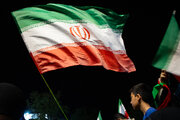
Night after night, citizens gather in main squares, streets, and public spaces, conveying a clear message to their government and the world: that Iran's society remains strong and united against external threats. This popular presence not only symbolizes internal loyalty and solidarity but also practically constitutes one of the most effective deterrent factors against the aggressors' attempts to create chaos and instability inside the country.
Recent developments have shown that a country's real power lies not merely in military equipment or hardware capabilities, but also manifests in the ability to mobilize and achieve social convergence. The presence of people in the streets, of all ages and genders and from every social class, sends a clear signal to the world: Iran is unified and resistant against external pressure and threats. This presence, like a non-material shield, prevents enemies from exploiting cognitive warfare and psychological propaganda tools against the Iranian people.
In recent years, many Western governments and media had tried, through cognitive warfare and creating a gap between the people and the government, to lay the groundwork for internal instability. By producing false news, distorting realities, and focusing on economic problems, their aim was to reduce public trust in the system and weaken social support for national decisions. But the epic of popular presence in recent days has thwarted all these projects and plans. The message that this presence sends to the world goes beyond a symbolic act; it is a real and tangible power that can create deterrence in the enemy's calculations and strengthen Iran's foreign policy and internal security.
One of the key points of this process is the direct link between security and national legitimacy. When people voluntarily and without coercion appear in the streets at night, this action not only shows support for the armed forces but also strengthens the internal legitimacy of the country's strategic policies and decisions. This kind of social convergence is a very effective tool for the government in managing crises, confronting external pressures, and consolidating internal stability.
This phenomenon also has an important psychological dimension. Observing the continuity and solidarity of the people strengthens national self-confidence and makes citizens feel that they are part of an effective collective force. This sense of belonging and participation, along with moral and national motivations, can direct social behavior and prevent the creation of discord or fear among the people. Popular presence, in a way, plays the role of a social safety mechanism that operates against enemy efforts to exploit gaps or internal differences.
In the international arena, this symbolic presence is also important. Many analysts and diplomats closely monitor the presence of people in the streets and consider it an indicator of national cohesion and social resilience. Such displays affect the calculations of foreign powers and show that military actions or economic pressures alone cannot achieve their intended goal. In other words, this social presence is a soft but powerful tool in foreign policy and diplomacy that can help redefine power equations.
Another important dimension of this phenomenon is its economic and social consequence. National cohesion and reduced risk of internal instability allow investments and economic activities to continue even in crisis conditions. This issue in turn increases domestic and foreign confidence in the country's ability to manage crises and prevents major economic shocks. In other words, popular presence is not only a political or security action but also helps stabilize the country's social and economic structures.
From a historical perspective, Iran has experienced numerous instances of popular presence in support of the country, but the unique feature of this period is its continuity and relative organization. Nightly gatherings in various cities have formed spontaneously and with clear messages to the world, showing that Iranian society has been able to create a coherent strategy against external pressure. This presence, alongside diplomatic activities and military capabilities, forms a complete package of national power tools that few countries in the world have the equivalent ability to assemble.
In fact, what has taken shape in this era is an example of a new logic of power in the contemporary world. Power is no longer confined solely to advanced equipment, military technologies, or security operations; it also manifests in countries' ability to mobilize and align their people, create internal cohesion, and demonstrate national resilience. With the active and united presence of its people, Iran shows the world that social power and collective will can complement and even be more effective than hardware tools.
This reality also carries a strategic message for external actors. Any attempt to destabilize Iran, due to the cohesion and continuous presence of the people, will fail. Popular presence is not merely a symbolic action but a practical deterrent that can seriously change the enemy's calculations and force them to reconsider their policies and actions.
In summary, what is happening in Iran today goes beyond a social movement or street gathering. It is a powerful tool in the country's national doctrine and defense strategy, showing that the people, alongside the armed forces, are the main pillars of national resilience and security. Iran, with this collective and continuous presence, tells the world that a united and aware nation can not only withstand external pressures and threats but also actively shape its own path of power and influence.
MNA






Your Comment