


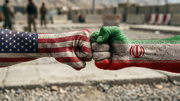
The war that erupted on 28 February 2026, initiated by coordinated military attacks from the United States and Israel against Iran, has dramatically reshaped security dynamics in Western Asia. While the offensive was reportedly aimed at Iranian nuclear sites, it has indiscriminately affected civilian infrastructure, hospitals, schools, and populated urban areas. The Israeli-American illegal aggression resulted in a conflict with devastating human, economic, and geopolitical consequences.
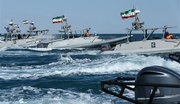
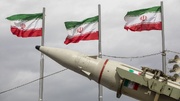
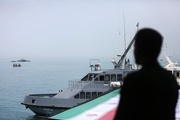
Iran’s subsequent countermeasures targeted US and Israeli interests across the region. In response to the ongoing military aggression, Iran has imposed strict navigational restrictions in the Strait of Hormuz, effectively preventing vessels associated with the aggressors from transiting its territorial waters. This measure underscores Tehran’s assertion of sovereignty and its right to protect national security under international law. Simultaneously, Iran has conducted targeted operations against US military bases and assets in Persian Gulf littoral countries, clarifying that its actions are not directed against these host nations themselves. Rather, Iran emphasizes that the strikes are a defensive response to the use of their territory as a launchpad for attacks on Iranian soil.
Thousands of Iranian civilians and officials were martyred and a widespread damage was inflicted to critical infrastructure due to the Israeli-American aggression. International observers warn that the conflict has the potential to destabilize regional peace far beyond Iran’s borders.
International bodies and numerous countries have called for an immediate end to the war, emphasizing the urgent need to protect civilians and stabilize regional security. In one of the diplomatic efforts, China and Pakistan proposed a five-point peace initiative, advocating for a ceasefire, the resumption of negotiations, protection of civilians, safe navigation in strategic waterways, and the reinforcement of United Nations principles to restore order in the Persian Gulf and broader West Asia region. However, the plan fails to address the root cause of the conflict—the unprovoked aggression by the United States and the Israeli regime—and therefore cannot be considered a fully fair or effective solution.
China and Pakistan’s Five-Point Initiative
In response to the escalating crisis, China and Pakistan have proposed a five-point plan to restore peace and stability in the region. The initiative emphasizes:
Immediate cessation of hostilities and humanitarian access.
Prompt initiation of peace negotiations, safeguarding sovereignty and security.
Protection of civilian populations and critical infrastructure, fully adhering to international humanitarian law.
Ensuring safe navigation in strategic waterways, including the Strait of Hormuz.
Reinforcing the principles of the United Nations Charter and multilateral frameworks for sustainable peace.
Why the Plan Falls Short
The fundamental limitation of this five-point initiative lies in its failure to confront the root cause of the conflict: the aggressive, unprovoked military action by the United States and the Zionist regime. By focusing on localized concerns and navigation safety while omitting the accountability of the aggressors, the proposal implicitly minimizes the magnitude of the war, recasting what is a global confrontation as merely a dispute among regional actors.
From an international legal perspective, the conflict represents a clear violation of state sovereignty and United Nations norms. Any credible peace effort must explicitly condemn the unlawful aggression, demand accountability, and address the systemic threats to regional and global stability.
The world, including Beijing, is expected to act beyond procedural diplomacy, using its influence to enforce respect for international law. A plan that treats the war as a limited regional issue fails to meet global expectations for conflict resolution and undermines the integrity of multilateral institutions.
To genuinely contribute to ending hostilities, influential states are expected to recognize the asymmetry and global dimension of the war, condemn the initial acts of aggression in clear and unequivocal terms, ensure that any ceasefire framework addresses violations of international law, not merely the immediate cessation of hostilities, and promote mechanisms that prevent future unilateral military interventions and reinforce UN principles of sovereignty, territorial integrity, and peaceful dispute resolution.
Without acknowledging the true origins of the conflict, the five-point initiative risks becoming a temporary pause in violence rather than a durable solution, leaving the structural causes of instability intact.
Conclusion
The war initiated on 28 February by Washington and Tel Aviv is not merely a regional quarrel; it is a large-scale international confrontation that challenges the very framework of global law and order. While China and Pakistan’s initiative offers a roadmap for de-escalation, its current scope falls short of the international community’s expectations. Only by addressing the unlawful aggression directly and enforcing accountability can lasting peace be achieved, restoring both stability to the region and respect for international norms that safeguard all nations.
Reported by Mohaddeseh Pakravan
















Your Comment