


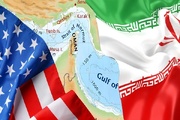
Recent developments in the Persian Gulf, especially against the backdrop of the war against Iran, have once again highlighted a strategic reality: borrowed security is not only unsustainable but can, in critical moments, become a source of insecurity. The security model pursued over decades by certain Arab states in the Persian Gulf—relying on external powers to ensure survival—is now under serious scrutiny, with clear signs of its inefficacy emerging.
For many years, these countries defined their security not based on domestic capabilities or regional cooperation, but through deep military, political, and economic ties with powers such as the United States. Establishing foreign military bases, extensive arms purchases, and alignment with these powers’ regional policies were considered pillars of this approach. At first glance, it seemed like a rational deal: security in exchange for money and influence. Yet what was overlooked was the inherently unstable nature of this dependence.
The truth is that security is not a commodity that can be imported or purchased. It is an internal, multi-layered process requiring a balance between domestic power, political legitimacy, and regional engagement. When any of these elements is missing, the security structure becomes disrupted—a reality that is clearly observable in the Persian Gulf region today.
The first cracks in this structure appeared during the Yemen war. The coalition, entering the conflict with assumptions of military superiority and external backing, not only failed to achieve its objectives but also faced serious challenges against an asymmetric actor. Missile and drone attacks deep into Saudi and Emirati territory conveyed a clear message: classical military superiority does not guarantee security. More importantly, the limited responses of foreign supporters, particularly to significant attacks such as those on oil facilities, revealed how conditional and constrained the “security umbrella” truly is.
However, the recent war against Iran marks a turning point beyond these prior experiences. This conflict is not merely a military engagement but a structural test of the borrowed security model. Countries that assumed hosting foreign bases and participating in military coalitions would keep them safe are now confronting a different reality: that very presence and involvement has made them part of the conflict equation.
When foreign military bases are used as a launchpad or support for operations against Iran, it is natural that these bases—and their host countries—become targets themselves. This is a fundamental principle in deterrence and military logic: once a country allows its territory to be used against another, it effectively removes itself from neutrality and becomes a party to the conflict.
From this perspective, what some Persian Gulf littoral Arab states face today is not a random threat but the direct consequence of their strategic choices. Transitioning from peripheral actors to potential targets is a natural outcome of participation in a conflict. This is the paradox of borrowed security: a tool intended to create safety can, under certain conditions, become a source of insecurity itself.
It is also crucial to carefully consider Iran’s behavior in this equation. Contrary to some media narratives, Iran’s approach over the decades has largely been defensive and deterrent-oriented. Iran has not initiated wars against regional countries and has often framed its actions as responses to threats. Therefore, the entry of some states into confrontation is more a result of alignment with extra-regional policies than direct provocation.
This point matters because it indicates that alternative paths were, and remain, available. Countries now at risk could have avoided such vulnerability by adopting more balanced policies. In other words, today’s insecurity is largely a product of yesterday’s decisions.
Additionally, the behavior of external powers underscores this reality. Their calculated, interest-driven, and limited responses demonstrate that their security commitments are not absolute. As the costs of conflict rise, these actors tend to avoid direct involvement or attempt to control escalation, while the regional states bear the brunt of immediate costs.
This gap between “security expectations” and “operational realities” is one of the main weaknesses of borrowed security. Countries that define their security through external support are forced, at critical moments, to question how much they can rely on it. Recent experiences suggest that the answer is far from reassuring.
Furthermore, the economic costs of this model are significant. Spending hundreds of billions of dollars on arms purchases and military infrastructure only makes sense if these investments genuinely enhance security. When infrastructure remains vulnerable and threats persist, the question of return on investment becomes critical.
Under these circumstances, a return to the concept of “endogenous security” is not optional but necessary. Endogenous security does not mean disconnecting from the world; it means creating balance—a balance between external cooperation and domestic reliance. This approach requires strengthening indigenous defense capabilities, enhancing social cohesion, and, most importantly, redefining regional relations.
The concept of “regional security” is equally important. Experience shows that no country in the Middle East can achieve sustainable security alone. Threats are transnational in nature, and addressing them requires regional cooperation. In this framework, reducing tensions and moving toward shared security mechanisms can be an alternative to costly competitions and dangerous confrontations.
This path, of course, faces serious challenges—from historical mistrust to political and ideological differences. Yet continuing on the current trajectory will incur even greater costs. Choosing between these paths is ultimately a strategic decision that will shape the region’s future.
In conclusion, recent developments in the Persian Gulf region have shattered an illusion: the illusion that security can be bought or guaranteed externally. The realities on the ground have shown that such an approach is neither sustainable nor risk-free, and it can expose countries to new threats.
Persian Gulf littoral Arab states now stand at a crossroads. They can continue down the path of dependence and borrowed security, accepting its risks, or they can reassess their policies and move toward domestic and regional security models. In a world where power dynamics are rapidly shifting, the most important lesson may be that real security lies not in the shadow of others, but in each country’s ability to define and ensure it for itself.
MNA

















Your Comment