


Hamas and Israel on Monday carried out a prisoner exchange deal under a ceasefire agreement that saw the release of nearly 2,000 Palestinians imprisoned in Israeli jails and 20 Israeli captives held in the Gaza Strip.
While key questions remain over the future of Gaza and Hamas’s role in the territory, the exchange of captives and prisoners has raised hopes for ending Israel’s devastating war, which has ravaged the enclave and killed more than 67,806 people. The ceasefire is also expected to allow for a surge of humanitarian aid into Gaza, where famine has broken out amid Israel’s bombardment and blockade of the territory. Many of Gaza’s more than two million people are reported to be on the brink of starvation.
Amid the exchange, US President Donald Trump, whose administration played a leading role in putting together the deal, travelled to occupied Palestine to address the Knesset ahead of an international summit in Egypt where he co-chaired later on Monday.
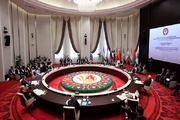
On Monday night, Donald Trump, along with several regional leaders, signed a document on the Gaza ceasefire deal during a summit in Egypt, hailing the release of Israeli captives, as Hamas condemned the “harshest forms of sadism and fascism” endured by Palestinians freed from Israeli jails.
To shed more light on the future of the ceasefire, Mehr News Agency conducted an interview with Basil Farraj, Assistant Professor at the Department of Philosophy and Cultural studies, Birzeit University. Below is his insights on the issue;
1. In your assessment, how sustainable is the Gaza ceasefire? Do you think Israel might resume its bombardment of Gaza once the prisoner exchange is completed, despite the the fact that the US president has already said the Gaza war is over?
Obviously, we know that Israel — the Zionist regime — has broken not only the last two ceasefire agreements but also, if we look at the current period, it has not stuck to any of the agreements laid out, for instance, in the Lebanon ceasefire agreement.
It has also been continuously expanding its aggression across numerous Arab countries.
If we look at this current moment, since the genocide began and throughout recent history as well, we can see that this regime does not actually adhere to its ceasefire agreements. For instance, the threat of re-arresting Palestinians is always looming. We have also been hearing about Israel controlling the amount of aid that enters the Gaza Strip. From experience and from what we have heard so far, Israel might not necessarily adhere to all of the ceasefire agreement and its details.
We also know that there has been some pressure on the Israeli government to accept what is referred to as the “Trump Plan.” Now, there’s a separate discussion about what this plan means and, of course, how it has favored the Israeli regime. This can also be seen through the military expenditure from the U.S. toward Israel, the investment in the war, and the fact that this war was not simply an Israeli war waged against the Palestinian population but also an Israeli war aided, abetted, and supplied with weapons by the United States and other countries.
That’s the broader scope of things. We do hope that the ceasefire continues. It appears, at least from what we are hearing, that there is immense pressure being exerted on the Israeli government. Again, this is being said while acknowledging that Israel might adhere to some terms of the ceasefire agreement but might also continue its aggression against the Palestinian people in different ways.
For instance, by escalating its threats against the Gaza Strip, controlling the amount of aid that enters, or limiting the possibility of leaving and entering the Gaza Strip through the Rafah crossing. We also know that it has manipulated the list of prisoners slated for release — even the list provided by the Palestinian political factions.
So, to answer this question, we have to look at Israel’s history — its treatment of and approach to ceasefire agreements — while also noting the pressure exerted on the Israeli regime by the United States.
2. What diplomatic or political mechanisms could ensure that a post-war Gaza does not return to another cycle of escalation?
I think how we can ensure the continuation of the ceasefire — which is the most important thing for us — is through the escalation of the embargo, activism, and global movements in relation to Palestine. There is a lot of work to be done.
The genocide might have been put on hold, but Israeli aggression continues. If we look at the West Bank, or at the continued cruel treatment of Palestinian prisoners and the fact that thousands remain in Israeli captivity — as well as the challenges and difficulties omnipresent across the Gaza Strip and for the Gazan population — we can understand that to ensure the ceasefire holds, we must continue global pressure toward isolating Israel.
We must ensure that this regime continues to be depicted as an outcast globally by maintaining continuous pressure, imposing embargoes, economic sanctions, and effectively working toward isolating the Israeli regime as a Zionist regime that thrives on genocide and the killing of the Palestinian population.
In a sense, the political mechanisms that would ensure there is no escalation involve ensuring mobilization. But of course, we also have to take into account the fact that Palestinians in the Gaza Strip have been living under blockade for decades.
If this political and social context is not addressed, we will not witness any change in the reality of the Gaza Strip. A ceasefire is, of course, an important step — but the situation that led to the escalation of Israeli aggression must be addressed. Otherwise, this brutal reality will continue, and we will not see any change in the way Palestinians are living across the Gaza Strip, in addition to the ongoing killing and genocidal war unleashed against them.
Interview by Mohaddeseh Pakravan







Your Comment