


A prime minister who for years has justified his policy with the promise of providing Israel's security, defeating enemies, and achieving "absolute victory" must now answer a fundamental question: if his strategies have been so successful, why has the Iran file remained one of the most important axes of threat and security propaganda for Israel?
Netanyahu has been placed in a situation where his political defeat could mean the end of a long period of power-seeking and security claims. Although the election result is not yet clear, political evidence and domestic criticisms show that he faces one of the most difficult tests of his political career. The security failure of October 7, 2023 and its consequences have severely called into question the credibility of Israel's security establishment.
From the Promise of Absolute Security to a Crisis of Trust
For years, Netanyahu tried to present himself as a politician who, better than any rival, is capable of confronting security threats. However, the operation of October 7, 2023 showed how vulnerable this claim of comprehensive security was. The surprise of Israel's intelligence and military agencies, the entry of Hamas forces into the areas and settlements around Gaza, and the killing and capture of a large number of Israeli settlers dealt a historic blow to this regime's security image.
Afterward, the Netanyahu cabinet launched extensive operations in Gaza, and the scope of Israel's confrontation with Lebanon's Hezbollah and Iran also expanded. Netanyahu tried to present the military achievements of these operations as a sign of the restoration of Israel's deterrence power; but his fundamental problem persists: the power of military destruction is not the same as the realization of strategic objectives.
When the conflict becomes prolonged, human and economic costs increase, and the government still speaks of the necessity of continuing operations to reach final victory, this question becomes more serious: has the chosen strategy been able to create lasting security, or has it merely formed a new cycle of conflict?
Iran; A File Netanyahu Cannot Close with Slogans
Iran has been one of the main axes of Netanyahu's security strategy. He has repeatedly placed confronting Iran's nuclear program, missile capability, and regional influence at the top of his policies and has tried to present this file as evidence of the necessity of continuing his leadership.
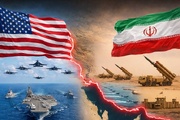
However, the result of a military campaign cannot be measured merely by the aggressor side's declaration of victory. The real criterion is the extent to which the declared objectives have been realized, a lasting change in the balance of power, and the ability to prevent the return of the crisis. If, after extensive operations, the possibility of renewed confrontation with Iran is still raised, this situation shows that the issue has not been settled from a strategic perspective.
Channel 12 recent report about the alleged dispute between Netanyahu and Eyal Zamir, the Chief of the General Staff of the military, over the possibility of a new military operation related to Iran has highlighted this very contradiction. According to this report, the proposed action could have led to a broader confrontation with Tehran. Israeli officials have denied or questioned the details of this dispute, but the publication of such a report on the eve of elections reveals the sensitivity of the Iran file.
Yair Lapid, the opposition leader, also criticized the prime minister's performance, saying Israel's security should not be turned into a tool for election propaganda. Referring to Netanyahu's promises about Iran, he stressed that the prime minister has repeatedly spoken of "absolute victory" but has not reached the expected results.
This criticism from within the Israeli regime's political structure is considered a blow to Netanyahu's victory narrative; because it shows that even his domestic rivals do not consider the repetition of Iran threats as equivalent to strategic success.
The Axis of Resistance; The Strategic Costs of a Multi-Front Confrontation
The Iran file is not Netanyahu's only testing ground. Gaza, Lebanon, and other regional arenas have also become parts of his cabinet's security record. On these fronts, Israel has been able to deal heavy military blows to some groups of the Axis of Resistance; but inflicting a military blow alone does not mean eliminating the capacity for resistance or achieving a regional order in accordance with Tel Aviv's wishes.
In Gaza, extensive military operations could not easily realize all of Israel's declared objectives. In Lebanon, too, the weakening of Hezbollah's capability cannot be considered equivalent to the complete elimination of this actor without examining the political and security situation after the conflict. At the regional level as well, the confrontation with Iran has shown that military pressure does not necessarily lead to the opposing side's political surrender.
Therefore, the main issue for Netanyahu is not merely the number of operations carried out or the extent of damage inflicted on the opposing side; the issue is whether these operations have been able to turn the declared strategic objectives into a lasting result or not.
Netanyahu faces a fundamental contradiction: the more he speaks of final victory, the more the continuation of threats and the necessity of new operations highlight the question about the realization of that very victory.
The Election; The Final Test of Netanyahu's Record
Israel's electoral competition is being held under conditions in which none of the main camps, according to published polls, has a definitive and obstacle-free path to forming a cabinet. Achieving a majority of 61 seats out of the Knesset's total of 120 seats will depend on coalition-building and post-election negotiations. Therefore, even the electoral performance of the parties alone does not determine the fate of the future cabinet.
However, Netanyahu's issue is not just the number of seats for the Likud party. He must answer for the security failure of October 7, the costs of prolonged conflicts, the condition of reserve forces, internal disputes, and the gap between promises of victory and actual results. His opponents are trying to turn the election into an opportunity to end his period of leadership; his supporters continue to rely on his political experience and security policies.
Under such circumstances, the election for Netanyahu has a meaning close to political life and death: preserving power can give him the opportunity to continue his narrative of regional developments, but losing power will confront his position and political credibility with a serious challenge.
Ultimately, Netanyahu's record cannot be assessed with election slogans or claims of absolute victory. In realizing the promise of lasting security and converting military operations into a decisive strategic victory, he has faced serious failures. Iran remains at the center of Israel's security calculations, and the fronts associated with the Axis of Resistance, despite heavy military blows, have become unresolved files in Tel Aviv's regional strategy.
This is precisely Netanyahu's main weakness on the eve of the election: he can once again speak of victory, but he cannot eliminate the gap between his promises and strategic results merely by repeating this word. The October 27 election is, more than anything, a test for measuring this very gap and the extent of Zionist society's trust in his leadership.
MNA



















Your Comment